 MortarDesk
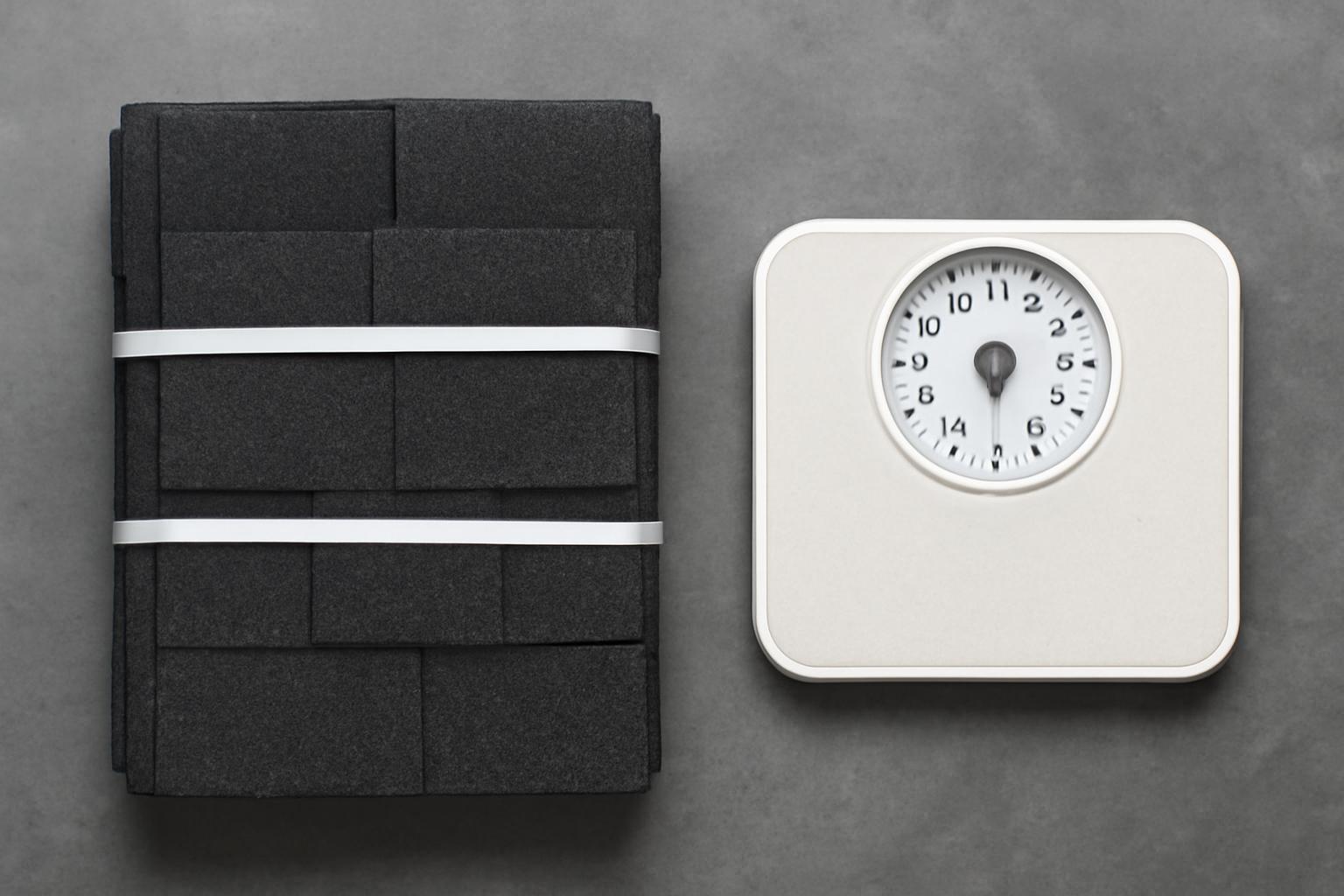
The quick answer: typical asphalt-shingle bundle weights
For preliminary planning, a standard asphalt-shingle bundle commonly weighs about 50–80 pounds. A more useful breakdown is:
- Three-tab asphalt shingles: about 45–60 pounds per bundle
- Architectural or laminated asphalt shingles: about 60–80 pounds per bundle
- Luxury or premium asphalt shingles: potentially more than 80 pounds per bundle, depending on the product
These are planning estimates, not universal package specifications.
| Shingle type | Preliminary bundle-weight range | Common standard-bundle coverage | Estimated weight per roofing square when three bundles per square is confirmed |
|---|---|---|---|
| Three-tab asphalt | About 45–60 lb | About 33–33.3 sq. ft. | About 135–180 lb |
| Architectural or laminated asphalt | About 60–80 lb | About 33–33.3 sq. ft. | About 180–240 lb |
| Luxury or premium asphalt | May exceed 80 lb | Product-specific; may be less than standard coverage | Calculate from verified bundles per square and labeled bundle weight |
The table uses broad ranges reported for common asphalt products. The per-square figures are derived by multiplying a confirmed three bundles per square by the estimated bundle weight: three bundles at 45–60 pounds equal 135–180 pounds, and three at 60–80 pounds equal 180–240 pounds. Roof Hub reports these type-specific bundle ranges and corresponding square weights.
The important qualification is “when three bundles per square is confirmed.” Many standard three-tab and architectural products use that packaging convention, but luxury and specialty products may not. A heavier bundle may also provide different coverage, so weight per bundle cannot be converted into weight per square until both coverage and bundle requirements are known.
For an early spreadsheet, use a range rather than a false point estimate. Entering 50–80 pounds per standard asphalt bundle reflects the possible spread in delivery weight. Once a product is selected, replace that estimate with the weight and coverage printed on its wrapper or stated in current manufacturer documentation.
The wrapper or current technical sheet controls because a bundle is a package, not an industry-wide quantity of material. Two bundles can have different weights, shingle counts, and coverage while both remain valid sales units.
Bundle, roofing square, and square feet are different measurements
A bundle is a packaged sales and handling unit: the wrapped group of shingles purchased from a supplier or delivered on a pallet. Its shingle count, total weight, dimensions, and roof coverage depend on the selected product.
A roofing square is an area measurement equal to 100 square feet of roof surface. It is not a bundle, pallet, box, or fixed weight. If a roof is described as 20 squares, that means about 2,000 square feet of roof surface—not 20 packages.
For many standard asphalt products, one bundle covers approximately 33–33.3 square feet. At that coverage, about three bundles cover one 100-square-foot roofing square. Luxury and specialty products can provide less coverage or require a different number of packages. River City Roofing describes the common three-bundle convention and the different coverage possible with specialty products.
The familiar relationship is therefore:
1 roofing square = 100 square feet of roof area For many standard asphalt products: 1 roofing square ≈ 3 bundles
That is a packaging convention, not a universal physical rule. If a bundle covers only 25 square feet, for example, three bundles provide 75 square feet and four are needed to reach 100 square feet before any waste allowance. Nonstandard packaging must be calculated from the stated coverage rather than forced into the three-bundle convention.
This distinction matters when estimating weight. A statement such as “30 bundles” supplies a package count, but it does not establish:
- The roof area those bundles cover
- Whether they represent 10 roofing squares
- The weight of each package
- Whether every package contains the same product
- The order’s total shipping weight
To convert bundle count into project weight, you need the weight per bundle. To convert roof area into bundle count, you need the coverage per bundle. Calculating weight per roofing square requires both.
Shingle count is not an adequate substitute. One product may use fewer, larger, or thicker pieces to provide its stated coverage, while another uses more individual pieces. A count of shingles does not reveal package weight or coverage unless the product specifications provide those missing values.
Use this sequence:
- Measure or obtain the actual roof-surface area.
- Identify the exact shingle product.
- Check its stated coverage per bundle.
- Confirm its bundles-per-square requirement.
- Check the weight of each bundle.
- Calculate package quantity first and total weight second.
This avoids treating a roofing square as though it were a package with a standard weight. A square of three-tab shingles and a square of architectural shingles cover the same nominal area but can represent different material weights.
Why one bundle can weigh more than another
Asphalt shingles are not all made to the same dimensions or construction. Bundle weight can vary with:
- Shingle type
- Thickness
- Construction or layer count
- Shape and design
- Product line
- Manufacturer
- Bundle dimensions
- Coverage supplied by the bundle
- Moisture present when the material is weighed
Architectural or laminated products generally fall into a heavier planning range than three-tab shingles. That comparison does not mean weight alone proves quality, durability, service life, or suitability. A heavier package may reflect more material, a different profile, or different coverage. Product performance must be evaluated from the selected manufacturer’s specifications, installation requirements, ratings, warranty terms, and suitability for the roof.
Construction also affects how many shingles fit in a package. A bundle can contain fewer thick shingles or more thin shingles while providing similar roof coverage. Package dimensions and production choices may differ among manufacturers and product lines.
Humidity or retained moisture may temporarily alter the weight of delivered or removed roofing, so a physical load may not match a dry planning estimate exactly. Product construction, dimensions, brand, layers, and moisture are among the variables identified in published weight guidance. This overview discusses both construction-related variation and temporary moisture effects.
Shingle count is therefore a poor shortcut. Even when two packages contain the same number of pieces, those pieces can differ in:
- Length and width
- Thickness
- Profile
- Laminated construction
- Installed exposure
- Total coverage
- Asphalt and granule content
Likewise, two bundles that both cover about one-third of a square do not necessarily weigh the same.
Online ranges also conflict. Some general guides provide higher estimates for three-tab or architectural products, and some reported bundle weights do not reconcile cleanly with the same source’s per-square figures. Those disagreements are a reason to narrow the claim rather than broaden it.
The practical interpretation is:
- Use broad type-specific averages only for early planning.
- Expect premium products to differ from standard packaging.
- Recognize that individual products can fall outside common ranges.
- Treat the selected product’s wrapper or current documentation as controlling.
This guide focuses on asphalt shingles. Wood shingles, shakes, slate, clay tile, and metal roofing are packaged and sold differently, so generic asphalt-style bundle comparisons should not be extended to those materials.
How to calculate bundle count and total shingle weight
A reliable weight estimate begins with actual roof-surface area, not simply the building footprint. Pitch and roof geometry affect the amount of surface being covered and therefore the amount of material required. Hips, valleys, dormers, and intersecting roof sections can also increase cutting and material demand.
Pitch does not make an individual bundle heavier. It can change the roof area and the number of bundles required.
Use this quantity formula:
Required bundles = ceiling of [roof area × (1 + chosen waste percentage) ÷ labeled coverage per bundle]
The ceiling instruction means rounding up to the next whole bundle. If the calculation produces 33.04 bundles, the purchase quantity is 34 bundles, not 33.
Then calculate weight:
Estimated total new-material weight = rounded-up bundle count × labeled weight per bundle
These are separate steps because shingles are purchased as whole packages. Multiplying an unrounded quantity by bundle weight and rounding only at the end may produce a weight that does not represent the physical number of packages ordered.
Choosing a waste allowance
There is no single waste percentage appropriate for every roof. Choose the allowance for the actual roof, product, and installation plan. Relevant considerations include:
- Hips and valleys
- Rakes and eaves
- Dormers and roof penetrations
- Intersecting roof planes
- Starter and finishing requirements
- Pattern or course alignment
- Cutting losses
- Damaged pieces
- Whether matching spare shingles will be retained
A simple gable roof and a highly cut-up roof with multiple valleys do not necessarily require the same allowance. Use the project takeoff, product instructions, and site conditions rather than treating a general percentage as universal.
Worked example: 1,000 square feet
Assume the following solely for preliminary planning:
- Roof-surface area: 1,000 square feet
- Assumed waste allowance: 10%
- Coverage: 33.3 square feet per bundle
- Estimated architectural-bundle weight: 60–80 pounds
The coverage and weight figures are common planning assumptions, not specifications for an unnamed product. Quality Exteriors reports approximately 33 square feet of standard coverage and a general 50–80-pound bundle range, with product-specific variation.
Calculate the package quantity first:
Required bundles
= ceiling of [1,000 × (1 + 0.10) ÷ 33.3]
= ceiling of [1,100 ÷ 33.3]
= ceiling of [33.03...]
= 34 bundles
Then calculate the estimated material weight:
Low estimate: 34 × 60 lb = 2,040 lb
High estimate: 34 × 80 lb = 2,720 lb
Under those assumptions, the order weighs approximately 2,040–2,720 pounds.
Every input is editable. If the selected product provides less coverage, the bundle count increases. If the actual pitched roof surface is larger than the building footprint, beginning with the footprint understates both quantity and weight. If the labeled bundle weight differs from the planning range, the total must be recalculated.
A useful worksheet needs four inputs:
| Input | Purpose |
|---|---|
| Actual roof-surface area | Establishes the area to cover |
| Selected waste allowance | Accounts for project-specific cuts and losses |
| Labeled coverage per bundle | Converts adjusted area into package count |
| Labeled weight per bundle | Converts rounded package count into total material weight |
Avoid substituting “three bundles per square” unless the product documentation confirms that requirement. Coverage per bundle is usually the more direct input because it accommodates nonstandard packaging without an extra assumption.
How much does one roofing square or a full order weigh?
Once the packaging is verified, calculate the weight of one roofing square with:
Weight per roofing square = verified bundles per square × labeled bundle weight
For a product confirmed at three bundles per square:
- Three-tab shingles at 45–60 pounds per bundle equal about 135–180 pounds per square.
- Architectural shingles at 60–80 pounds per bundle equal about 180–240 pounds per square.
- A broad 50–80-pound standard-bundle range implies about 150–240 pounds per square.
These conversions are consistent with published standard-product comparisons, but they apply only when three bundles per square is verified. ProCraft Home Products reports the 135–180-pound and 180–240-pound square-weight ranges for three-tab and architectural shingles respectively.
The figures cover shingles only. They do not automatically include separate starter or ridge-cap products, underlayment, fasteners, pallets, packaging, or other project materials.
For a full order, calculate the rounded bundle count directly and multiply by the labeled weight. That method preserves the requirement to purchase whole packages. If a takeoff produces a fractional number of squares, convert the adjusted area into the selected product’s package count and round the bundle quantity up.
Bundle weight is not pallet weight
Pallet weight cannot be established from a generic bundle count. You need:
- The actual number of bundles on the pallet
- The weight of each bundle
- Any pallet and packaging weight included in the shipping figure
- Confirmation that the pallet contains only one product
Use the delivery ticket, pallet label, supplier record, or manufacturer documentation rather than assuming every pallet has the same bundle count or total weight.
Shipping, installation, and staging are separate questions
Several different weights may matter:
- Material weight: the purchased shingles
- Shipping weight: material plus any included pallets and shipping packaging
- Installed material weight: shingles incorporated into the roof, excluding discarded packaging and unused stock
- Staging load: material temporarily grouped in a particular roof area
- Total project load: all relevant materials and equipment present at a given time
These values answer different planning questions.
Obtain the documented shipment weight and compare it with the applicable rated capacity stated in the vehicle, trailer, or equipment documentation. If the ratings or terminology are unclear, ask the supplier or an appropriately qualified professional. A generic bundle calculation is not vehicle, trailer, pallet, structural, or staging approval.
New bundles and tear-off debris are not the same estimate
New-bundle weight can provide a rough starting point for removal planning, but it does not fully describe demolition debris. A tear-off can include:
- Multiple existing shingle layers
- Retained moisture
- Underlayment
- Nails and other fasteners
- Damaged or removed decking
- Other roofing material being removed
Old shingles may not weigh exactly the same as an equivalent quantity of new bundles. Age, wear, material loss, and moisture can affect the physical debris. Multiplying a historical bundle count by the weight of a current product can therefore overstate or understate disposal weight.
Keep the calculations separate:
| Material-purchase calculation | Tear-off and disposal calculation |
|---|---|
| Measure actual roof-surface area | Measure the roof area being removed |
| Select a project-specific waste allowance | Determine the number of existing layers |
| Use the new product’s labeled coverage | Identify underlayment and other material being removed |
| Round required bundles up | Account for retained moisture |
| Use the new product’s labeled bundle weight | Include damaged or removed decking |
| Confirm order and pallet quantities | Verify the provider’s permitted weight and surcharge terms |
Existing layers, damaged decking, moisture, and provider weight limits can materially change disposal planning beyond the incoming package weight. Roof Hub’s dumpster discussion identifies these additional tear-off variables.
Do not select a dumpster solely from a generic bundle range. Container dimensions, permitted contents, included weight, loading conditions, and surcharge terms are provider-specific. Give the provider the roof area, number of layers, roofing type, and other material being removed, then request a project-specific recommendation.
Volume and weight are also separate constraints. Generic shingle arithmetic does not determine whether a particular container will reach its provider-defined space or weight limit first.
The specification checks to make before buying, moving, or staging shingles
Before acting on an estimate, verify:
- Exact manufacturer and product name
- Product code or line
- Shingle type
- Weight per bundle
- Coverage per bundle
- Bundles required per roofing square
- Total bundle count ordered
- Bundles on each pallet
- Verified pallet or shipment weight
- Manufacturer handling and storage instructions
- Supplier delivery and unloading conditions
Prioritize sources in this order:
- Bundle wrapper
- Current manufacturer technical documentation
- Supplier product record
- Delivery ticket or pallet label
- Generic planning ranges when exact documentation is not yet available
The wrapper is particularly useful because it accompanies the package being handled. Check that the delivered pallets contain the expected product and that substitutions or mixed materials have not changed the calculation. If weight is not printed on the package, request current documentation tied to the exact product code.
Before transporting the order
Calculate shipment weight from verified documentation rather than apparent cargo-space dimensions. Compare that documented value with the applicable rated capacity in the vehicle or trailer documentation. A generic shingle-weight range cannot authorize a particular load.
Before handling or carrying bundles
This article cannot determine whether one person can safely lift a particular bundle or carry it up a ladder. Package weight is only one consideration; individual ability, route, access, weather, surface conditions, equipment, and worksite organization vary.
Do not interpret a common bundle-weight range as a statement that every person can or should handle the package manually. Follow the product’s handling instructions and the procedures applicable to the worksite, and obtain appropriate assistance where needed.
Before rooftop staging
Do not treat an average weight per square as structural approval for concentrated rooftop storage.
Mortar Desk publishes general building-material reference information; it is not a contractor and does not provide engineering advice. Its Terms describe the material as general reading and disclaim any warranty of completeness. Product documentation, rated capacities, site conditions, and appropriately qualified project-specific advice take priority over a generic estimate.
Frequently asked questions
How much does a bundle of three-tab shingles weigh?
For preliminary planning, use approximately 45–60 pounds per bundle. If the selected product is confirmed at three bundles per roofing square, that implies approximately 135–180 pounds of shingles per 100-square-foot square. Angi reports the 45–60-pound three-tab range and defines a roofing square as 100 square feet.
Verify the exact product’s wrapper or current manufacturer documentation before buying, transporting, or staging it.
How much does a bundle of architectural shingles weigh?
A common planning estimate is approximately 60–80 pounds per bundle for architectural or laminated asphalt shingles. At a confirmed three bundles per square, that equals approximately 180–240 pounds per roofing square. Quality Exteriors reports the common standard-bundle coverage and general asphalt bundle-weight conventions.
Premium products can fall outside that range. Verify bundle weight, coverage, and bundles per square for the selected product.
How many bundles of shingles make one roofing square?
Approximately three bundles commonly make one roofing square for standard three-tab and architectural asphalt shingles. One roofing square equals 100 square feet, and standard bundles often cover approximately 33–33.3 square feet each. River City Roofing explains this standard relationship and notes that specialty products can require more bundles.
The rule is not universal. Use the selected product’s labeled coverage and bundles-per-square specification.
Can I use bundle weight to estimate roof-removal debris?
Yes, but only as a rough starting point. New-bundle weight does not account for multiple existing layers, retained moisture, underlayment, nails, damaged decking, or other material being removed. Old shingles may also differ in weight from equivalent new material.
Build a separate debris inventory and confirm the dumpster provider’s permitted contents, included weight, loading terms, and possible surcharges. Do not treat new-material weight as a guaranteed disposal figure.
Where can I find the exact weight of a specific shingle bundle?
Start with the bundle wrapper and current manufacturer documentation for the exact product name or code. Supplier records, pallet labels, and delivery tickets may also state bundle, pallet, or shipment weight.
If the wrapper does not provide weight, request a current specification from the manufacturer or supplier. Do not infer exact weight from shingle count, appearance, or a generic online average.
The practical takeaway
For early planning, a three-tab asphalt-shingle bundle commonly weighs about 45–60 pounds, while an architectural or laminated bundle commonly weighs about 60–80 pounds. Luxury products may exceed those ranges. ProCraft Home Products reports the same planning ranges for three-tab and architectural bundles.
Use those figures only until the product is selected. Before purchasing, transporting, staging, or arranging disposal, calculate with the product’s labeled coverage and weight, round fractional bundle requirements up, and verify shipment limits, provider terms, and structural questions with the relevant supplier, service provider, documentation, or appropriately qualified professional.