 MortarDesk
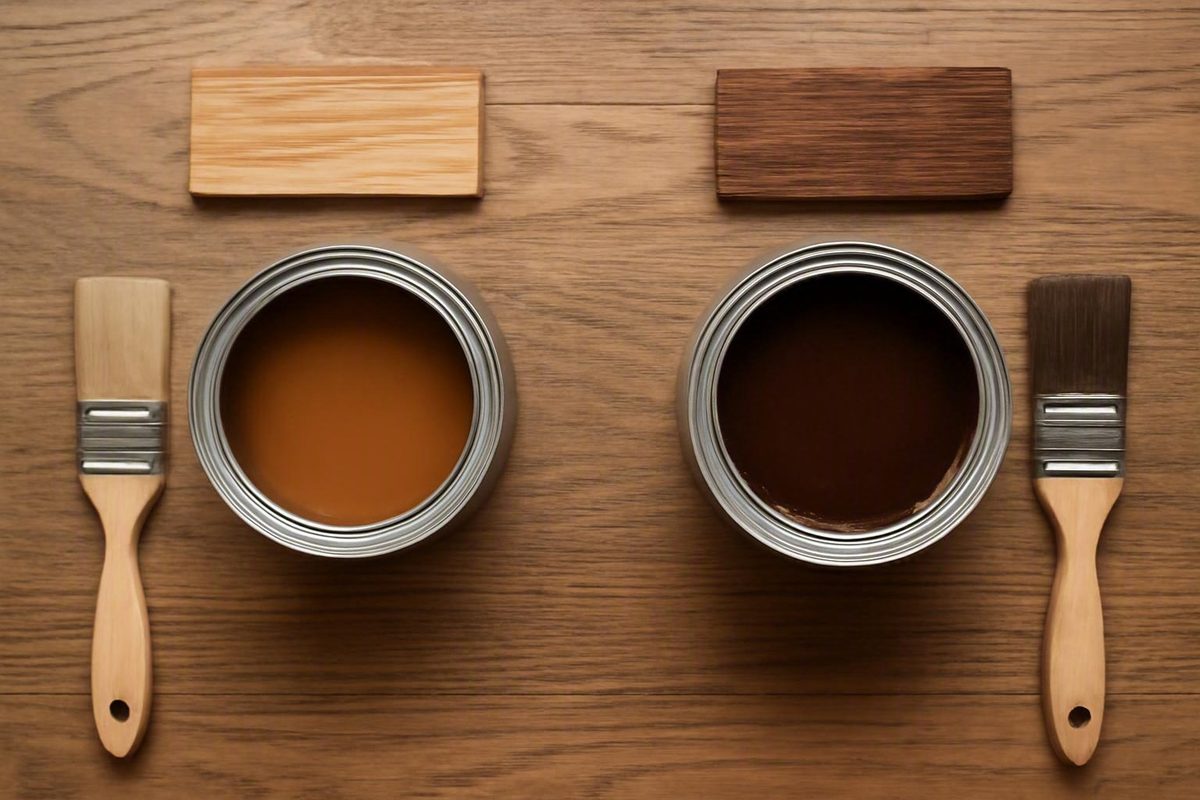
The practical verdict in the oil based stain vs water based debate is conditional. Choose a suitable water-based stain when fast turnaround, lower odor, or soap-and-water cleanup matters most. Consider an oil-based stain when you need more time to spread and blend the color or want a warmer, amber-toned appearance—and the workspace can meet the product’s ventilation and safety requirements.
Neither category is automatically better. The exact formulation, intended substrate, opacity, exterior rating, existing finish, preparation requirements, application conditions, compatible topcoats, and maintenance instructions are more useful than the carrier description alone.
Quick comparison: when each stain type makes sense
Water-based and oil-based stains have recognizable category-level tendencies, but the exact product label controls the job. Commercial comparisons commonly describe water-based products as faster-drying and easier to clean with soap and water, while oil-based products generally allow more blending time and often require mineral spirits for cleanup. They also associate oil-based stain with warmer or more amber-toned color, although the result depends on the formula and wood (U-C Coatings’ comparison of water- and oil-based stains).
| Factor | Water-based stain: typical tendency | Oil-based stain: typical tendency |
|---|---|---|
| Consumer product category | Uses water as the main liquid carrier | Uses an oil or resin-based system that commonly includes solvents |
| Drying tendency | Usually faster | Usually slower |
| Working time | Shorter interval for spreading, wiping, and blending | Longer interval for spreading and blending |
| Odor | Commonly lower, but not odor-free or harmless | Commonly stronger and more persistent |
| Cleanup | Soap and water for many products | Mineral spirits for many products |
| Possible appearance | May preserve a lighter-looking or less amber tone | Often described as warmer, richer, or more amber-toned |
| Grain raising | Water can swell wood fibers and raise the grain | Less associated with water-induced grain raising |
| Ventilation and precautions | Follow the exact label and safety data sheet even when odor is low | Follow the exact label and safety data sheet, especially where solvents and stronger fumes are present |
| Often practical when | Turnaround, lower odor, or easy cleanup is a priority | Blending time or a warm appearance is a priority |
| Possible application challenge | Fast setting may make broad, grooved, or detailed surfaces harder to keep even | Slow drying extends the time before recoating, handling, topcoating, or use |
| Outdoor suitability | Only when expressly approved for the substrate and exposure | Only when expressly approved for the substrate and exposure |
Treat the table as a shortlist, not a specification. A fast-drying water-based stain can be convenient on cabinet parts but demanding across a large tabletop. A slower oil-based stain may blend more easily on that tabletop, but it can delay later steps and introduce stronger odor and solvent cleanup.
Before buying either type, confirm the following on the exact product label or technical data:
- Interior, exterior, or dual-use approval
- Approved wood or substrate
- Transparent, semi-transparent, semi-solid, or solid appearance
- Recommended brush, pad, roller, spray, or wiping method
- Required surface preparation
- Application rate, number of coats, and coverage instructions
- Recoat and topcoat intervals
- Compatibility with sealers and protective topcoats
- Temperature, humidity, and substrate-condition limits
- Rain-ready, handling, traffic, and full-cure milestones where applicable
- Ventilation, protective equipment, ignition-control, cleanup, storage, and disposal requirements
What oil-based and water-based actually describe
A water-based stain uses water as its principal liquid carrier. In consumer labeling, oil-based stain broadly describes a system using natural or synthetic oils or oil-related resins to carry and bind the colorants; these products commonly also contain solvents. The label terms are useful categories, but they do not fully describe the liquid vehicle, binder, pigments, additives, or final coating behavior.
The category name does not, by itself, tell you:
- How transparent or opaque the stain will be
- Whether it primarily penetrates, forms a film, or combines those behaviors
- How much exterior protection it provides
- Whether it is suitable for a deck, cabinet, fence, or tabletop
- Whether it can be recoated without sanding or stripping
- Whether it is compatible with an existing finish or planned topcoat
- How long it will retain its appearance
- How often it will require maintenance
Transparent, semi-transparent, and more opaque products expose the wood differently even when they share the same broad chemistry.
Penetrating versus film-forming behavior is also a separate issue. The convenient rule that every oil-based stain penetrates while every water-based stain forms a surface film is too broad. Formulations vary, and some products marketed as waterborne oils or hybrids are specifically designed to carry oil components in a waterborne system. For example, WOCA describes its own water-based oil deck product as penetrating; that is a claim about a hybrid product, not proof that every conventional water-based stain behaves the same way (WOCA’s description of its water-based oil deck stain).
Evaluate a hybrid as its own formulation. The product’s stated use, resin or binder system where disclosed, opacity, exterior approval, preparation requirements, compatible topcoats, and renewal instructions are more informative than the front-label category alone.
Drying speed, working time, odor, and cleanup
Water-based stain generally dries faster than oil-based stain. That can shorten the time between project stages, but it also reduces the interval available to spread, wipe, and blend the color.
This tradeoff becomes important on broad or detailed surfaces. If one area begins setting before an adjacent area is blended into it, the boundary may remain visible. Recesses, carvings, beadboard grooves, corners, and detailed trim can hold excess stain while exposed areas dry. One DIY author reported that difficulty when applying a water-based stain to beadboard grooves, but the experience involved one personal project rather than controlled comparative testing (Astin’s Designs’ project account).
That does not make it automatically easier.
Do not reduce the schedule to one generic “drying time.” Product instructions may distinguish among:
- Dry to touch: The surface no longer feels wet under the stated conditions.
- Recoat time: Another coat of the same product may be applied.
- Handling time: The work can be moved or touched without expected damage.
- Topcoat time: A compatible sealer or protective finish may be applied.
- Rain-ready time: An exterior application can tolerate expected rain.
- Foot-traffic time: A walking surface can enter limited or normal use.
- Full cure: The coating has reached its specified final cure condition.
Published category-wide estimates vary substantially and may not identify which milestone they describe, so use the selected product’s current instructions rather than a universal timetable.
Schedule the work around the label’s permitted application conditions and allow for slower progress when conditions are less favorable.
Cleanup follows a broad category pattern. Many water-based stains allow soap-and-water cleanup, while many oil-based stains call for mineral spirits. Use only the cleaner named by the manufacturer; do not assume that water or mineral spirits is suitable for every tool, spill, or partly cured residue.
Water-based stains also commonly have less odor than oil-based stains. That may make them more practical for indoor furniture, cabinets, or trim, but lower odor does not establish that a product is harmless or suitable for an unventilated room. Use the label and safety data sheet—not smell alone—to decide whether the workspace is appropriate.
Appearance and application: color, blending, raised grain, and lap marks
Oil-based stains are often described as producing warm, rich color with amber undertones. Water-based stains may leave the wood looking lighter or less amber. These are useful tendencies when narrowing the options, not color guarantees.
The most reliable appearance test is a side-by-side sample on an offcut from the project. If no offcut is available, use an inconspicuous area that can be refinished if necessary. Prepare the sample exactly as you intend to prepare the project, including the same sanding sequence and any label-directed conditioner, pre-wetting, or pretreatment.
Compare the samples for:
- Overall color under the lighting where the piece will be used
- Ambering or warmth
- Grain contrast
- Absorption at end grain, joints, and repaired areas
- Blotching
- Raised fibers
- Ease of wiping and blending
- Lap marks or streaks
- Appearance after any planned compatible topcoat
Evaluate the samples only after they reach the label-specified evaluation or topcoat point.
Water can swell wood fibers and raise the grain, leaving the surface feeling fuzzy even when the original sanding appeared smooth. A retailer’s comparison identifies this as a potential water-based application issue, although its broader performance statements are commercial guidance rather than controlled testing (Outdoor Furniture Plus on water-based stain and raised grain).
Do not apply one universal remedy. Some systems may direct the user to pre-wet and sand the raised fibers; others specify a different preparation process. Follow the selected stain’s instructions and remove sanding dust before applying the stain.
Fast setting creates another tradeoff. It improves turnaround but can make lap marks, streaks, or uneven color harder to avoid if too large an area is coated at once. Working in manageable sections and maintaining a wet edge are useful general principles when they do not conflict with the product directions. Natural breaks such as boards, rails, stiles, panels, and corners can help define those sections.
Stir the stain as directed before and during use. Pigments can settle, causing the first portion of the container to produce a different color or intensity from the last.
Neither chemistry should be assumed to be more opaque, to penetrate more deeply, or to produce a more even finish in every case. Those outcomes depend on the complete formula, wood, preparation, application rate, and wiping technique.
Project selector: furniture, cabinets, trim, decks, and fences
The project should narrow the product category before chemistry breaks the tie.
Indoor furniture, cabinets, and trim
A label-approved water-based stain is often practical when quick turnaround, lower odor, or soap-and-water cleanup is important. Those benefits can be useful when finishing removable cabinet doors, shelves, trim sections, or smaller furniture components.
That does not make every water-based stain suitable for an occupied room. Confirm the ventilation and workspace requirements, protect adjacent materials, and let the work reach the applicable handling and cure milestones before installation or normal use.
Tabletops and other broad indoor surfaces
An oil-based stain can be a useful option when extended blending time and a warm appearance are priorities. The additional working time may make it easier to keep the color continuous across a broad tabletop, panel, or bench.
The tradeoff is a slower schedule, commonly stronger odor, mineral-spirit cleanup for many products, and greater attention to the product’s ventilation and ignition precautions. Choose it only when the workspace can meet those requirements.
Beadboard, carvings, and grooved trim
Detailed surfaces create two simultaneous problems: stain can collect in recesses while exposed sections begin drying. A fast-setting water-based product may therefore require very small working sections and a carefully planned application sequence.
Make a representative sample containing the same grooves or carved details. A flat offcut cannot show how stain will collect in recesses. If the sample is uneven, change the product or label-approved application method rather than assuming another coat will conceal the problem.
Decks, fences, siding, and outdoor furniture
For outdoor wood, start with an exterior-rated product approved for the exact substrate and exposure. An interior furniture stain does not become suitable for a deck because it shares the same broad chemistry as an exterior product.
Check whether the stain is approved for horizontal or vertical surfaces.
Do not select a chemistry solely because the wood is described as hardwood, softwood, porous, or nonporous. Species and absorption matter, but they do not override exterior approval, preparation, compatibility, climate, and exposure.
Decision matrix
| Project condition | Lean toward considering | Why—and what to verify |
|---|---|---|
| Indoor work on a limited schedule | Water-based | Faster drying tendency; verify ventilation, handling, and topcoat intervals |
| Lower odor is a priority | Water-based | Commonly lower odor; still follow all safety instructions |
| Easy tool cleanup matters | Water-based | Many use soap and water; confirm the label |
| Large tabletop or broad panel | Oil-based | Longer blending time may help; confirm ventilation and the total drying schedule |
| Warm or amber-toned appearance desired | Oil-based | Common visual tendency; test it on the actual wood |
| Grooved or highly detailed surface | Either, after testing | Sample the details and plan manageable working sections |
| Existing coating is present | Neither by default | Identify the system as far as possible and verify preparation and compatibility |
| Deck, fence, siding, or outdoor furniture | Exterior-rated product of either type | Match substrate, orientation, exposure, coat count, and maintenance instructions |
| Frequent sun, rain, or climate cycling | Product-specific comparison | Compare current labels and technical data rather than chemistry alone |
| Minimal future maintenance desired | Product-specific comparison | Reliable category-wide maintenance intervals are not established |
| Planned sealer or topcoat | Compatible complete system | Confirm compatibility and timing for every layer |
The available evidence does not support a definitive recommendation for floors or other heavy-traffic surfaces. Those projects require product-specific information about traffic performance, coating-system compatibility, and protective topcoats.
Outdoor durability: why chemistry alone cannot predict service life
The available comparisons do not establish a universal exterior-durability winner.
READY SEAL, an oil-stain manufacturer, argues that oil-based stain provides better penetration, exterior performance, and renewal characteristics. It also makes application and recoating claims for its own product. The comparison provides no independent test methods or controlled service-life data, so product-specific features such as no primer, no back-brushing, or direct recoating should not be generalized to other oil-based stains (READY SEAL’s oil-versus-water comparison).
A seller of a hybrid waterborne-oil product makes contrary claims for its own system, including penetration and exterior durability. That position has similar limits: it is commercial product information without a controlled, category-wide service-life comparison. It also concerns a hybrid formulation rather than every conventional water-based stain.
The disagreement partly results from comparing unlike products. A transparent penetrating deck stain, a more heavily pigmented coating, and a hybrid waterborne oil can behave differently even when two products share a broad water- or oil-based description.
Exterior performance can depend on:
- Approval for the substrate and horizontal or vertical orientation
- Transparency or opacity
- Resin, pigment, and additive package
- Product-specific UV or mildew-related claims
- Age and condition of the wood
- Existing coatings
- Cleaning, sanding, stripping, and other preparation
- Sun intensity and duration of exposure
- Rain, humidity, snow, and freeze-thaw conditions
- Foot traffic and furniture movement
- Application rate and coat count
- End-grain treatment
- Drying weather
- Inspection and maintenance practices
Accordingly, do not assume that water-based stain necessarily peels sooner, oil-based stain always penetrates more deeply, or either category always provides better water repellency or color retention. The commercial comparisons are too broad and internally conflicting to support those conclusions.
Compare current labels and technical data for intended substrate, exposure, coverage, coat count, preparation, rain readiness, and renewal procedure.
The available evidence also cannot supply dependable maintenance intervals or lifecycle-cost comparisons. A meaningful estimate would require product coverage, coat count, labor, tools and cleaners, renewal preparation, and a defensible maintenance interval for the local exposure.
Preparation, existing finishes, and compatibility
First determine whether the surface is bare wood or previously coated. If it is coated, identify the existing product as far as reasonably possible. There is no dependable universal visual test in the available comparison material for identifying an unknown finish, so do not guess solely from sheen, color, or water beading.
Use this bounded preparation checklist:
- Review the new stain’s instructions. Confirm the substrate, location, application method, environmental limits, and required preparation.
- Review the existing product’s instructions if it is known. Look for recoating, stripping, and compatibility restrictions.
- Clean the surface. Use a method approved for the selected system.
- Remove loose, failing, or incompatible material. Sand or strip where the instructions require it.
- Complete label-directed sanding. Sanding too finely or too coarsely can change absorption.
- Remove dust and residue. Pay particular attention to grain, joints, grooves, and corners.
- Let the substrate meet the stated conditions. For exterior wood, follow the product’s dryness or moisture requirements rather than applying a universal moisture threshold.
- Stir the stain as directed.
- Make a hidden test patch. Use the intended application rate and complete coating system.
- Evaluate before proceeding. Check color, drying, adhesion, and surface defects at the specified time.
Preparation guidance for a hybrid deck product similarly calls for cleaning and drying the wood, removing existing finishes where required, sanding, following the manufacturer’s instructions, and working in small sections. Those steps remain product-specific rather than a universal refinishing protocol.
Switching from an oil-based stain to a water-based stain—or the reverse—may be possible only when the old coating is adequately cured, the surface is prepared correctly, and the instructions for both products permit the combination. Carrier names alone cannot establish compatibility.
Check the entire system: stain, sealer, and protective topcoat. If the instructions conflict or do not address the combination, obtain product-specific guidance or choose components expressly designed to work together.
The hidden patch should reveal more than color. Look for persistent tackiness, incomplete drying, loss of adhesion, wrinkling, lifting, bleeding, unusual gloss, or other defects. A successful patch reduces uncertainty, but it does not override an explicit incompatibility in either product’s instructions.
For outdoor refinishing, avoid generic shortcuts. Claims that a named stain needs no primer, no back-brushing, or only cleaning before recoating describe that particular product, not all oil-based stains.
Ventilation, solvents, and oil-stain rag hazards
Many oil-based stains are described as producing stronger solvent fumes and requiring ventilation, while water-based stains are commonly described as lower-odor. These category tendencies do not replace the exact product label and safety data sheet, which should control ventilation, protective equipment, ignition precautions, cleanup, storage, and emergency measures.
Lower odor or lower stated volatile-organic-compound content does not prove that a water-based product is harmless, appropriate for an unventilated room, or free from product-specific precautions. Do not use smell as the safety test.
Because those sources are not substitutes for authoritative, product-specific fire guidance, this article does not prescribe a container, storage arrangement, or disposal method. Follow the exact stain label and safety data sheet and obtain current instructions from the relevant local fire or waste authority.
Apply the same product-specific approach to mineral spirits, leftover stain, cleanup liquid, applicators, and contaminated absorbent material. Do not assume that solvent waste belongs in a household drain or ordinary trash.
Do not select a respirator type, glove material, storage container, exposure limit, or disposal procedure from a general stain comparison. Those decisions require the current product documentation and applicable workplace, fire, or waste guidance.
This is general reference information rather than individualized safety advice, consistent with Mortar Desk’s role as a building-material reference site. If the product instructions are missing, unclear, or inconsistent, stop and obtain product-specific or local-authority guidance before continuing.
Frequently asked questions
Is oil-based stain better than water-based stain for outdoor wood?
Not universally. An oil-stain manufacturer claims better exterior penetration, weather resistance, and maintenance characteristics, while a seller of a hybrid waterborne-oil product makes contrary durability claims. Neither commercial position supplies a common test method or controlled, quantified service-life comparison.
For decks, fences, siding, and outdoor furniture, prioritize a product expressly approved for the substrate, horizontal or vertical orientation, and expected exposure. Compare opacity, preparation, coverage, coat count, rain readiness, and renewal instructions rather than using oil or water chemistry as a proxy for durability.
Can water-based stain go over oil-based stain, or vice versa?
Sometimes, but there is no reliable rule that one category can always go over the other. Compatibility depends on the existing coating, its cure and condition, surface preparation, the new stain, and any planned sealer or topcoat.
Review the instructions for every known product, clean and sand or strip as directed, and test the complete system in a hidden area. Do not proceed if the patch stays tacky, lifts the old coating, dries unevenly, or shows adhesion defects.
How long should stain dry before recoating or topcoating?
Use the exact product’s recoat and topcoat instructions. Water-based stains generally dry faster and oil-based stains generally dry more slowly, but category-wide numerical ranges are unreliable.
Do not confuse dry-to-touch with readiness for recoating, topcoating, handling, rain, traffic, or normal use. Temperature, humidity, airflow, wood condition, absorption, and application thickness can change the actual schedule.
Does water-based stain raise the wood grain?
It can. Water may swell wood fibers and leave the surface feeling rougher. The extent depends on the wood, preparation, and product.
Follow the manufacturer’s instructions for any pre-wetting or sanding process. If sanding is directed, remove the dust before staining. Test the process on project wood because flat grain, end grain, grooves, and carved details may absorb stain differently.
Why can oily stain rags catch fire?
Commercial stain comparisons warn that rags contaminated with oil stain can self-heat and ignite, particularly when left crumpled or piled. General comparison pages do not provide enough authority for a detailed storage or disposal protocol.
Do not leave oil-stain rags crumpled or piled. Follow the exact product label and safety data sheet, and obtain current handling and disposal instructions from the relevant local fire or waste authority.
Choose the complete stain system rather than relying on the words oil-based or water-based. Water-based stain is often practical for speed, lower odor, and easier cleanup. Oil-based stain may be preferable when longer blending time or a warmer appearance matters. In either case, confirm substrate approval, exterior rating, preparation, compatibility, drying milestones, ventilation, and disposal requirements—then test the actual system on the actual wood.