 MortarDesk
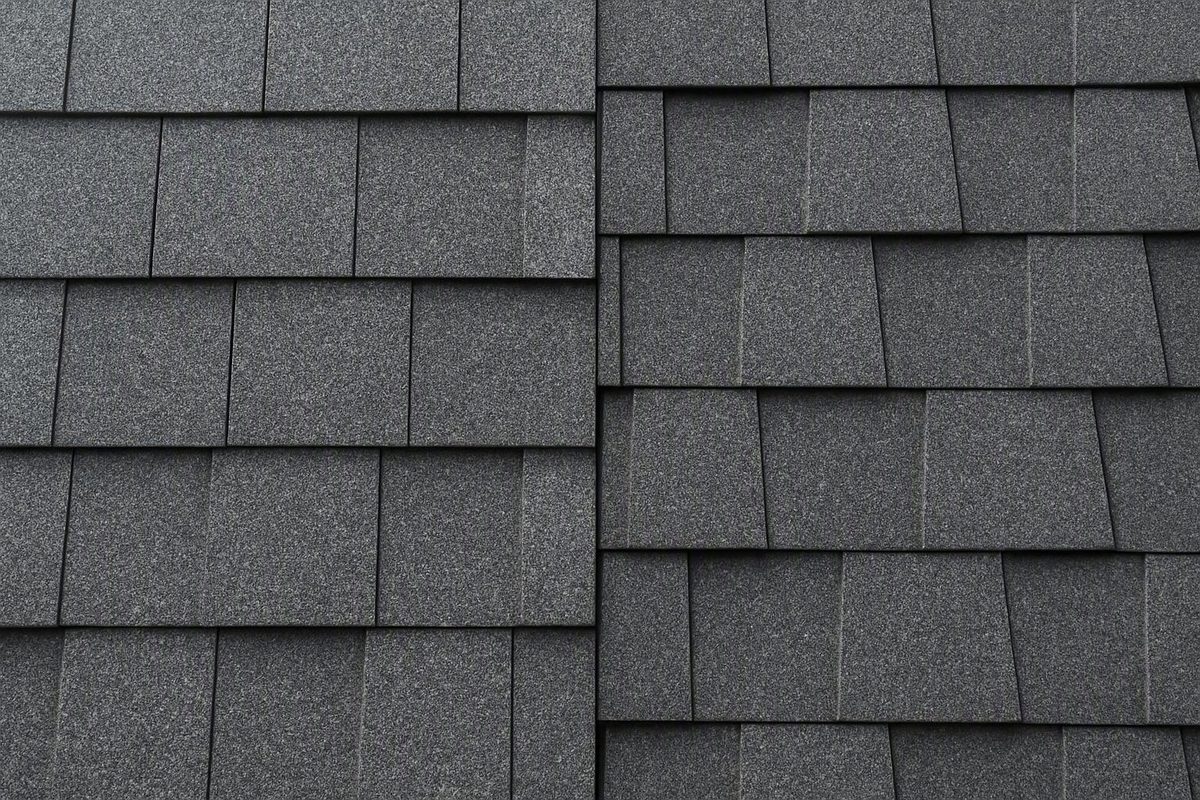
The short answer: how much more do architectural shingles cost?
Three-tab shingles are consistently the lower-upfront-cost option in the available evidence. The clearest material-only planning benchmark lists:
- 3-tab field shingles: $90–$120 per roofing square
- Standard architectural field shingles: $120–$180 per roofing square
Comparing corresponding endpoints produces an architectural-shingle premium of $30–$60 per square:
- Low-end comparison: $120 − $90 = $30
- High-end comparison: $180 − $120 = $60
The same calculator separately characterizes the typical material premium as approximately 30%–50%. However, its published ranges do not support treating $180 minus $90 as a like-for-like $90 premium; that calculation compares the highest architectural estimate with the lowest 3-tab estimate. The more transparent corresponding-endpoint benchmark is therefore $30–$60 per square. These are field-shingle planning prices, excluding accessories, labor, tear-off, disposal, permits and repairs, and the publisher does not disclose a regional pricing sample or independent market methodology. See the June 2026 RoofPitch calculator and material guide.
Installed comparisons are less consistent. Source-reported corresponding-endpoint differences run from approximately $100 to $400 more per installed square. The $100 floor comes from a 2025 Cincinnati contractor comparison, while the $400 ceiling comes from a contractor’s broad $300–$500 versus $500–$900 installed ranges. This is an editor-synthesized sensitivity range, not a national average or a prediction for a particular roof. The scopes, markets and pricing methods are not standardized.
Applied to a nominal 20-square roof, that installed sensitivity range produces an illustrative difference of approximately $2,000–$8,000:
20 waste-adjusted squares × $100–$400 per square = $2,000–$8,000
The lower end is supported by the corresponding low endpoints in a 2025 Greater Cincinnati contractor comparison; the upper end comes from the corresponding high endpoints in Home Genius Exteriors’ broad installed ranges. Actual roof quantity, product tier, location and scope determine whether either endpoint resembles a local bid.
| Pricing basis | 3-tab estimate | Architectural estimate | Implied difference at corresponding endpoints | Year or context | What is excluded or uncertain |
|---|---|---|---|---|---|
| Field shingles only | $90–$120/square | $120–$180/square | $30–$60/square | June 2026 planning estimate | Accessories, labor, tear-off, disposal, permits and repairs |
| Installed comparison | $350–$500/square | $450–$650/square | $100–$150/square | 2025, Greater Cincinnati | Local contractor estimate; scope is not standardized nationally |
| Installed comparison | $275–$425/square | $400–$650/square | $125–$225/square | October 2025 national and regional estimates | Waste, complexity and project components may not be normalized |
| Installed comparison | $300–$550/square | $450–$850/square | $150–$300/square | 2026, 12-state publisher estimate | Quote sample and weighting are undisclosed |
| Installed comparison | $300–$500/square | $500–$900/square | $200–$400/square | Undated national contractor estimate | Location, tear-off, complexity and named products are unspecified |
The October 2025 publisher reports installed prices of $275–$425 per square for 3-tab and $400–$650 for architectural shingles. It does not show direct calculations from the datasets it names, so the figures are best treated as commercial planning estimates rather than verified national prices. See its architectural-versus-3-tab pricing comparison.
Most available pricing sources are roofing contractors, exterior-service companies or contractor lead-generation businesses. They have a commercial interest in roof-replacement decisions, and most do not disclose quote samples, product mixes, collection methods or weighting. Their figures can help construct low, middle and high scenarios, but they do not establish one authoritative 2026 market price.
Start with roofing squares, not home floor area
A roofing square is 100 square feet of roof surface.
A 2,000-square-foot house does not necessarily have a 20-square roof. The first figure may describe interior floor area or building footprint; the roofing quantity must describe the sloped surfaces receiving shingles. They are not interchangeable.
The required quantity can increase because of:
- Roof pitch
- Eave and rake overhangs
- Attached garages, porches and additions
- Dormers and intersecting roof sections
- Hips, ridges and valleys
- Starter courses and hip or ridge coverage
- Offcuts around penetrations
- Waste created by roof geometry and installation patterns
A two-story house can have substantially less roof footprint than total living area. A single-story house with broad overhangs and attached sections can have more roof surface than its advertised floor area suggests.
Use this planning sequence:
- Determine the sloped roof area. Use measured roof planes or a professional takeoff rather than the home’s floor area.
- Divide the net roof area by 100. A measured 2,000 square feet of roof surface equals 20 net roofing squares.
- Apply a waste allowance. Base it on geometry, valleys, hips, penetrations and the selected product.
- Convert adjusted squares to bundles. Use the manufacturer’s stated coverage per bundle.
- Round up to full bundles. The order quantity may therefore exceed the mathematical number of squares.
As examples—not universal specifications—the June 2026 calculator uses 10% waste for a simple roof, 15% for a standard roof and 20%–25% for a complex or very complex roof. It also says many standard 3-tab and architectural products use about three bundles per square, while some architectural products use four. Coverage must be verified for the named product in the bid because bundle count directly affects price comparisons.
This matters when shopping by bundle price. A $40 bundle covering one-third of a square is not equivalent to a $40 bundle covering one-quarter of a square. Convert each offer to cost per square:
Bundle price × bundles required per square = field-shingle cost per square
Before ordering, verify these inputs against current manufacturer documentation and the contractor’s takeoff:
- Measured, pitch-adjusted area
- Waste percentage and its geometric basis
- Coverage per bundle
- Final full-bundle quantity
Ask the supplier about its return policy before assuming unused material can be returned. Also ask the contractor whether retaining compatible material would be useful for future repairs.
Material price and installed price are different comparisons
“Shingles cost $150 per square” does not mean “the completed roof costs $150 per square.” The number may refer only to field shingles—the main shingles covering the roof planes.
A complete roofing system may also include:
- Underlayment
- Ice-and-water membrane
- Starter strips or starter shingles
- Ridge and hip caps
- Drip edge
- Step, counter, valley and penetration flashing
- Nails and other fasteners
- Intake and exhaust ventilation components
- Approved sealants
- Delivery and rooftop loading
- Installation labor
- Removal of existing roof layers
- Containers, hauling and disposal
- Permits and inspections
- Damaged-sheathing replacement
- Included fascia, soffit or trim repairs
- Property protection and cleanup
The RoofPitch planning guide estimates that accessory materials can add approximately 15%–25% above field-shingle cost before labor and other installed expenses. Its broader installed asphalt-roofing range does not separate 3-tab from architectural installations, so it cannot establish the installed upgrade price by itself.
A reported 30%–50% field-shingle premium should not be applied mechanically to the entire contract. Tear-off, permits, much of the flashing work and damaged-decking replacement may remain the same under either shingle option.
For example, if field shingles are only one component of a $15,000 contract, increasing that component by 40% does not increase the complete contract by 40%. Conversely, the substitution price can exceed the field-shingle difference if accessories, handling or installation procedures change for the selected product. Those changes must be identified in the bids rather than assumed.
Scope differences help explain published installed prices. A 2026 guide covering 12 states lists $3.00–$5.50 per square foot for installed 3-tab shingles and $4.50–$8.50 for architectural shingles, stating that materials, labor, tear-off and disposal are included. Its corresponding-endpoint difference is $1.50–$3.00 per square foot, or $150–$300 per roofing square. The publisher does not disclose its quote sample, collection method or weighting, so these remain commercially published planning figures. See the RoofVista scope and price breakdown.
Use a strict labeling rule when comparing figures:
- Material-only: Field shingles, with any included accessories identified
- Installed: Materials and labor, with tear-off and disposal status stated
- Whole-project: Complete quoted scope, including allowances and exclusions
Every number should also carry its date and region when known. A June 2026 material estimate, a 2025 Cincinnati installed rate and a 2026 New Jersey contractor estimate are different pieces of information. Combining them without labels creates false precision.
Worked examples for 15-, 20-, and 25-square roofs
The following table uses waste-adjusted order quantities, not home floor area. The field-shingle column applies the corresponding-endpoint benchmark of $30–$60 per square derived from the June 2026 material ranges. The installed column applies the broader $100–$400 per-square sensitivity range derived from nonstandardized contractor and estimate-publisher comparisons.
| Waste-adjusted roof quantity | Field-shingle premium at $30–$60/square | Illustrative installed premium at $100–$400/square |
|---|---|---|
| 15 squares | $450–$900 | $1,500–$6,000 |
| 20 squares | $600–$1,200 | $2,000–$8,000 |
| 25 squares | $750–$1,500 | $2,500–$10,000 |
The field-shingle results exclude accessories, labor, tear-off, disposal, permits and repairs. The installed results are sensitivity scenarios, not quotes or expected national prices.
A hypothetical calculation works the same way:
22 waste-adjusted squares × $150 installed premium per square = $3,300
That does not establish $150 as the correct local premium. It means that if matched bids show a $150-per-square substitution price, the upgrade on a 22-square order would add $3,300.
Waste alone also changes the field-shingle result. For a roof measuring 20 net squares before waste:
| Waste allowance | Order quantity before bundle rounding | Field-shingle premium at $30–$60/square |
|---|---|---|
| 10% | 22 squares | $660–$1,320 |
| 15% | 23 squares | $690–$1,380 |
| 20% | 24 squares | $720–$1,440 |
The square quantities are whole-number results in this example. Actual bundle rounding may produce a slightly different order. The contractor should explain the waste factor using roof geometry and product coverage rather than select a percentage solely because it is customary.
Published whole-roof examples require particular caution. Some contractor pages give totals for a “2,000-square-foot roof” that do not reconcile with their own unit rates. Others appear to treat 2,000 square feet as the final roof quantity without showing waste. Those examples should not be transferred to a budget merely because the house has 2,000 square feet of living space.
A more transparent planning method is:
- Confirm net sloped roof area.
- Confirm waste-adjusted squares.
- Identify whether each rate is material-only, installed or whole-project.
- Compare named products from equivalent tiers.
- Multiply the local substitution price by the actual order quantity.
- Add or remove only the scope items that genuinely change.
Why two contractors can quote very different premiums
A difference of several thousand dollars does not necessarily indicate an arithmetic mistake. The bids may describe different roof systems, allowances or project risks.
Major variables include:
- Region and labor market: Crew availability, labor costs, business overhead and disposal charges vary.
- Manufacturer and product line: Entry-level architectural shingles should not be priced as designer products.
- Roof pitch: Steeper roofs may change access, staging and installation requirements.
- Number of stories: Height affects loading and site logistics.
- Site access: Landscaping, driveways and container placement can affect handling.
- Roof geometry: Hips, valleys, dormers and penetrations increase cutting and waste.
- Existing layers: Additional tear-off changes labor and disposal quantities.
- Decking condition: Sheathing replacement may be quoted as a unit-price allowance.
- Flashing and ventilation: One bid may replace components that another reuses.
- Permits and local requirements: Fees and required details differ by jurisdiction.
- Availability: Stock status, colors and product lines vary among local suppliers.
Product tier is especially important. “Architectural” is not a single price level. Standard laminated, designer, luxury and impact-resistant products should not be grouped together. Comparing a basic 3-tab shingle with a designer or impact-resistant architectural line exaggerates the premium attributable to construction category alone.
Regional estimates demonstrate variation without establishing national prices. An October 2025 comparison lists 3-tab installed rates of $4.00–$5.00 per square foot in the Northeast, $3.00–$4.25 in the Midwest, $2.75–$4.00 in the South and $3.50–$4.75 in the West. Its architectural estimates are $5.50–$7.25, $4.50–$6.00, $4.00–$5.75 and $5.00–$6.50, respectively. The publisher says region, design, pitch and labor affect pricing but does not provide direct calculations from the datasets it names.
Nominally similar 2,000-square-foot examples also vary because sources do not consistently normalize measured roof area, waste, complexity or scope. Home Genius Exteriors estimates a $4,000–$8,000 installed difference, while a New Hampshire contractor’s corresponding whole-roof endpoints imply $3,000–$7,000. The latter also says brand, contractor, location, complexity and removal needs affect cost; see the Dover Roofing comparison.
Local availability can further complicate the apparent cheaper choice. Ask each bidder:
- Is the quoted 3-tab product currently stocked by local distributors?
- Is it available in an acceptable color?
- What does the supplier say about future matching material?
- Does the installer regularly install the product?
- Which warranty terms apply to this installer and system?
- Is the product acceptable under the project’s local requirements?
Obtain at least two or three bids based on the same measurement and written scope. A $4,000 difference between unmatched bids is not a meaningful architectural-shingle premium if one includes flashing replacement, ventilation work and a decking allowance while the other does not.
What the higher price buys—and what it does not guarantee
Both categories are described in the supplied sources as asphalt shingles built around fiberglass mats. Three-tab shingles are generally single-layer, flat products with cutouts forming a repeating tab pattern. Architectural shingles use laminated or bonded layers to create a thicker, dimensional profile. Roofr describes the shared asphalt-and-fiberglass construction and the single-layer versus multilayer distinction in its 3-tab and architectural shingle overview.
The construction difference is associated with several broad patterns:
- Architectural shingles are generally thicker and heavier.
- Their laminated profile creates shadow lines and a less uniform appearance.
- Published architectural ranges commonly report longer service lives.
- Published comparisons commonly report higher wind ratings.
These are category-level tendencies, not specifications for every product. Standard architectural shingles must also be distinguished from luxury and impact-resistant products.
For preliminary planning, the supplied sources commonly report approximately 15–25 years for 3-tab shingles and 25–30 or more years for standard architectural shingles. These are broad reported ranges, not guaranteed outcomes. Installation, exposure, ventilation, maintenance, climate and the named product affect service life. Turtle Roofing, for example, reports 15–20 years for 3-tab and 25–30 years or longer for architectural products while acknowledging the importance of installation quality; see its construction and lifespan comparison.
Higher reported wind ratings are also common in commercial comparisons, but the category name does not establish the rating of a product in a bid.
For each proposed product, obtain the current technical sheet and verify:
- Installed weight per square
- Bundles and coverage per square
- Approved roof slopes and deck types
- Fastener type, number and placement
- High-wind installation requirements
- Approved starter and ridge accessories
- Underlayment and membrane requirements
- Temperature or sealing limitations
- Warranty eligibility requirements
Warranty duration is not expected service life. Review the current manufacturer document rather than relying on a bid’s headline term.
The architectural premium does not by itself establish energy savings, fewer repairs, a resale gain, an insurance discount or better performance in every climate. Each outcome would require separate product-, property- and policy-specific evidence.
Does the longer reported lifespan offset the upfront premium?
Architectural shingles may provide better lifecycle value if their additional service life is realized and matters during the owner’s holding period. The available evidence does not establish a universal payback period.
A simple “price divided by claimed lifespan” calculation omits:
- Actual installation quality
- Climate and site exposure
- Maintenance and repair history
- Short, middle and long service-life scenarios
- Inflation in future labor and material costs
- Financing or opportunity cost
- Future tear-off and disposal
- Changes to code or installation requirements
- Remaining roof life when the property is sold
Use an input-based framework rather than beginning with a predetermined winner:
- Current installed premium: What do matched local bids charge to substitute a standard architectural product?
- Expected ownership period: How long is the property likely to be retained?
- Service-life scenarios: What short, middle and long outcomes are reasonable for each named product?
- Replacement timing: Could either roof require replacement during ownership?
- Future replacement cost: What assumption will be used, and how will inflation be handled?
- Repair allowance: Are repair assumptions supported or merely speculative?
- Residual roof life: How much useful life might remain when the property is sold?
Contractor-published long-horizon examples show how assumptions drive the result. Home Genius Exteriors compares a hypothetical 30-year period in which an $8,000 3-tab roof is replaced once while a $14,000 architectural roof is not. The resulting $16,000 versus $14,000 comparison assumes specific service lives and an unchanged replacement cost. It is a commercial illustration, not a documented payback result.
A Central Indiana contractor presents a 40-year scenario totaling $16,000 for two 3-tab installations and $11,000 for one architectural installation. That example likewise depends on assumed prices and service lives while omitting inflation, financing, repairs and residual value. The source also contains inconsistent architectural price ranges, so its 40-year contractor scenario should be treated only as an illustration.
Ask three ownership-horizon questions:
-
Is the owner likely to sell before either roof requires replacement? If so, the owner may not realize the full potential additional life of the architectural roof.
-
Could a 3-tab replacement occur during ownership? If yes, compare the current upgrade premium with a range of possible future replacement costs and timing.
-
Is the property likely to be held through a complete second roofing cycle? Long ownership makes replacement timing more important while also increasing uncertainty about future costs.
Remaining roof life at sale can also be included as a scenario input, but the available evidence does not support assigning an automatic resale premium.
There is no defensible rule that architectural shingles pay for themselves after five, ten or any other fixed number of years. The result depends on installed price, realized service life, workmanship, local conditions and ownership horizon.
When each shingle type can be financially reasonable
Three-tab shingles are not automatically a poor decision. They are a legitimate lower-cost category that may fit a project where limiting current capital expenditure matters more than seeking a potentially longer service life.
They may be reasonable for:
- A project with a strict capital limit
- A detached shed, garage or other outbuilding
- A lower-stakes or temporary-use structure
- A property expected to be sold relatively soon
- A rental where the owner prioritizes minimum initial cost
- A project where local availability and compliance are confirmed
Standard architectural shingles may deserve closer consideration for:
- A primary residence
- A longer expected ownership period
- A preference for a dimensional appearance
- A comparison emphasizing longer reported service-life ranges
- A site where the exact product offers relevant tested performance
- A project where the local substitution price is modest relative to the full contract
| Project situation | Conditional direction | What to verify first |
|---|---|---|
| Primary residence | Compare standard architectural products closely, especially for longer ownership | Installed premium, named product, workmanship and holding period |
| Short-term ownership | Three-tab may preserve capital; additional architectural life may not be fully realized | Expected sale timing and required roof condition |
| Rental property | Three-tab may suit a minimum-cost strategy; architectural may suit a long-hold strategy | Ownership plan, maintenance approach, lender and insurer requirements |
| Detached shed or garage | Three-tab can be financially reasonable | Code, slope, exposure and product availability |
| Severe-weather location | Compare exact tested products rather than category labels | Local requirements, fastening schedule and insurer treatment |
| Tightly capped budget | Three-tab may keep the project feasible | Do not remove essential system components merely to fund another upgrade |
Local code, wind-zone requirements, lender conditions, homeowners-association rules, product availability and insurer underwriting must be checked rather than assumed. A December 2025 Florida-oriented contractor article advises including materials, labor, warranties and code compliance in the comparison, but its recommendations should not be generalized to other jurisdictions; see the regional product comparison.
Designer, luxury and impact-resistant shingles belong in separate comparisons. Their pricing and possible policy treatment may differ from standard architectural products. A quote for an impact-resistant line should not define the ordinary premium for a basic laminated shingle.
A financially suitable choice is one that meets the project’s required installation conditions while fitting its capital limit, ownership plan and risk tolerance. That is a planning framework, not an individualized recommendation.
How to compare roofing bids on equal terms
Require contractors to bid from the same baseline. An apples-to-apples comparison should identify:
- Measured net roof area
- Pitch-adjusted area where applicable
- Waste factor
- Final order squares or bundle count
- Manufacturer and exact product line
- Product tier
- Color
- Bundle coverage
- Number of existing layers
- Tear-off and disposal scope
- Underlayment type
- Ice-and-water membrane locations
- Drip edge
- Starter system
- Ridge and hip cap product
- Flashing replacement or reuse
- Ventilation work
- Fastener specification
- Delivery and site protection
- Permit responsibility and fees
- Decking-repair unit rate or allowance
- Cleanup
- Manufacturer warranty
- Contractor workmanship warranty
- Explicit exclusions
Ask each contractor to show either unit rates or a clear substitution price for changing from the quoted 3-tab product to a standard architectural product from the same manufacturer or an equivalent tier. One whole-project total makes it difficult to determine whether a $4,000 difference comes from field shingles, flashing, ventilation or an unrelated allowance.
Ask:
- How much of the upgrade is field-shingle material?
- Do accessory products or quantities change?
- Does installation labor change?
- Are tear-off and disposal identical under both options?
- Are warranty coverage levels equivalent, not merely the headline terms?
- Does either product require different installation procedures?
- Are both products available in the selected color?
- Does the quote include taxes, delivery, permits and cleanup?
- How is damaged decking priced if discovered?
- Which optional items can be declined without changing the required roof system?
Keep optional upgrades separate. Designer profiles, enhanced warranty packages, impact resistance, ventilation changes and extensive flashing work should appear as distinct line items. Otherwise, the apparent architectural premium may include work unrelated to the shingle category.
Request the manufacturer’s current warranty document and a separate written workmanship warranty from the installer. Confirm code and permit requirements with the authority having jurisdiction. Ask the insurer directly about the exact manufacturer, product line, classification, documentation and installation requirements; do not infer insurance treatment from the word “architectural” or from a contractor’s general statement.
The useful answer to the 3-tab versus architectural shingles cost difference is a calculation rather than one percentage. Measure the roof in waste-adjusted squares, compare equivalent product tiers, separate field shingles from the complete installation and multiply the local substitution price by the actual order quantity.
The clearest supplied material ranges support approximately $30–$60 more per square at corresponding endpoints for field shingles. Commercially published installed comparisons support a much broader $100–$400-per-square sensitivity range, but only matched local bids can establish the project price. Three-tab can be a rational lower-cost choice in defined circumstances; architectural shingles can be a worthwhile upgrade when their potential additional service life, tested product characteristics and appearance align with workmanship, local conditions and the expected ownership period.
Mortar Desk publishes independent general-reference information about building materials. It is not a contractor and does not provide engineering advice or individualized roofing recommendations. Specifications change, and codes and inspection requirements are local; more about that role appears on the About Mortar Desk page.
Frequently asked questions
How much more do architectural shingles cost per roofing square?
For field shingles alone, the June 2026 planning ranges of $90–$120 per square for 3-tab and $120–$180 for standard architectural shingles produce a $30–$60 difference when corresponding endpoints are compared.
The source separately describes a typical 30%–50% material premium, but that percentage should not be applied automatically to the complete contract. Installed contractor comparisons span approximately $100–$400 more per square at corresponding endpoints, depending on source, region and scope. Ask local contractors for the substitution price between named, equivalent-tier products.
How much more might architectural shingles cost on a 2,000-square-foot roof?
If 2,000 square feet is the actual waste-adjusted roof quantity, it equals 20 squares. At the $30–$60 field-shingle benchmark, the upgrade would add approximately:
20 squares × $30–$60 = $600–$1,200 for field shingles alone
At the broader installed sensitivity range:
20 squares × $100–$400 = $2,000–$8,000
Do not assume a 2,000-square-foot house has a 2,000-square-foot roof. Pitch, overhangs, attached sections and waste can increase the order, while a multistory layout may reduce roof footprint relative to total living area.
Does a roofing quote usually include tear-off, underlayment, flashing, and disposal?
Not necessarily. “Shingle price,” “installed price” and “whole-project price” can describe different scopes. Even a quote labeled installed may leave decking replacement, permits or some flashing work as allowances or exclusions.
Require the proposal to state whether it includes:
- Tear-off and the number of existing layers
- Disposal and container charges
- Underlayment and membranes
- New or reused flashing
- Starter and ridge products
- Ventilation work
- Permits
- Decking replacement
- Delivery, cleanup and taxes
Never infer scope from the total alone.
Are architectural shingles always cheaper over the long term?
No. They may provide better lifecycle value if they achieve additional service life and the owner retains the property long enough for that difference to matter. They are not guaranteed to be cheaper.
The result depends on the current installed premium, realized service lives, workmanship, climate, repairs, inflation, future replacement costs, financing and remaining roof life at sale. Contractor examples in which one architectural roof outlasts two 3-tab installations are hypothetical, assumption-driven scenarios rather than universal payback evidence.
Can architectural shingles qualify for a homeowners-insurance discount?
The architectural label alone does not establish eligibility for a discount or any other policy treatment. The supplied evidence does not support a general claim that architectural shingles qualify.
Ask the insurer directly about the exact manufacturer, product line, impact-resistance classification, required documentation, inspection conditions and effect—if any—on premiums, deductibles or coverage. Obtain the answer in a form that can be checked against the final installed product rather than relying on a contractor’s general description.