 MortarDesk
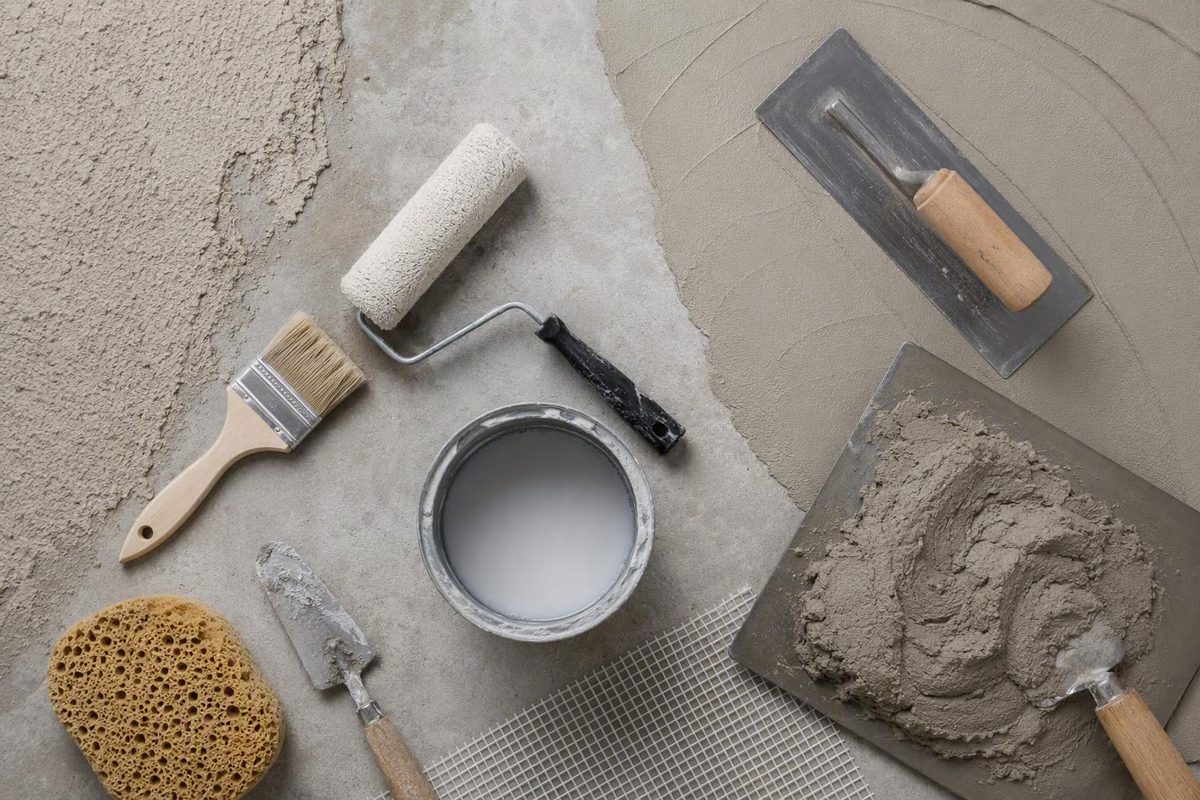
A bonding agent for stucco is intended to improve adhesion between an existing substrate and newly placed cementitious material. The term can describe products with different chemistries, approved surfaces, application methods, moisture requirements, and placement windows.
The right choice begins with the wall, not the brand. First determine whether the existing surface is sound, identify paint or other coatings, and confirm that the selected stucco system permits direct bonding. Then decide whether the work calls for a surface-applied bonder, a mix-in admixture, mechanical profiling, a scratch coat, or a mechanically attached stucco assembly.
Only after those decisions should you compare dilution, coverage, temperature limits, packaging, storage, and application methods.
Do You Actually Need a Bonding Agent?
A liquid bonder is not automatically necessary for every stucco patch, skim coat, or overlay. The connection between old and new cementitious materials can involve three distinct mechanisms:
- Chemical adhesion: A compatible bonding product helps create adhesion across the interface.
- Suction: A porous substrate absorbs water and fine cement paste from fresh mortar.
- Mechanical keying: Mortar engages texture, a profiled surface, a scratch coat, lath, or physical recesses and projections.
A stucco system may rely on one or more of these mechanisms. Rough, absorptive masonry behaves differently from smooth cast concrete or painted stucco. Trade guidance discusses chemical adhesion, suction, and mechanical keying as separate contributors, but the applicable product and stucco-system instructions must determine the actual method used on a project.
The decision depends on:
- Whether the substrate is sound or deteriorated
- Surface porosity and texture
- Paint, sealers, curing compounds, or release residue
- The selected stucco, base-coat, or repair formulation
- Interior or exterior exposure
- Moisture conditions
- Required coat thickness
- Whether the complete system permits direct bonding
- Whether lath or another form of mechanical attachment is required
Smooth, low-suction concrete may require profiling, a compatible scratch coat, a chemical bonder, or a specified combination. Rough, porous masonry may already offer suction and mechanical grip, but that does not automatically establish that direct application is approved. Painted stucco introduces another dependency: even if a bonder adheres to the paint, the overlay still depends on the paint remaining attached to the old stucco.
A separate liquid bonder can also be inappropriate when the patching or stucco material already contains polymers. In its concrete-repair guidance, Sakrete identifies unmodified products that accept its bonder and heavily polymer-modified products for which an added liquid may impair adhesion or act as a bond breaker. That guidance concerns named concrete-repair products rather than every stucco assembly, but it demonstrates why compatibility must be verified rather than assumed. See Sakrete’s product-specific bonding guidance.
A bonding liquid cannot:
- Stabilize loose, sandy, chalking, hollow, or detached stucco
-
Restore adhesion beneath unstable paint
-
Correct an active leak or failed flashing
-
Make an unapproved direct-bond assembly acceptable
Stop before selecting a product if large areas are hollow or detached, the wall is moving, water is entering the assembly, or the surface cannot be reduced to sound material. Those conditions require a complete system specification or assessment by an appropriately qualified local professional.
Choose by Substrate Before Choosing by Brand
“Stucco bonder” is not a universal substrate approval. Classify the actual receiving surface before comparing products.
| Substrate | Initial inspection | Likely preparation need | Bonding options to verify | Reasons not to proceed |
|---|---|---|---|---|
| Sound old cement stucco | Check for loose, hollow, sandy, cracked, coated, or water-damaged areas | Remove failed material and bond-breaking contamination; prepare edges or profile the surface as required | Approved surface bonder, approved admixture, scratch-coat method, or direct application permitted by the stucco system | Extensive delamination, leakage, movement, or no written acceptance of direct bonding |
| Smooth bare concrete | Look for laitance, polishing, weak surface paste, curing compounds, form-release residue, cracks, and moisture | Abrade or profile to expose sound concrete; remove residue and dust | Compatible bonder, keyed scratch coat, profiled direct bond, or a specified combination | Unsound concrete, contamination that cannot be removed, or a system requiring mechanical attachment |
| Concrete block or porous masonry | Check units, joints, repairs, dust, efflorescence, absorption, treatments, and movement | Clean and repair; condition suction only as directed by the selected system | Direct application, scratch coat, compatible bonder, or another system-specific treatment | Weak units or joints, unstable repairs, incompatible coatings, or excessive movement |
| Old plaster | Determine whether it is interior gypsum or lime plaster, exterior cement plaster, or an unknown multilayer assembly | Remove weak layers and identify the material and exposure | A product expressly accepted for that plaster type and service environment | Friable or unidentified plaster, exterior exposure with an interior-only product, or no documented compatibility |
| Painted or sealed cementitious surface | Check adhesion, chalking, peeling, blistering, coating type, moisture, and the stucco below | Remove failed coating and clean as directed | Direct bonding only to sound coatings expressly accepted by the selected products | Unknown or unstable coating, leakage, soft coating, or required mechanical attachment |
| Polished, nonporous, or unlike surface | Identify each material and whether it can carry the proposed overlay | Cleaning, abrasion, removal, or a purpose-made textured layer may be needed | A system formulated and approved for the exact substrate and overlay | No documented compatibility or inadequate support for the overlay |
Sound old stucco
Existing stucco must be more than visually intact. Remove loose edges and material that is hollow, weak, sandy, or detached. Dust, salts, dirt, grease, biological residue, and other weak surface material must not remain between the old wall and the new coat.
Verify compatibility in both directions. The bonding-product manufacturer must accept the receiving surface and intended use, while the stucco manufacturer must permit that bonding product or additive.
Smooth bare concrete
Smooth concrete may provide little suction or texture. Laitance—a weak layer of fine material at the concrete surface—and form-release residue can prevent a bonding film or mortar from attaching to sound concrete.
Mechanical abrasion or another approved profiling method can expose sound material and create texture. Trade guidance often combines mechanical keying with a modified scratch coat on low-suction concrete, while warning that release residue and other contamination may undermine paint-on products. These are field recommendations, not universal preparation specifications; the selected stucco system must define the required method.
Concrete block and porous masonry
Concrete block and some masonry surfaces provide both texture and suction. That does not mean every wall can receive stucco directly, nor does it mean a bonder is always inappropriate.
A film that behaves like a sealer may change normal absorption. Conversely, excessive or uneven suction may remove water from fresh material too quickly. Follow the selected stucco specification for cleaning, moisture conditioning, primers, and scratch coats instead of assuming that more adhesive is necessarily better.
Old plaster
Distinguish interior plaster from exterior cement stucco. A product intended only for interior plaster or dry service is not automatically suitable for an exterior wall exposed to rain or persistent moisture.
If the existing material cannot be identified, direct bonding is difficult to specify responsibly. Removal to a known, sound substrate may be necessary rather than attempting to bridge an uncertain layer with a stronger liquid.
Painted or sealed cementitious surfaces
Treat the coating as a potential weak link.
Direct bonding should be considered only when the coating is sound, firmly attached, clean, and expressly accepted by both the bonding-product manufacturer and the overlay manufacturer.
Polished, nonporous, or unlike surfaces
Some primers are formulated to remain tacky, while others create a rough, textured layer. MONTÓ, for example, distinguishes a tack-retaining primer for porous wall and ceiling substrates from a textured primer promoted for smooth or nonabsorbent surfaces. Its guidance addresses mortar, rendering, and plaster rather than approving a particular stucco assembly, so project compatibility still requires verification. See the manufacturer’s comparison of tack-forming and textured primers.
If a substrate cannot be made sound, or direct bonding is not expressly accepted, a supposedly stronger liquid adhesive does not resolve the assembly problem.
Surface Bonder or Mix-In Admixture?
A surface-applied bonder is brushed, rolled, or sprayed onto the receiving surface before fresh cementitious material is placed.
An admixture is incorporated into the mortar or stucco mix. It changes the fresh or hardened material rather than simply creating an intervening film at the wall.
These uses are not interchangeable. Approval as a surface primer does not establish approval as a mix ingredient, and approval as an admixture does not mean the product may be rolled onto the substrate. A dual-use product can also require different concentrations and procedures for each role.
A documented dual-use example
Stucco-Bond is marketed for both uses. SpecChem specifies undiluted application when it is used as a surface bonder. For admixture use with sand-and-cement mixes, the manufacturer specifies a 1:1 dilution with potable water, adjusted as necessary for the desired consistency. Those instructions apply to this product and are not a general formula for other bonders. See the SpecChem Stucco-Bond instructions.
A surface-applied example
Whitecap Contractor Strength is rolled onto prepared concrete, stucco, or masonry before a new base or skim coat. The manufacturer says to shake the product and not dilute it with water or another agent. Fresh cementitious material is then applied while the bonding film is tacky. See the Whitecap manufacturer instructions.
A dual-role product with incomplete public detail
Superior Stucco Acrylic Bonder is promoted for surface preparation and admixture use in cement-based products. Its supplier lists old plaster, cement, stucco, and properly prepared painted surfaces, including interior and exterior applications. The supplied page does not provide a mixing ratio, coverage rate, bonding window, temperature range, or detailed preparation procedure. Those fields should be treated as unverified until confirmed in current technical documentation. The advertised roles and substrates appear on the Superior Stucco Acrylic Bonder page.
The compatibility checkpoint
Before combining products, check both:
- The current technical data sheet for the bonding agent
- The current instructions for the stucco, base coat, patch, or repair mortar
Confirm:
- Surface application, admixture use, or both
- Approved receiving substrates
- Accepted overlay materials
- Dilution or prohibition on dilution
- Mixing order
- Required substrate moisture condition
- Placement or tack window
- Prohibited additives
- Coat-thickness limits
- Curing requirements
- Exterior-service limitations
Do not add a separate liquid bonder to an already polymer-modified stucco or repair product unless that material’s manufacturer expressly permits it. More polymer does not automatically mean more adhesion.
Trade preferences for paint-on bonders, admixtures, or combinations can provide context, but they are not universal rules. PVA, acrylic, copolymer latex, SBR, and other formulations should not be treated as interchangeable.
Product Specifications That Matter Before Purchase
The available evidence does not provide comparable independent testing that would support a “best” or “strongest” ranking. Compare products by documented use and by whether that use matches the wall and overlay system.
The table separates the receiving surface from the material being placed because those are different specification questions.
| Product | Type and documented role | Receiving surface or condition | Newly placed material or use | Dilution | Timing and coverage | Application and temperature | Packaging, storage, and listed standards |
|---|---|---|---|---|---|---|---|
| Stucco-Bond | Non-rewettable copolymer latex; surface bonder and admixture | Clean, dry, structurally sound surface free of laitance, grease, oil, and other contamination; mechanically abraded profile recommended | Bonding fresh concrete, stucco, mortar, or plaster in patching, plastering, and topping applications; admixture for sand-and-cement mixes | Undiluted on the surface; 1:1 with potable water for admixture use, adjusted for consistency | 250 sq. ft. per gallon as a surface application | Brush, roller, or spray; sprayed material must be worked into the surface; no application-temperature range stated on the supplied page | 1-, 5-, and 55-gallon packages; stated one-year shelf life; keep tightly closed, cool, dry, and protected from freezing; ASTM C1059 Type I and ASTM C932 listed by the manufacturer (SpecChem product specifications) |
| Whitecap Contractor Strength | PVA surface bonding agent | Existing concrete, stucco, masonry, and suitable previously painted cement surfaces | New concrete, masonry mortar, stucco, base coat, or skim coat as described by the manufacturer | Do not dilute | Apply the new coat while tacky; recoat dried areas; approximately 300 sq. ft. per gallon, affected by porosity | Roll on; apply above 40°F and below 100°F and not when conditions are expected to move outside that range within 24 hours | 1- and 5-gallon packages; product-specific freeze and thaw instructions; no ASTM reference stated on the supplied page (Whitecap product specifications) |
| Superior Stucco Acrylic Bonder | Acrylic-polymer product advertised for surface preparation and admixture use | Old plaster, cement, stucco, and properly prepared painted surfaces | Surface preparation and admixture use in cement-based products | Not provided in the supplied evidence | Timing and coverage not provided | Detailed method and temperature limits not provided | Packaging and storage not provided; supplier cites ASTM C1059 and ASTM C1583, but current documentation and project relevance still require verification |
Weld-Crete and Quikrete bonding products are also used or recommended in contractor-authored stucco guidance, including for some painted-stucco work. The contractor tells readers to follow the container instructions, and his reported dilution practices reflect personal field experience rather than a universal specification. See the contractor discussion of these bonding agents.
Before purchase, obtain the current, version-dated technical data sheet and safety data sheet. Confirm that the product name, formulation, package, instructions, and intended use match those documents. Treat an unavailable field as unverified rather than filling it with an assumption.
Prepare the Wall: The Bond Starts Below the Liquid
A bonding product works at an interface, so everything beneath that interface matters. Use an ordered preparation process.
1. Inspect for soundness and moisture problems
Look for loose material, hollow areas, peeling coatings, stains, efflorescence, spalling, cracks, and previous repairs. Check for evidence of water entering around roofs, windows, parapets, plumbing, or flashing.
Inspection can identify warning signs, but appearance alone does not establish the cause. Widespread detachment, active movement, falling-material risk, or continuing water intrusion requires qualified assessment rather than a product-selection shortcut.
2. Remove failed material
Cleaning is not the same as stabilizing. Weak, chalking, sandy, hollow, spalled, or moving material should not simply be coated with a bonding liquid.
Remove failed material to a sound boundary using a method accepted by the repair system. If removal exposes widespread deterioration or an uncertain backing, stop and reconsider whether a direct-bond repair remains appropriate.
3. Identify coatings and contaminants
Potential bond breakers include:
- Dust and loose fines
- Laitance
- Grease and oil
- Dirt and construction debris
- Old adhesive
- Sealers and curing compounds
- Form-release residue
- Unstable paint
- Biological residue
- Weak surface paste
A bonding film applied over contamination is attached to the contamination, not necessarily to sound wall material.
4. Clean using an approved method
The appropriate method depends on the contamination, substrate, surrounding finishes, and selected system. The bonding-product and overlay instructions may call for washing, vacuuming, power washing, abrasion, or localized removal.
Follow the equipment instructions, the preparation-material documentation, applicable workplace requirements, and the site’s containment and disposal rules.
5. Repair or profile as required
Smooth concrete may need mechanical abrasion to remove weak paste and expose a sound profile. Patch edges and existing texture may require preparation defined by the repair or stucco system.
Do not adopt a trade article’s exact chipping pattern or roughness as a universal specification. Profiling requirements should come from the selected product and complete stucco system.
6. Confirm the required moisture condition
Moisture instructions differ across systems. Stucco-Bond calls for a clean, dry, structurally sound substrate. Some concrete-repair methods instead use damp or saturated-surface-dry conditions to limit rapid absorption.
These instructions are not interchangeable. An overly dry absorptive substrate may shorten working time, while standing water or excess moisture may interfere with products that require a dry interface.
Do not casually combine pre-wetting with a liquid bonder. In its concrete-patching context, Sakrete distinguishes water conditioning from bonding-agent preparation and warns against using both for the same preparation step. Follow the selected system rather than combining instructions from unrelated products.
7. Use a representative trial only as a screening step
Where the manufacturer permits it, a small representative area may reveal poor wetting, rapid absorption, coating softening, or an impractical placement sequence.
On painted surfaces, it must also consider whether the paint remains attached to the underlying stucco.
8. Apply the selected system as documented
Agitate or mix the product as directed. Use the specified roller, brush, spray equipment, or mixing procedure. Avoid missed areas, puddles, unauthorized dilution, or application beyond the documented window.
For spray application of Stucco-Bond, the manufacturer says the liquid must be worked into the substrate to create a continuous film. Misting the surface is not equivalent to forming that film.
Use the current SDS to plan handling, product-specific personal protective equipment, ventilation, first aid, spill response, cleanup, storage, and disposal. The bonding-agent SDS does not replace instructions for powered preparation equipment or other materials used during the work.
Painted Stucco Requires a Coating Check First
When new stucco is proposed over painted stucco, the first question is not simply which bonder adheres to paint. The more important question is whether the paint and all underlying layers can remain attached while carrying the new coat.
The bond path may include:
- New stucco to bonding agent
- Bonding agent to paint
- Paint to old finish coat
- Finish coat to underlying base coat
- Existing stucco assembly to its backing
Inspect for peeling, blistering, chalking, flaking, softening, contamination, trapped moisture, cracks, and hollow or unsound stucco beneath the coating.
Whitecap is listed for suitable previously painted cement surfaces. Its manufacturer directs users to power-wash painted surfaces and remove debris that could impair adhesion. “Suitable” does not mean every paint or coating is accepted.
Superior Stucco Acrylic Bonder is marketed for properly prepared painted surfaces, but the supplied product description does not identify accepted paint chemistries or provide an adhesion-test method. Do not infer compatibility with elastomeric coatings, waterproofing membranes, sealers, synthetic stucco, EIFS finishes, or unknown coatings.
A cautious decision sequence is:
- Identify the coating and underlying wall system where possible.
- Investigate peeling, blistering, chalking, moisture, cracks, and hollow areas.
- Remove failed or unstable material.
- Clean using a method accepted by the coating, bonder, and stucco system.
- Obtain written compatibility for the coating, bonder, and new material.
- Use a representative screening area if permitted and appropriate.
- Work within the specified application and weather limits.
- Follow the overlay manufacturer’s curing and protection requirements.
Contractor experience supports full-strength use of some products over painted stucco, but field practice does not override current manufacturer instructions. Do not copy an anecdotal dilution method unless the selected product documentation permits it.
Reject a direct overlay when the coating or stucco is unstable, water intrusion is active, movement remains unresolved, or the complete system requires lath or another form of mechanical attachment.
Application Timing, Weather, and Coverage
There is no universal rule that every bonding agent must be covered while tacky or allowed to dry completely. The selected product’s current instructions control.
Whitecap is a documented tacky-film example: fresh cementitious material is applied while the bonding agent is tacky, and areas that have dried must be recoated. That timing must not be transferred automatically to Stucco-Bond, Superior Stucco Acrylic Bonder, or another formulation.
Plan the work so the crew can place the overlay within the allowed window. Avoid coating more wall than can be covered before conditions change. Corners, scaffolding moves, mixing delays, equipment problems, and detailing can consume working time.
Any adjustment to sequencing, work-area size, shading, or wind protection must remain within the manufacturer’s procedure.
Whitecap’s supplied product information sets an application range above 40°F and below 100°F and prohibits application when conditions are expected to move outside that range within the following 24 hours. These limits are product-specific, as documented in the comparison table above.
Coverage planning
The documented rates in the product table are:
- Stucco-Bond: 250 square feet per gallon
- Whitecap: approximately 300 square feet per gallon, subject to porosity
For a 1,000-square-foot application area:
1,000 ÷ 250 = 4 gallons1,000 ÷ 300 = 3.33 gallons
The initial planning quantity is therefore about 3.3 to 4 gallons before allowances, based on the manufacturer rates cited in the product comparison.
Round the purchase upward according to available package sizes and account for:
- Rough or deeply textured surfaces
- High or uneven porosity
- Roller or brush loading
- Spray loss
- Spills
- Screening areas
- Edges and detailing
- Required recoating
- Material remaining in containers or equipment
Do not apply this range to an unrelated product.
Storage is also product-specific. Stucco-Bond is to be stored tightly closed in a cool, dry place and protected from freezing. Whitecap provides separate freeze-and-thaw instructions. Do not assume that one product’s storage or recovery procedure applies to another.
Avoid the Failures a Bonding Agent Cannot Hide
Appearance alone rarely establishes one definitive cause. Peeling, hollow sounds, slippage, and delamination can result from several interacting conditions.
| Symptom | Plausible bond-line cause | Immediate check | Appropriate next step |
|---|---|---|---|
| Peeling or flaking overlay | Unstable paint, weak surface material, contamination, or incompatible products | Examine which layer separated on both faces of a detached piece | Stop further application and obtain a repair method that addresses the failed layer |
| Hollow-sounding area | Incomplete contact, unsound substrate, movement, water intrusion, or unsuitable assembly | Map the affected area and note nearby cracks or moisture paths | Have extensive or overhead detachment assessed; do not assume another coat of bonder will secure it |
| Mortar slipping during placement | Excess surface water, wrong moisture condition, smooth substrate, excessive coat thickness, or mix inconsistency | Check the interface, mix procedure, and permitted coat thickness | Stop placement and correct the documented condition before continuing |
| Early loss of adhesion | Missed application window, unauthorized dilution, rapid drying, freezing, contamination, or placement over a dried film | Review product, batch, weather, storage, and sequencing records | Identify the procedural or substrate problem before repeating the work |
| Failure at the paint layer | Bonder remained attached to paint, but paint released from old stucco | Inspect both separation faces and adjacent coating condition | Address the unstable coating rather than applying more bonder |
| Soft or weak new coat | Excess water, unsuitable mortar, unauthorized additives, poor curing, or environmental exposure | Check material identity, proportions, batch procedure, and curing records | Follow the overlay manufacturer’s repair or removal instructions |
| Cracking followed by delamination | Movement, water entry, weak edges, shrinkage, unsuitable thickness, or incompatible assembly | Observe the crack pattern and whether movement or leakage continues | Correct the underlying condition before replacing the finish |
| Local failure after cold or prolonged storage | Product may have been frozen, aged, contaminated, or handled contrary to instructions | Check storage history, shelf life, and material condition | Consult the manufacturer rather than assuming remixing restores the product |
A failure should not be assigned automatically to the liquid product. If paint separates from old stucco, the paint interface failed. If weak concrete paste comes away with the bonder, the preparation did not reach sound material. If existing stucco detaches from its backing, the problem lies deeper than the new bonding film.
Several causes can coexist.
Changing brands will not correct:
- Failed flashing or active leakage
- Structural or recurring movement
- Unsound backing
- Inadequate curing
- Unsuitable mortar
- Improper coat thickness
- Weak or unsupported edges
- Missing mechanical attachment
- Unauthorized additives
Pre-application checklist
Before coating the wall or adding liquid to the mix, confirm:
- [ ] The existing substrate is sound and adequately attached.
- [ ] Hollow, loose, chalking, spalled, or unstable material has been addressed.
- [ ] Paint, sealers, release residue, laitance, dust, oil, grease, adhesive, and debris have been identified and removed as required.
- [ ] Active leakage and significant movement have been investigated.
- [ ] The complete stucco system accepts the proposed direct-bond method.
- [ ] The bonding product is approved for the actual receiving surface.
- [ ] Surface use or admixture use has been correctly identified.
- [ ] The bonding product and overlay are mutually compatible.
- [ ] The prescribed dilution—or prohibition on dilution—is understood.
- [ ] The required dry, damp, or otherwise conditioned substrate state is confirmed.
- [ ] Weather and substrate conditions are within the product limits.
- [ ] The placement or tack window is understood and practical.
- [ ] Coverage has been calculated using the selected product’s rate.
- [ ] Material has been allowed for porosity, texture, screening areas, and required recoating.
- [ ] Current technical and safety data sheets are available.
- [ ] Equipment instructions, handling controls, cleanup, storage, and disposal have been planned.
Frequently Asked Questions
Can I apply a bonding agent directly over painted stucco?
Possibly, but only when the paint and underlying stucco are sound, firmly attached, clean, and expressly accepted by the bonding product and stucco system.
Inspect for peeling, blistering, chalking, flaking, contamination, moisture, and hollow stucco. Remove failed material and verify written compatibility. A representative trial may expose an obvious problem, but it is not a standardized adhesion test and cannot make an unapproved assembly acceptable.
Do not assume compatibility with elastomeric coatings, sealers, waterproofing layers, EIFS, synthetic stucco, or unknown paint. If the coating is unstable or the system requires lath, do not direct-bond over it.
Should stucco be applied while the bonding agent is tacky or after it dries?
Follow the current instructions for the specific product. There is no universal timing rule.
Whitecap requires placement while its bonding film is tacky and reapplication where the film has dried. Other products may specify a different window. Do not transfer one manufacturer’s timing instructions to another product.
Can a stucco bonding agent be diluted or mixed into the stucco?
Only when the product documentation permits that exact use.
Some products are dual-use, while others are surface-applied only. The dilution for admixture use may differ from the surface-application instruction, and some products prohibit dilution altogether. Use the selected product’s current technical data sheet rather than a universal ratio.
How many gallons of stucco bonding agent do I need?
Divide the measured application area by the selected product’s published coverage rate, then round upward for package size and actual project conditions.
Allow for surface roughness, porosity, application loss, screening areas, detailing, and any required recoating. Do not use another product’s coverage rate as a substitute when the selected manufacturer provides a different figure.
Can I use a separate bonding agent with polymer-modified stucco or repair mix?
Not unless the stucco or repair-material manufacturer expressly permits it.
A polymer-modified product may already contain the chemistry required for its specified application. Check both manufacturers’ technical instructions before combining products.
The final rule is substrate-first: do not buy a bonding agent until the wall is confirmed sound, the complete stucco system accepts direct bonding, and the product is approved for the intended surface or admixture use.
Preparation, compatibility, dilution, moisture condition, application timing, weather limits, coverage, and current technical and safety documents are the decisive checks. A liquid bonder can improve an approved interface; it cannot rescue unstable paint, an unsound wall, a leaking assembly, unresolved movement, or missing mechanical attachment.
Mortar Desk publishes general building-material reference information rather than project-specific contracting or engineering advice. Specifications change and codes vary locally, so structural, moisture, assembly, and code questions should be taken to qualified local professionals, consistent with Mortar Desk’s stated scope.