 MortarDesk
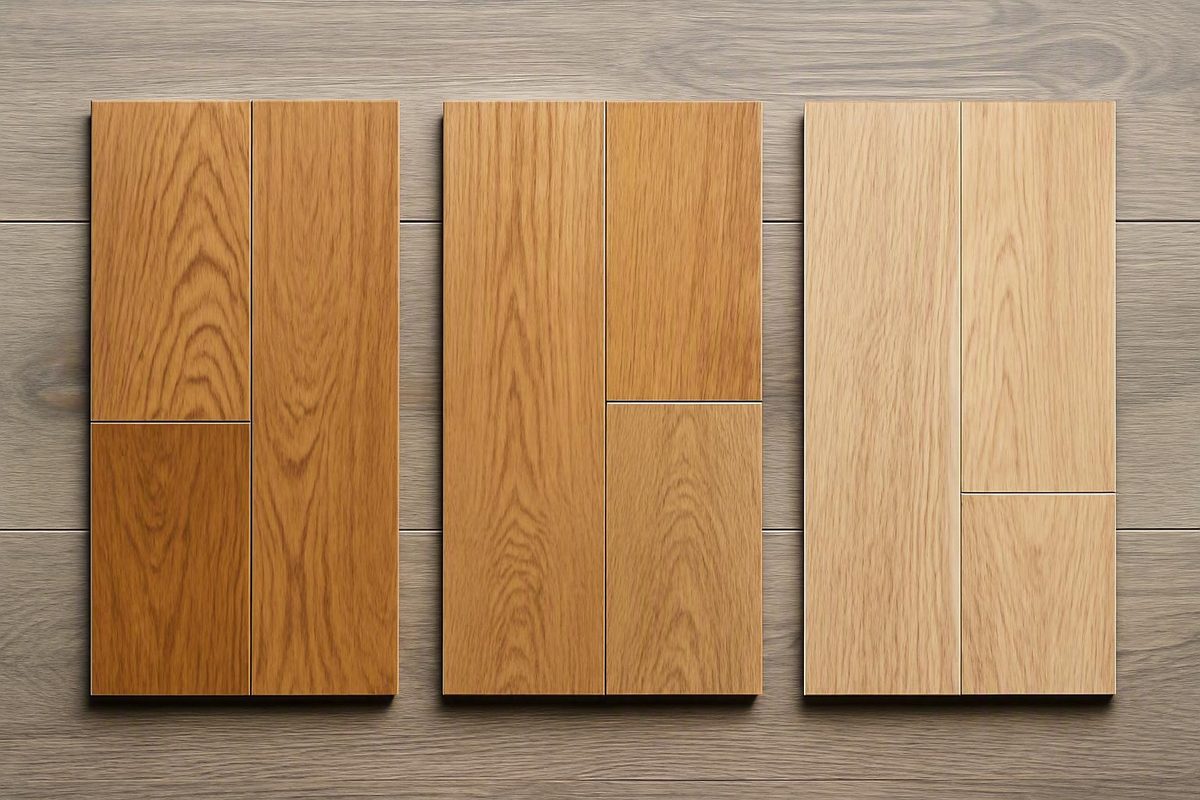
Solid hardwood, engineered hardwood, and laminate can all create a wood-floor appearance, but they are fundamentally different products. Solid hardwood offers the greatest opportunity for future renewal. Engineered hardwood combines a genuine wood surface with greater dimensional stability and broader installation flexibility. Laminate prioritizes lower upfront cost, resistance to surface scratches and scuffs, and straightforward floating-floor installation. Commercial buying guides generally position laminate below engineered hardwood on price, although actual costs vary substantially by product and market (Avalon Flooring’s comparison).
There is no universal winner in the engineered vs hardwood vs laminate comparison. The right floor depends on the room, expected water exposure, household traffic, subfloor, permitted installation method, budget, ownership period, and whether a genuine wood surface matters to you.
This guide compares broad category tendencies. Most available evidence comes from flooring manufacturers and retailers rather than standardized, independent head-to-head testing. The selected product’s data sheet, installation manual, maintenance instructions, and warranty therefore take priority over any category-level recommendation.
First, clarify what engineered, hardwood, and laminate mean
In this comparison, hardwood means solid hardwood. Retailers sometimes use “hardwood flooring” as a broader category that includes engineered products, so confirm the plank construction rather than relying on an aisle, collection, or marketing name.
The three materials differ both at the walking surface and through the body of the plank:
- Solid hardwood: A plank made from wood through its thickness.
- Engineered hardwood: A genuine hardwood surface bonded to a layered plywood, high-density fiberboard, or comparable manufacturer-specified core.
- Laminate: A printed decorative image beneath a protective wear layer, generally supported by a fiberboard-based core and backing.
Solid and engineered hardwood therefore expose real wood at the walking surface. Laminate reproduces wood with a printed image. Its image quality, texture, finish, and pattern may be convincing, but its decorative surface is not a hardwood veneer. Bruce’s construction guide describes engineered flooring as having a real hardwood layer over plywood or HDF, while laminate uses an image beneath a protective wear layer (Bruce’s construction comparison).
Engineered hardwood is not a type of laminate. Both rely on layered construction, but layering alone does not make them equivalent. The walking surface, core, repair options, installation limits, and response to damage can all differ.
A simplified layer-by-layer view looks like this:
SOLID HARDWOOD
┌──────────────────────────────┐
│ Wood surface and finish      │
│                              │
│ Solid wood through plank     │
│                              │
└──────────────────────────────┘

ENGINEERED HARDWOOD
┌──────────────────────────────┐
│ Factory- or site-applied     │
│ finish                       │
├──────────────────────────────┤
│ Genuine hardwood surface     │
│ or veneer                    │
├──────────────────────────────┤
│ Layered manufacturer-        │
│ specified core               │
├──────────────────────────────┤
│ Backing or balancing layer,  │
│ where used                   │
└──────────────────────────────┘

LAMINATE
┌──────────────────────────────┐
│ Protective wear layer        │
├──────────────────────────────┤
│ Printed decorative image     │
├──────────────────────────────┤
│ Fiberboard-based core        │
├──────────────────────────────┤
│ Backing or balancing layer   │
└──────────────────────────────┘
This is a conceptual diagram, not a universal manufacturing specification. Layer counts, core materials, finishes, backing systems, edge treatments, and locking designs vary. Use the product specification to identify what you are actually buying.
Three-way comparison at a glance
The table below summarizes category tendencies. It does not promise identical performance from every product.
| Characteristic | Solid hardwood | Engineered hardwood | Laminate |
|---|---|---|---|
| Walking surface | Genuine wood | Genuine hardwood surface or veneer | Protective wear layer over a printed wood image |
| Core construction | Wood through the plank | Layered plywood, HDF, or another specified core | Usually fiberboard-based, with decorative and backing layers |
| Visual authenticity | Natural grain and plank-to-plank variation | Natural grain and plank-to-plank variation | Can look highly realistic, but the visuals are reproduced |
| General price position | Commonly a premium option | Often above laminate; may overlap solid wood | Commonly the least expensive category |
| Surface-scratch resistance | Depends on species, finish, texture, and use | Depends on species, finish, treatment, and construction | Commonly stronger than conventional real-wood surfaces |
| Dent and impact considerations | Vary with species, support, finish, and type of impact | Vary with veneer species, construction, support, and impact | Scratch resistance does not establish equivalent dent or impact resistance |
| Moisture limitations | More sensitive to moisture and environmental movement | More dimensionally stable than solid wood, but not inherently waterproof | Product-specific; water reaching a vulnerable core can cause swelling |
| Common installation methods | Commonly nailed to an appropriate wood subfloor | Floating, glue-down, nail-down, or staple-down where approved | Commonly click-lock and floated over approved underlayment |
| Refinishing | Generally offers the greatest repeated-refinishing potential | Sometimes possible; depends on the wood layer, construction, condition, and manufacturer limits | Cannot be sanded and refinished like wood |
| Likely best fit | Dry, stable settings where authentic wood and future renewal matter | Projects requiring real wood plus greater stability or installation flexibility | Budget-focused, scratch-conscious, or floating DIY projects |
| Quick verdict | Best candidate for maximum renewal potential | Best candidate for authentic wood with added stability | Best candidate for affordability and scratch-and-scuff resistance |
The table’s price ordering is qualitative, not a current national price benchmark. Commercial guides generally describe laminate as less expensive than engineered hardwood, while solid hardwood is commonly positioned as a premium product; species, finish, plank size, brand, market, and preparation work can change that order (Hartco’s flooring comparison).
Solid hardwood’s principal long-term advantage is the amount of usable wood available for restoration. It can generally be sanded and refinished more often than engineered hardwood, although prior sanding, plank profile, remaining material, damage, and installation details impose practical limits.
Engineered hardwood retains a genuine wood walking surface while its layered body reduces movement relative to solid wood as environmental conditions change. It may also permit more installation methods. That advantage concerns dimensional stability; it does not establish immunity to scratches, leaks, or standing water. Robbins distinguishes engineered hardwood’s added stability and installation flexibility from the limitations of solid wood, while also noting that suitability varies by location and system (Robbins’ solid-versus-engineered guide).
Laminate is commonly the more budget-oriented and DIY-friendly choice. Its wear layer often handles ordinary scratches and scuffs better than conventional wood surfaces, but it cannot be sanded back to fresh wood. Water performance must be verified for the exact collection rather than inferred from the word “laminate.”
Appearance, texture, and the real-wood difference
If authentic material is the priority, both solid and engineered hardwood satisfy that requirement. Planks cut from the same species and finished in the same color will not necessarily look identical.
Laminate takes a different approach. Its decorative layer can imitate oak, maple, walnut, hickory, and other looks without using those species at the walking surface. Detailed imaging, embossing, varied board graphics, edge treatments, and controlled sheen can make the reproduction convincing.
The choice is partly between natural variation and controlled consistency:
- Real wood provides naturally individual boards, but buyers must accept variation in grain and color.
- Laminate can produce a more predictable visual field, but repeated printed patterns may become noticeable across a large room.
- Neither result is universally more attractive. Some buyers value authenticity; others prefer uniform color and fewer unexpected markings.
Appearance also varies substantially within each real-wood category. Species is only one factor. The result can change with:
- The way the lumber or veneer was cut
- Natural grade and character selection
- Stain color and finish sheen
- Wire brushing, scraping, or other texture
- Plank width and length
- Beveled, eased, or square edges
- Straight, diagonal, random, or patterned layouts
- The amount and direction of natural and artificial light
A wide, matte, textured engineered oak floor may look more rustic than narrow, glossy solid maple. Conversely, restrained solid wood may appear more uniform than character-grade engineered flooring. “Solid” and “engineered” do not define a single visual style.
Laminate appearance likewise depends on image quality, the number of distinct plank visuals, texture alignment, edge detail, and gloss. Perry Floors notes that laminate patterns can repeat, while engineered hardwood retains natural variation because the visible surface is real wood (Perry Floors’ buyer’s guide).
Before choosing, inspect several loose planks from different cartons or view a large installed display. Place samples in the intended room and check them in morning, afternoon, and artificial light. One board cannot reveal the full variation of a natural product or show how often a laminate design repeats.
Choose real wood because you value its appearance, feel, aging characteristics, and repair possibilities—not because of an assumed resale premium. The supplied evidence does not establish a measurable category-wide increase in resale value.
Durability is not one measurement
Calling a floor “durable” without identifying the type of damage is not useful. A product may resist dog-claw scratches but perform poorly if water enters its core. Another may dent under a concentrated impact yet later be repaired or refinished.
Compare these performance questions separately:
- Surface scratching: How readily do claws, grit, furniture, or dragged objects mark the surface?
- Scuffing and staining: How does the finish react to shoe marks, spills, and ordinary soil?
- Denting: Does concentrated pressure leave a permanent indentation?
- Impact damage: What happens when a hard or heavy object falls?
- Finish wear: Will traffic dull or wear through the protective finish?
- Environmental movement: How much can the floor expand, contract, cup, or gap as conditions change?
- Water damage: What happens at seams, edges, joints, and the core after prolonged exposure?
- Repairability: Can the surface be touched up, recoated, sanded, or selectively replaced?
Laminate commonly has an advantage in ordinary surface-scratch and scuff resistance. That can make it attractive in homes with pets or children, rentals, entries, and busy hallways. Royal Flooring’s comparison similarly characterizes laminate as more scratch-resistant than engineered hardwood, while acknowledging that product choice still depends on the room and household (Royal Flooring’s engineered-versus-laminate comparison).
That advantage should not be expanded into “laminate is the most durable overall.” A scratch-resistant surface does not prove superior performance against concentrated dents, damaged edges, broken locking joints, seam intrusion, core swelling, or every dropped-object impact. Product construction, substrate support, and installation quality can also affect the result.
Solid and engineered hardwood performance depends on interacting factors, including:
- Wood species and grain structure
- Surface texture
- Finish system and sheen
- Veneer and plank construction
- Support beneath the plank
- Type and concentration of impact
- Maintenance and grit control
Engineered hardwood’s dimensional-stability advantage over solid wood concerns movement as humidity and temperature conditions change. It does not make the exposed hardwood immune to scratching. An engineered oak surface can acquire the same kinds of marks associated with other real-wood floors.
Avoid using one rating to answer a different performance question. Wood-hardness figures measure resistance to indentation under a defined test method; they are not direct scratch-resistance scores.
Repairability can change the long-term ranking. Laminate may avoid many minor scratches, but damage through its wear layer or printed image cannot be sanded away. The practical remedy usually involves replacing damaged material, subject to access and the availability of a compatible plank.
Before buying, compare the exact product’s:
- Wear-layer or finish information
- Residential and commercial warranty terms
- Pet-related conditions or exclusions
- Water limitations
- Cleaning restrictions
- Requirements for furniture protection
- Availability of matching replacement planks
- Rules for entries and other high-traffic locations
Category labels are only a starting point. Product documentation determines the represented performance and warranty coverage.
Moisture, spills, basements, kitchens, and bathrooms
Four moisture concepts are often confused:
- Dimensional stability describes how much a material moves as environmental conditions change.
- Spill resistance describes its response to limited surface exposure that is cleaned promptly.
- Water resistance is a product claim that may include defined conditions or time limits.
- Waterproof performance is a stronger claim, but its practical meaning still depends on the stated exposure, installation system, exclusions, and warranty.
Engineered hardwood is generally more dimensionally stable than solid hardwood. Its layered core can reduce movement as humidity changes, making approved products possible candidates for some slabs, below-grade rooms, or variable conditions. It can still expand, contract, stain, swell, or sustain joint and finish damage. Engineered hardwood is not categorically waterproof.
Standard laminate should not be treated as waterproof either. If water passes through seams and reaches a vulnerable fiberboard core, the plank can swell or distort. Some laminate products carry water-resistant or waterproof claims, but those claims apply only to qualifying collections installed according to their specified systems. Bruce, for example, distinguishes standard category performance from named products marketed for enhanced water protection (Bruce’s water-performance explanation).
Use this room matrix as an initial screening tool:
| Room or condition | Solid hardwood | Engineered hardwood | Laminate |
|---|---|---|---|
| Dry living room or bedroom | Strong candidate where the subfloor and environment are suitable | Strong candidate when real wood and added stability are desired | Practical when cost or scratch resistance matters more than authentic material |
| Kitchen with ordinary spill risk | Possible only where the selected product and installation permit | Often a candidate, but leaks and standing water remain concerns | Consider only a product approved for the room and expected exposure |
| Basement or concrete slab | Frequently constrained by moisture and fastening requirements | Often the most flexible real-wood candidate when specifically approved | Floating products may be suitable when slab and moisture requirements are met |
| Bathroom or laundry room | Generally a high-risk choice | Use only if the exact product and system approve the location | Use only if the exact product and system approve the location |
| Over radiant heat | Product-specific and often restrictive | Some products are approved; obtain written confirmation | Some products are approved; obtain written confirmation |
In a kitchen, a drink wiped up promptly is not equivalent to a refrigerator-line leak, dishwasher failure, repeated wetting near a sink, or water trapped beneath fixed construction. Ask what exposures the written warranty covers rather than relying on a general statement that the floor “handles spills.”
Bathrooms and laundry rooms present both routine surface moisture and the possibility of concealed leaks. Use only a flooring product and installation system expressly approved for the location. Check whether that approval requires particular edge treatments, sealants, moldings, room dimensions, maintenance practices, or professional installation.
For basements and concrete slabs, verify:
- Whether the flooring is approved below grade or over concrete
- What concrete-moisture evaluation the manufacturer requires
- Whether a specified moisture-control layer or other preparation is required
- Whether the slab meets the product’s flatness requirements
- Which adhesives or underlayments are approved
- Whether existing coatings or floor coverings affect the assembly
Floating laminate and approved floating or glue-down engineered hardwood can be installed over some concrete slabs, but product approval, slab condition, and preparation remain decisive. Available retailer guidance emphasizes both flatness and moisture evaluation rather than assuming that every concrete slab is ready to cover (Perry Floors’ slab guidance).
Before relying on a “waterproof” label, examine the product warranty and installation instructions for:
- Exposure-duration limits
- Whether coverage applies only to water from above
- Exclusions for floods, plumbing failures, appliance leaks, or water beneath the floor
- Required edge or perimeter details
- Approved cleaning methods
- Bathroom, laundry, and below-grade restrictions
- Installation and maintenance conditions
- Whether labor or related property damage is covered
These are questions to verify, not universal requirements for every floor. A carton label cannot substitute for the full product documents.
Installation methods, subfloors, and DIY difficulty
Installation flexibility differs substantially among the three categories.
Solid hardwood is commonly nailed to an appropriate wood subfloor. Product dimensions, grade level, subfloor, and site conditions determine whether another method is permitted.
Engineered hardwood may be floated, glued, nailed, or stapled where the selected construction allows it. Not every engineered product supports every method, so its installation manual must control the decision.
Laminate commonly uses a click-lock floating assembly installed over an approved underlayment. The boards lock to one another rather than being fastened across the field to the subfloor. Lowe’s describes click-together laminate as comparatively accessible for DIY installation while presenting solid hardwood as more demanding (Lowe’s flooring buying guide).
Laminate is generally the most DIY-friendly of the three because it commonly avoids blind nailing or full-spread adhesive. That does not make every laminate floor suitable for every installer or room. Layout, cutting, stairs, transitions, doorways, subfloor preparation, and product-specific details can still make the project complex.
“Floating” means the floor is not mechanically or adhesively attached across the field. It does not mean the floor can ignore the surrounding building. Depending on the product, the installation instructions may address:
- Required underlayment or moisture-control materials
- Subfloor flatness
- Expansion space at walls and fixed objects
- Maximum continuous-floor dimensions
- Transitions between rooms
- Treatment around cabinets, islands, pipes, and door jambs
- Perimeter and molding details
Treat these as items to verify in the selected product’s manual rather than assumptions that apply identically to every floating floor.
Every installation method depends on subfloor condition. Check structural soundness, dryness, cleanliness, flatness, and material compatibility before opening cartons. Finished floor height, door and appliance clearances, stair nosings, and transitions can affect product selection as much as the plank itself.
Some floating laminate and approved floating or glue-down engineered hardwood products can be used over concrete. The slab still requires evaluation and any preparation specified by the manufacturer. Do not use a floating floor simply to conceal unacceptable unevenness.
Radiant-heat compatibility is product-specific. Obtain written approval for the flooring construction, installation method, operating conditions, and heating system. Approval for one collection does not establish approval for an entire category or even every product from the same manufacturer.
Installation method can also affect future repair access, but the exact procedure depends on the locking profile, adhesive, fastening system, location of the damage, and manufacturer instructions. A floating floor may offer a different replacement pathway from a glued or nailed floor, but no method guarantees simple plank removal.
Use this pre-installation checklist:
- [ ] Measure the room, closets, alcoves, and connected areas.
- [ ] Confirm the layout and waste allowance.
- [ ] Identify the subfloor material and structural condition.
- [ ] Complete any moisture evaluation required by the manufacturer.
- [ ] Check and correct subfloor flatness as specified.
- [ ] Confirm the approved grade level, subfloor, and room use.
- [ ] Select the specified underlayment, moisture-control layer, adhesive, or fasteners.
- [ ] Follow the product’s acclimation or no-acclimation instructions.
- [ ] Plan required expansion clearances and transitions.
- [ ] Check doors, cabinets, appliances, stairs, and finished floor height.
- [ ] Order compatible reducers, thresholds, stair parts, base, or shoe molding.
- [ ] Confirm radiant-heat approval where applicable.
- [ ] Record product and carton information.
- [ ] Retain the installation instructions, invoices, and warranty.
- [ ] Follow all documented conditions required for warranty coverage.
Refinishing, repairs, and value over the ownership period
A floor’s value is not determined only by how long it avoids visible wear. It also depends on the available response after damage occurs.
Solid hardwood generally provides the greatest opportunity for repeated sanding and refinishing because the plank is wood through its thickness. Practical limits depend on the profile, material remaining above the tongue, prior sanding, depth of damage, overall condition, and installation. “Solid” does not mean infinitely refinishable.
Some engineered hardwood can also be refinished, but there is no universal promise. The decision can depend on:
- The thickness and remaining depth of the genuine wood surface
- Plank and core construction
- Previous sanding
- Surface texture and bevels
- Depth of scratches, stains, or deformation
- Floor condition and flatness
- Manufacturer restrictions
- The refinisher’s assessment
Do not rely on a universal veneer threshold or a promised number of sanding cycles. Two products with nominally similar wood layers may have different finishes, textures, bevels, constructions, or manufacturer limits. Signature Flooring’s guide also qualifies engineered refinishing according to veneer thickness rather than treating it as guaranteed for every product (Signature Flooring’s material guide).
It is important to distinguish the main repair pathways:
- Cleaning or touch-up: Addresses soil or limited appearance issues without applying a new full-surface finish.
- Recoating: Prepares the existing finish and applies a compatible new coat without intentionally sanding deeply into the wood.
- Sanding and refinishing: Removes the finish and some wood to create a renewed surface.
- Plank replacement: Removes and replaces damaged material while leaving the rest of the floor in place.
Conversely, deep damage, contamination, incompatible treatments, an inadequate wood layer, or movement may make recoating inappropriate. Obtain product-specific guidance before authorizing work.
Laminate cannot be sanded and refinished like real wood. Sanding would remove the protective layer and printed design rather than expose fresh decorative material. Minor appearance issues may have limited cosmetic remedies, but substantial plank damage generally leads to replacement.
Selective replacement depends on compatible stock and an approved repair method. Purchase spare material from the same production run when possible and store it according to the manufacturer’s instructions. Later products may differ in:
- Color and sheen
- Printed pattern or natural grade
- Width, length, or overall thickness
- Bevel profile
- Tongue-and-groove dimensions
- Locking geometry
It can nevertheless offer a closer construction and visual match than a later product generation.
For lifecycle value, consider how long you expect to own or operate the property and which repair routes you are prepared to fund. A landlord may prefer a lower-cost floating product with spare planks and predictable turnover planning. A long-term homeowner may accept more maintenance in exchange for a real-wood surface that can potentially be renewed. Neither strategy is automatically superior.
Cost, quote comparison, and the final decision framework
As a defensible general ordering, laminate is commonly the least expensive category, engineered hardwood often costs more than laminate, and solid hardwood is commonly positioned as a premium option. There is substantial overlap, and the available commercial sources do not establish a reliable current national installed-price range. Local quotes are necessary because product specification, labor, market conditions, and site preparation can rearrange the order (Avalon Flooring’s cost discussion).
Do not compare only the carton price. Ask every bidder to separate or clearly include the following:
| Quote component | What to verify |
|---|---|
| Flooring material | Product name, construction, quantity, production information, and unit price |
| Waste allowance | Percentage or added square footage and the reason for it |
| Underlayment or moisture control | Product, coverage, seam treatment, and compatibility |
| Adhesive or fasteners | Exact system and quantity |
| Moisture-related work | Evaluation, preparation, membrane, or other specified measures |
| Subfloor preparation | Patching, grinding, repairs, or added panels |
| Existing-floor removal | Included layers and treatment of concealed materials |
| Disposal | Hauling, fees, and cleanup |
| Transitions and trim | Reducers, thresholds, nosings, base, and shoe molding |
| Stair work | Treads, risers, landings, nosings, and labor |
| Delivery and handling | Freight, indoor placement, access, and scheduling |
| Installation labor | Method, floor area, minimum charges, and exclusions |
| Tax and permits | Applicable amounts and responsibility |
| Furniture and appliances | Moving, disconnection, reconnection, and exclusions |
A low material price can be offset by preparation, demolition, trim, moisture-related work, or difficult access. A higher initial price does not guarantee better lifecycle value. Suitability, repair access, spare-material availability, expected ownership, and maintenance preferences all matter.
Use this five-question decision tree:
-
Is genuine wood essential? - If no, laminate remains a strong candidate. - If yes, compare solid and engineered hardwood.
-
Is standing water or a concealed leak plausible? - If yes, do not choose by category alone. Require written approval for the room, exposure, and installation system. - If no, continue comparing stability, scratches, appearance, and renewal.
-
Is surface scratching the main concern? - If yes, laminate may provide the strongest category-level advantage. - If no, determine whether denting, moisture, appearance, or repairability matters more.
-
Is a floating DIY installation required? - If yes, click-lock laminate is usually the simplest candidate; approved floating engineered hardwood is another possibility. - If no, compare all manufacturer-permitted methods.
-
Is future refinishing a priority? - If yes, solid hardwood is the leading candidate. Consider engineered hardwood only after confirming the selected product’s refinishing limits. - If no, laminate’s replace-rather-than-refinish pathway may be acceptable.
Scenario-based conclusions
- Long-term dry living room: Solid hardwood is the strongest candidate when authentic material and future renewal outweigh initial price. Engineered hardwood is compelling when genuine wood is wanted with added stability.
- Concrete-slab home: Approved engineered hardwood often offers broader real-wood installation flexibility. Floating laminate may simplify installation and control material cost. Both require product approval and slab evaluation.
- Pet-heavy hallway: Laminate often makes sense when claw scratches and scuffs are the leading concerns. Also consider grit, wet paws, seams, replacement access, and warranty exclusions.
- Rental or budget renovation: Laminate commonly provides the clearest upfront-cost advantage and a practical floating installation. Keep spare planks and confirm how damaged material can be replaced.
- Kitchen: Compare written water limitations, seam protection, maintenance rules, and leak exclusions. Promptly cleaned spills are not equivalent to appliance leaks or prolonged standing water.
- Bathroom or laundry room: Select only a product and installation system explicitly approved for the location. None of the three categories should be assumed suitable by default.
Before ordering, collect the product data sheet, installation instructions, maintenance guidance, and warranty. Confirm:
- [ ] Surface material and core construction
- [ ] Engineered hardwood veneer or wear-surface specification
- [ ] Approved installation methods
- [ ] Approved grade levels, subfloors, and rooms
- [ ] Concrete and moisture requirements
- [ ] Definitions of water-resistant or waterproof performance
- [ ] Radiant-heat approval
- [ ] Acclimation and environmental conditions
- [ ] Cleaning and maintenance instructions
- [ ] Recoating or refinishing restrictions
- [ ] Warranty exclusions
- [ ] Compatible transitions and stair parts
- [ ] Replacement-plank availability
Category guidance cannot override the selected manufacturer’s instructions or warranty. Requirements and product availability also vary by location, so use local quotes and the documents supplied for the exact flooring.
Frequently asked questions
Is engineered hardwood real wood or laminate?
Engineered hardwood has genuine wood at the walking surface. It uses a hardwood layer bonded to a layered core. Laminate instead places a printed decorative image beneath a protective wear layer, generally over a fiberboard-based core.
Engineered hardwood is therefore not laminate, even though both products use multiple layers. Their surface materials, repair options, and construction details are different.
Can engineered hardwood be refinished?
Some engineered hardwood can be refinished, but not all of it. The thickness and condition of the genuine wood surface, plank construction, texture, bevels, previous work, and manufacturer restrictions determine whether recoating or full sanding is possible.
Do not assume a fixed number of refinishing cycles or rely on a universal veneer threshold. Obtain the product specification and have the installed floor assessed before sanding.
Is laminate or engineered hardwood waterproof?
Neither category is universally waterproof. Standard laminate can swell if water passes through its seams and reaches a vulnerable core. Engineered hardwood is generally more dimensionally stable than solid hardwood, but its finish, wood surface, core, or joints can still be damaged by water.
Some named laminate and engineered products carry enhanced water-resistance or waterproof claims. Those claims apply to the specified product and installation system, not the entire category. Check exposure limits, required installation details, room restrictions, and exclusions for floods, plumbing failures, appliance leaks, and water beneath the floor.
Which flooring is better for dogs, children, and heavy traffic?
Laminate is often the practical choice when surface scratching and scuffing are the primary concerns. Its protective surface commonly resists claws and ordinary abrasion better than conventional real-wood surfaces.
That does not make laminate universally better. Wet paws, grit, dropped objects, seam damage, water exposure, and replacement access also matter.
Can solid hardwood, engineered hardwood, or laminate be installed over concrete?
Some engineered hardwood and laminate products can be installed over concrete when specifically approved. Engineered hardwood may permit floating or glue-down installation, while laminate commonly uses a floating click-lock system. In both cases, the slab must meet the manufacturer’s moisture, flatness, cleanliness, and preparation requirements.
Solid hardwood is more constrained because it is commonly fastened to an appropriate wood subfloor. Do not assume that a solid-wood assembly over concrete is permitted without written product and system guidance. Choose the flooring and installation assembly together.
The conditional choice
Choose solid hardwood when a genuine wood surface, a dry and stable setting, and maximum future renewal matter most. Choose engineered hardwood when authentic wood is required but the project also needs greater dimensional stability or more installation flexibility. Choose laminate when controlling upfront cost, resisting surface scratches and scuffs, or completing a floating DIY installation takes priority.
Before ordering, verify the exact product’s construction, approved rooms and subfloors, moisture limitations, installation method, refinishing restrictions, maintenance rules, and warranty exclusions. The best category is the one whose specific product documentation matches the actual room and project.