 MortarDesk
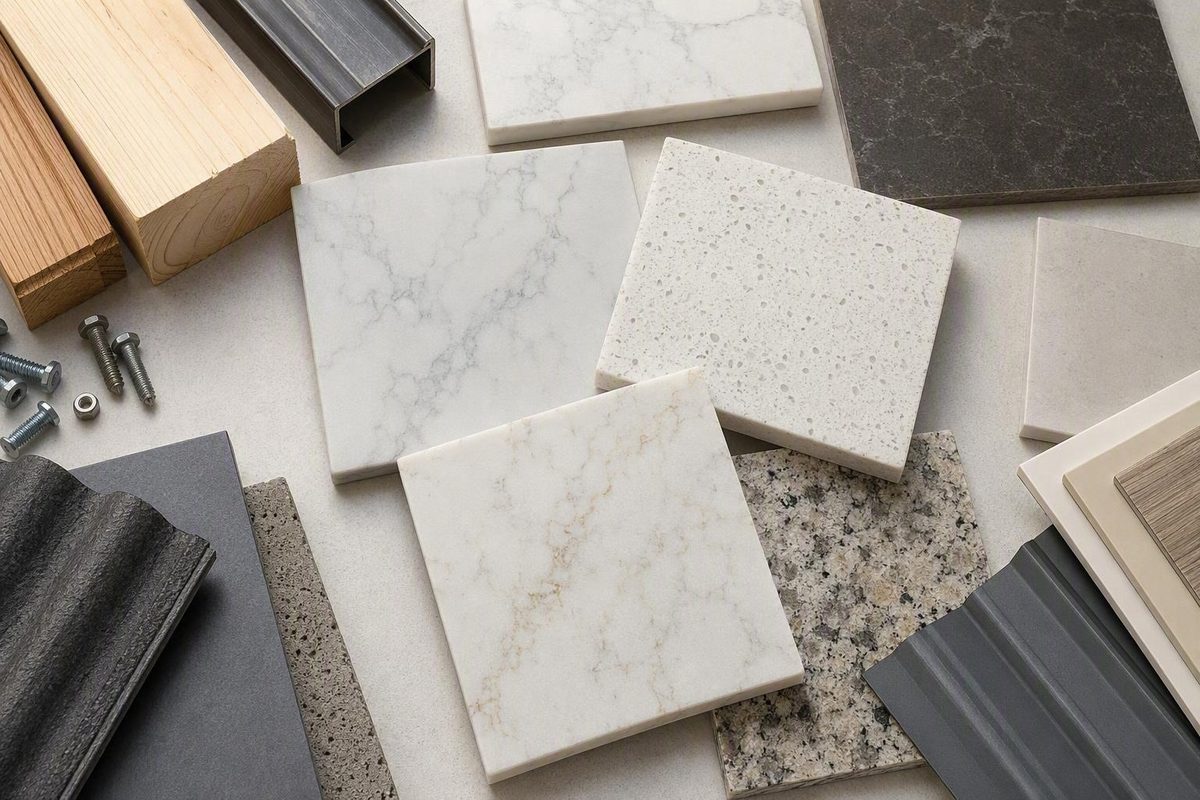
Yes, if the slab is engineered (agglomerated) quartz, it was manufactured in a country the proclamation does not exempt, and it is entered for U.S. consumption on or after 12:01 a.m. Eastern on August 15, 2026. Proclamation 11051, signed July 31, 2026, put a four-year Section 201 safeguard on quartz surface products classified under HTSUS 6810.99.0020, 6810.99.0040 and 7020.00.6000. Year 1 is a tariff-rate quota: 10% on covered slabs while the quota is open, 50% once it fills. Granite, marble, quartzite and soapstone are outside the measure. Slabs made in Canada, Mexico, Israel, South Korea, Australia or a CAFTA-DR country are exempt. A Chinese slab is covered, and it also carries separate antidumping and countervailing duties that predate this safeguard.
Pick the slab material and the country where it was made; the verdict updates beside the controls.
Section 201 Quartz Tariff Checker
Covered
Covered — non-exempt origin (China), safeguard duty applies.
Year 1 (Aug 15, 2026 – Aug 14, 2027): 10% while the quota is open, 50% once it fills. The importer of record knows which tier the entry received.
China-made quartz also carries separate antidumping and countervailing duties.
Optional: entry date and slab value
| Manufacturing country | Section 201 |
|---|---|
| Canada, Mexico, Israel, South Korea, Australia | Exempt |
| CAFTA-DR members | Exempt |
| Listed developing countries | Conditional — verify |
| China, India, Turkey, Spain, Vietnam, Malaysia, Italy, others | Covered: 10% in-quota / 50% over-quota (year 1) |
| Granite, marble, quartzite, soapstone (any origin) | Not covered |
Source: Proclamation 11051 (Federal Register, Aug 5, 2026), effective 12:01 a.m. ET Aug 15, 2026; USITC TA-201-79. Duty is assessed on the customs value of the imported slab, not the retail quote. Years 2–4 step down; take those rates from the annex. Not a customs determination.
Engineered Quartz Is Covered; Quartzite, Granite and Marble Are Not
The safeguard covers engineered quartz surface products: slabs made from a mixture that is predominantly silica, bound with resin, and manufactured rather than quarried. Cutting a covered slab into a countertop, island top, vanity top, bar top or backsplash does not take it out of scope. The material is what counts, not the finished shape.
| Surface on the quote | How it is made | Section 201 |
|---|---|---|
| Engineered quartz | Silica-predominant mix, resin binder | Covered |
| Quartzite | Quarried natural stone | Not covered |
| Granite, marble | Quarried natural stone | Not covered |
| Soapstone | Quarried natural stone | Not covered |
Natural stone is excluded because it is quarried, not because of its name. The Diaz Trade Law summary lists granite, marble, quartzite and soapstone as outside the measure. Granite pricing has its own drivers, set out in Red Granite Countertops Vary by Slab.
Showrooms use “quartz” for engineered slabs and “quartzite” for the natural stone, and the two are not interchangeable on a customs entry. Quartzite contains quartz as a mineral and is still a quarried rock, so it stays out. If the invoice only says “quartz,” ask for the manufacturer’s product or composition sheet and a photo of the slab label. The fields that settle it are the product line and model, the producer, the binder type, composition by weight if given, the manufacturing country and the slab or lot number.
Porcelain, sintered stone, acrylic solid surface and crushed-glass products are not engineered quartz, but do not clear them from a one-line invoice description. Their composition and the proclamation’s product language decide it, and the composition sheet is the document that does so.
The Three HTSUS Codes Are a Screen, Not the Ruling
The proclamation names HTSUS 6810.99.0020, 6810.99.0040 and 7020.00.6000. A code on a retailer’s product page is preliminary. The classification that matters is the one the importer of record declared on the entry covering your slab. A listed code alone does not prove coverage either: the product description in the proclamation governs, and CBP decides a disputed entry. Ask the importer or customs broker for the declared classification; the fabricator usually does not have it.
Exempt Origins: Canada, Mexico, Israel, South Korea, Australia and CAFTA-DR
Origin is where the slab was manufactured, as declared on the customs entry. The proclamation exempts specified trading partners and gives conditional treatment to a list of developing countries.
| Manufacturing country | Section 201 status |
|---|---|
| Canada, Mexico | Exempt |
| Israel, South Korea, Australia | Exempt |
| CAFTA-DR members (Costa Rica, Dominican Republic, El Salvador, Guatemala, Honduras, Nicaragua) | Exempt |
| Listed developing countries | Conditionally exempt; check the annex for the entry date |
| China, India, Turkey, Spain, Vietnam, Malaysia, Italy, any origin not listed | Covered |
The developing-country exemption is conditional, so a country chart pasted into a quote in August can be wrong by the entry date. If a supplier claims an exemption, ask for the manufacturing origin and the basis that was declared when the merchandise entered.
Keep five places separate, because only the first one counts:
- Manufacturing country: where the slab was produced.
- Fabrication location: where it was cut, edged, polished or drilled.
- Shipping country: where the container departed.
- Seller address: where the distributor or fabricator operates.
- Brand headquarters: where the parent company sits.
A slab made in one country, cut in a second, shipped from a third and sold by a U.S. showroom does not take the origin of the last stop. Complicated production chains can need a formal customs-origin analysis, and that answer belongs to the importer, not the showroom.
The Customs-Entry Date Decides, Not Your Order Date
The safeguard applies to covered merchandise entered for U.S. consumption, or withdrawn from warehouse for consumption, on or after 12:01 a.m. Eastern on August 15, 2026. The purchase-order date, contract date, supplier invoice date, factory-completion date, vessel departure and U.S. port arrival do not decide it on their own.
A slab ordered on August 1 and entered on August 20 is covered if it meets the scope and origin tests; the early order does not protect it. A slab that cleared customs into U.S. inventory on August 10 and was sold to a homeowner in September is outside the safeguard, and it is not assessed retroactively. Distributors carried stock into August, so a fabricator that bought early may be quoting slabs with no safeguard cost behind them. Ask which.
The measure runs through August 14, 2030, with rates and quota volumes changing each year. It followed a petition filed in September 2025 and a USITC injury investigation whose timeline is on the USITC fact sheet for TA-201-79. That history explains why the duty exists; it does not decide your slab.
What 10% In-Quota and 50% Over-Quota Mean for the Line Item
This is a tariff-rate quota, not a flat charge. Covered imports pay the lower rate while the year’s quota volume is available and the higher rate after it is exhausted. For year 1 that is 10% in-quota and 50% over-quota, assessed on the customs value of the imported slab, not on your retail price. KPMG’s TaxNewsFlash sets out the quota structure.
The proclamation steps the rates down through 2030. This article does not reproduce the year 2 to 4 schedule because secondary summaries disagree on it; the Diaz Trade Law analysis reports a different schedule from summaries published by countertop and cabinet-industry sources. Take later-year figures from the proclamation annex and current CBP instructions for the entry date, not from a blog table.
Which tier your slab received is a fact of the entry. The importer of record knows it; the showroom usually does not. Two shipments of the same slab from the same factory can pay 10% and 50% depending on when they entered against the quota.
The duty is assessed on the imported merchandise. It is not a percentage that belongs on fabrication labor, installation, cabinets, plumbing, appliances, demolition or the whole remodel contract. A distributor or fabricator may pass through some, all or none of the added import cost, depending on inventory, contracts and margin. That is a commercial choice, separate from what CBP assessed at entry.
As an illustration only: on a covered slab with a $2,000 customs value, the in-quota duty is $200 and the over-quota duty is $1,000. A “tariff” line of $1,000 against that slab is defensible only if the entry actually went over quota, and only against the slab.
Read the quote’s tariff-adjustment or change-in-law clause. If a surcharge appears, ask for an itemised explanation: the material value affected, the tariff category asserted, and whether the quoted price already included the duty. A line labelled “tariff” may bundle ordinary customs duty, antidumping and countervailing duties and the safeguard together.
Chinese Quartz Also Carries Antidumping and Countervailing Duties
The safeguard sits on top of the antidumping and countervailing duty orders on certain quartz surface products from China, which Commerce continued in January 2025 under the Federal Register continuation notice. Commerce’s written scope covers surfaces in which silica is the largest single material by actual weight and a resin binder is present; the written scope, not the marketing name or HTSUS code, controls.
Cutting, polishing, finishing or packaging Chinese-made quartz in Malaysia or another third country does not take it out of those orders. Commerce’s case materials identify Chinese-manufactured quartz further processed in Malaysia as in scope. A slab that entered as “Malaysian” can owe antidumping and countervailing duties on top of the Section 201 duty if the underlying slab was made in China.
Four separate charges can hit one entry: ordinary customs duty, the Section 201 safeguard, antidumping duty and countervailing duty. Industry guidance describes the safeguard as cumulative with the others. There is no combined rate that can be read off “quartz countertop”; exporter-specific rates, producer identity, composition, processing history and entry date all change the total. If the slab has Chinese inputs or the producer records are incomplete, the final cutting location tells you nothing. Ask for importer-level records.
What to Ask the Supplier Before Accepting a Surcharge
Send these before approving a tariff adjustment:
- Is this engineered, resin-bound quartz, or quarried stone such as quartzite? Attach the composition sheet and a copy or photo of the slab label.
- Who made the slab, and in which country? Provide any certificate of origin and name each country where it was cut, polished, fabricated or packaged.
- What HTSUS classification was or will be declared on the U.S. customs entry?
- On what date was the merchandise entered for consumption or withdrawn from warehouse? Had it cleared U.S. customs before 12:01 a.m. Eastern, August 15, 2026?
- Was the manufacturing origin treated as exempt from Section 201 on the entry date, and on what basis?
- Did the entry receive in-quota or over-quota treatment, and what safeguard rate applied?
- Does the quote include the safeguard duty, ordinary customs duty and any antidumping or countervailing duty, itemised?
- Which contract clause supports the surcharge or a later price adjustment?
A missing document proves neither coverage nor exclusion. Unknown composition, origin, classification or entry date means coverage is unverified; unknown quota treatment means the rate is unverified. The importer of record or a licensed customs broker can answer for a specific shipment. Borderline scope and origin questions go to CBP, trade counsel or a Commerce scope ruling, and nothing in this note is a binding customs determination.