 MortarDesk
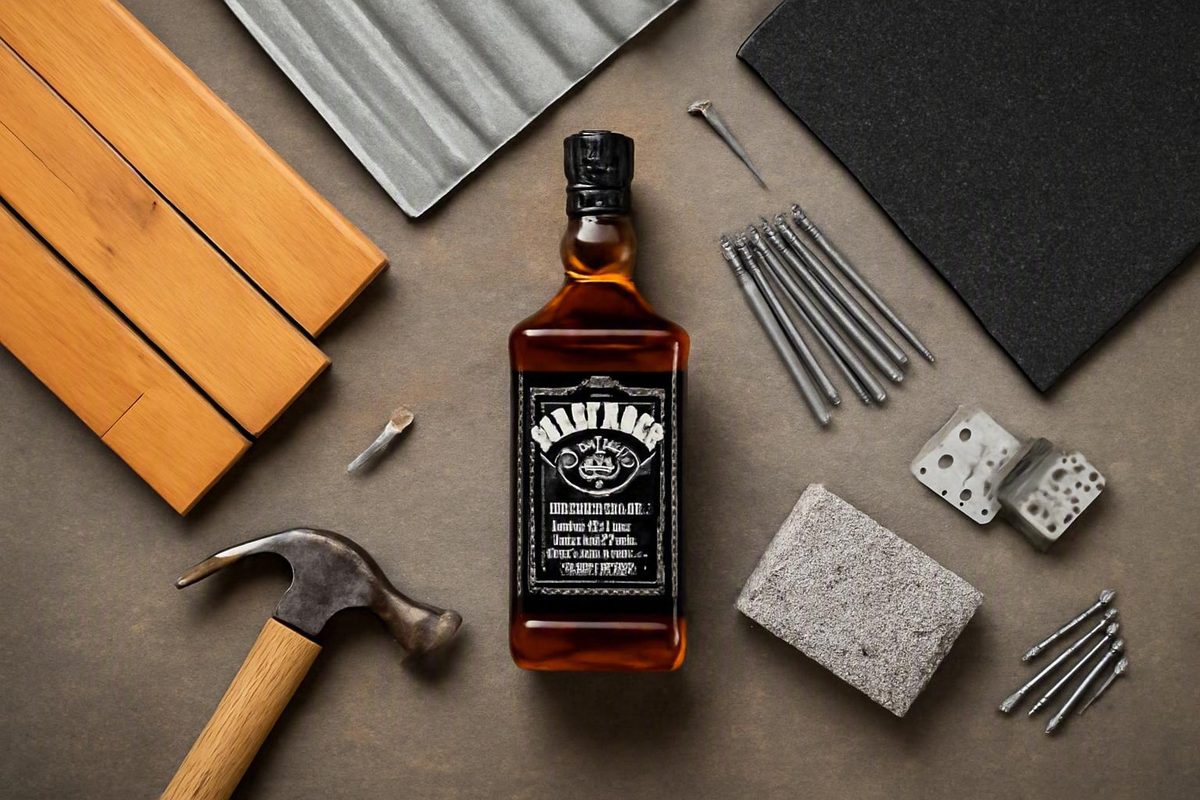
What to expect from the black-label Tennessee whiskey
Jack Daniel’s Old No. 7 at a Glance
Jack Daniel’s Old No. 7 is the brand’s core black-label Tennessee whiskey. Its formal name is Jack Daniel’s Old No. 7 Tennessee Whiskey, although shoppers frequently search for “Jack Daniels Old Number 7.”
Its defining production claim is not an age or unusually high proof. Jack Daniel’s says the spirit is mellowed drop by drop through 10 feet of sugar-maple charcoal, then matured in handcrafted barrels. The company says tasters determine when it is ready by evaluating appearance, aroma, and taste rather than following a fixed calendar. Jack Daniel’s describes that production and maturation approach on the Old No. 7 product page.
Old No. 7 quick facts
Item What to know Formal product name Jack Daniel’s Old No. 7 Tennessee Whiskey Declared category Tennessee whiskey Common bottle example A US retailer lists a 750 ml bottle Common US strength example The same retailer lists 40% alcohol by volume, or 80 proof. Bottle size and strength appear in the retailer listing. Age information No verified numerical age is established by the evidence reviewed here; the producer emphasizes sensory evaluation rather than a fixed maturation calendar Characteristic step Pre-barrel mellowing through 10 feet of sugar-maple charcoal Recurring flavor impressions Fruit—often banana—plus caramel, vanilla, oak, charcoal or light smoke, and spice Common uses Neat, over ice, with cola or ginger ale, and in highballs, sours, Old Fashioneds, and lemonade-style drinks
The listed proof needs a local check. A common US example is 40% ABV and 80 proof, but Jack Daniel’s warns that the depicted proof and packaging can vary by country. One comparison page reports Old No. 7 at 43% ABV without identifying the bottle’s market, further illustrating why the label on the bottle being sold should take priority over a general online description.
The evidence also does not establish one universal age statement for every bottle or market. The narrower conclusion is that the producer’s public description emphasizes sensory readiness rather than promising maturation for a stated number of years.
For a buyer, Old No. 7 makes the clearest case as a flexible bottle for cola or ginger-ale highballs, Whiskey Sours, Old Fashioneds, Lynchburg Lemonade, and other uncomplicated drinks. It can also be sampled neat or over ice. What the available reviews do not support is a reliable promise of rich viscosity, layered complexity, or a long finish; those are among the qualities on which tasters disagree most.
Editorial note: This is a source-based product guide, not a report of a first-hand tasting. It separates producer statements, retailer specifications, historical trade reporting, and independent tasting opinions. It is not affiliated with Jack Daniel’s or the retailers cited.
This article is intended for adults of legal drinking age. Follow the alcohol laws where you live, measure servings, and drink responsibly.
How Old No. 7 Is Made: From Mash to Charcoal and Barrel
The current producer description is concise: Old No. 7 is mellowed through sugar-maple charcoal and matured in handcrafted barrels. More detailed operational information comes from a trade report published in 2012. Those dated details are useful as a historical production snapshot, not as a guarantee that every specification or quality-control procedure remains unchanged.
A practical production outline is:
- Prepare the grain mash. A 2012 trade report described a mash of 80% corn, 12% barley, and 8% rye.
- Use sour-mash fermentation. The same account described water, grain, pure-culture yeast, and a portion of previous sour mash.
- Ferment and distill. Fermentation was reported in 2012 to last four to six days before the distillation stage.
- Mellow through sugar-maple charcoal. The newly distilled spirit passes through charcoal before entering the barrel.
- Mature in new charred white-oak barrels. The 2012 report described handcrafted, toasted, and charred new white-oak barrels.
- Evaluate maturity. The current producer says tasters assess appearance, aroma, and taste rather than relying on a fixed calendar.
- Bring to bottling strength and package. Proof and packaging should be checked locally because the producer says they can vary by country.
The mash percentages, sour-mash description, fermentation duration, and detailed barrel specification all come from the dated trade account rather than a current public technical specification. That account also reported filtration through 10 feet of hard sugar-maple charcoal before barreling. The 2012 report documents the mash, four-to-six-day fermentation, charcoal treatment, and barrel maturation described above.
What is the Lincoln County Process?
“Lincoln County Process” is the term third-party whiskey and retailer sources use for mellowing newly distilled spirit through sugar-maple charcoal before it enters the barrel. In an Old No. 7 discussion, it refers to the pre-barrel charcoal step that Jack Daniel’s describes on its product page.
That process is central to how the bottle is presented. It should not, however, be turned into an unsupported scientific guarantee. The supplied evidence does not establish through controlled independent testing that the charcoal removes a defined quantity of impurities, guarantees smoothness, or produces an effect equivalent to a measurable number of years in a barrel.
Old No. 7 is labeled and marketed as Tennessee whiskey. The charcoal step by itself is not sufficient evidence for resolving every possible question about whether its production might also satisfy bourbon standards. A proper legal analysis would require the applicable federal and state rules together with complete production specifications. For identifying the bottle, its declared category—Tennessee whiskey—is the clearest description.
A 2012 quality-control snapshot
The same trade report described process monitoring, laboratory analysis, sensory panels, bottle testing, proof verification, and retention of samples from completed batches. These details illustrate how quality control was presented in 2012. They do not prove that the same systems, staffing levels, tolerances, or testing procedures remain in place today.
The evidence therefore has three different confidence levels:
- Current producer statements: The whiskey is mellowed through 10 feet of sugar-maple charcoal, matured in handcrafted barrels, and released according to sensory judgment.
- Dated trade reporting: The mash proportions, fermentation duration, barrel specification, and quality-control system reported in 2012.
- Retailer or reviewer explanations: Broader claims about precisely what charcoal removes, how it changes the whiskey, or why it may taste smoother.
Keeping those categories separate prevents a documented production step from becoming an unsupported guarantee about taste, legal classification, or objective quality.
What Old No. 7 Smells and Tastes Like
Old No. 7 is generally described in a sweet, fruity, oaky direction, but the details vary by taster. Producer copy, retailer descriptions, and independent reviews can identify recurring perceptions. None makes a tasting note a fixed ingredient or measurable promise.
| Stage | Producer description | Independent reviews | Retailer description |
|---|---|---|---|
| Aroma | Dried fruit, oak, and delicate spice | Banana, cherry, maple, malt, caramel, oak, pepper, honey, tea, and orange zest | Caramel, vanilla, toasted oak, banana, light smoke, corn, and rye spice |
| Palate | Dried fruit, wood, and vanilla | Banana, caramel, charcoal, vague smoke, brown sugar, honey, oak, pepper, spice, and perfume-like astringency in one review | Caramel, vanilla, honey, toasted oak, apple, pear, and black pepper |
| Texture | Presented as balanced, without a measurable texture specification | Described variously as mellow and light or as low in viscosity, rough, and thin | Described in promotional retailer language as smooth or medium-bodied |
| Finish | Dry and lingering | Short and clean in one review; little to no finish in another | Warm and medium-length, with oak, smoke, char, and spice |
The producer’s descriptions are promotional and subjective. They show how Jack Daniel’s presents the whiskey, not how every drinker will perceive it. The official tasting notes specify dried fruit, oak, spice, wood, vanilla, and a dry, lingering finish.
The independent accounts are less uniform. Whiskey Ramble reported banana, cherry, maple, caramel, charcoal, vague smoke, molasses, warmth, and a short, clean finish. The reviewer considered it acceptable for casual sipping but objected to a perfume-like astringency. That review illustrates both the favorable and critical sides of one tasting experience.
The Bourbon Road reported caramel, oak, pepper, honey, tea, orange zest, brown sugar, and light spice. Its reviewers criticized the whiskey’s low viscosity and found little to no finish. The Bourbon Road review provides the contrasting texture and finish assessment.
Retailer language tends to be more favorable. Curiada describes caramel, vanilla, toasted oak, banana, smoke, honey, apple, pear, black pepper, char, and a medium-length finish. Those notes are useful as another reported impression, but descriptions such as “smooth” and “medium-bodied” remain subjective commercial language. Curiada publishes the retailer tasting profile summarized in the matrix.
The disagreement about the finish is especially clear:
- Jack Daniel’s: dry and lingering.
- Whiskey Ramble: short and clean.
- The Bourbon Road: little to no finish.
Broader quality judgments divide in the same way. Favorable descriptions include sweet, mellow, light, flavorful, warming, and acceptable for casual sipping. Critical descriptions include thin, astringent, rough, indistinct, and limited in complexity. These are different sensory responses rather than factual measurements.
Serving conditions can also affect what a drinker notices.
The safest expectation is some combination of sweetness, fruit, vanilla or caramel, oak, charcoal, and spice. Banana appears repeatedly but is not universal. Texture and finish are less predictable, so the bottle should not be purchased solely on a promise of weight, complexity, or prolonged aftertaste.
Is Old No. 7 Better Neat, on Ice, or Mixed?
There is no universally best way to serve Old No. 7. The right format depends on whether the goal is direct evaluation, chilling and dilution, easy refreshment, or a structured cocktail.
Neat: best for direct evaluation
Start with a modest room-temperature pour in a small whiskey glass. Smell it before sipping, then look for fruit, vanilla or caramel, oak, charcoal, and spice. A second small sip may give a clearer impression after the initial alcohol sensation.
Neat service lets you decide whether the sweetness and charcoal character suit your palate without interference from ice or mixers. Some reviewers find Old No. 7 suitable for casual sipping; others find it light, thin, rough, or astringent. Treat the neat pour as an evaluation rather than assuming it must be either a dedicated sipping whiskey or “only a mixer.”
On ice: colder and gradually diluted
Ice chills the whiskey and adds water as it melts. That can make the pour easier to approach for some drinkers, but it can also make relatively light aromas and texture less noticeable.
Compare a sip immediately after pouring with another after several minutes. That simple comparison will reveal whether added water improves the balance for your palate.
With cola or ginger ale: simplest for casual drinking
Cola and ginger ale are repeatedly suggested as straightforward pairings. Cola reinforces the whiskey’s sweet, caramel-like direction while adding acidity and spice. Ginger ale creates a lighter, sharper highball.
A published Jack and Coke formula uses 2 oz Old No. 7 with 4 oz cola over ice. The ratio is only a starting point: more mixer makes a lighter drink, while less leaves the whiskey more prominent.
Match the format to your preference
- Choose neat to evaluate the whiskey directly.
- Choose ice for a colder pour that changes as it dilutes.
- Choose cola or ginger ale for an easy highball.
- Choose a Whiskey Sour for citrus and sweetness around the oak and charcoal notes.
- Choose an Old Fashioned when you want the whiskey to remain central.
- Choose Lynchburg Lemonade for a taller, carbonated citrus drink.
Old No. 7’s strongest evidence-based role is versatility, particularly in mixed drinks. That does not mean it cannot be sipped, nor does it establish it as an exceptional sipping whiskey. Measure servings instead of free-pouring, and drink responsibly.
Four Practical Old No. 7 Cocktails
These four drinks cover the bottle’s most useful roles: a two-ingredient highball, a citrus sour, a spirit-forward cocktail, and a longer lemonade-style drink.
1. Jack and Coke
A retailer cocktail guide publishes the following 2-to-4-ounce whiskey-and-cola formula. The Jack and Coke proportions are given in the recipe guide.
Glassware: Highball or Collins glass Ice: Fill the glass with cubes
Ingredients:
- 2 oz Jack Daniel’s Old No. 7
- About 4 oz cola
- Lime wedge, optional
Method: Add the whiskey to an ice-filled glass, pour in the cola, and stir briefly. Garnish with lime if desired.
Why the format works: Cola reinforces the whiskey’s caramel-like sweetness, while its acidity and spice sit alongside the oak and charcoal impressions. Adjust the ratio to taste rather than treating it as definitive.
2. Whiskey Sour
The following formula is published as an Old No. 7 Whiskey Sour: 2 oz whiskey, 1 oz citrus, ¾ oz simple syrup, bitters, and optional egg white. Bartesian supplies those quantities and the optional egg-white structure.
Glassware: Rocks glass or coupe Ice: Cubes for rocks service; no ice in the coupe
Ingredients:
- 2 oz Old No. 7
- 1 oz fresh lemon or lime juice
- ¾ oz simple syrup
- A few dashes of bitters
- Egg white, optional
- Lemon peel or cherry
Method: Shake the whiskey, citrus, syrup, and bitters with ice, then strain into the chosen glass. If using egg white, shake the ingredients without ice first, add ice, and shake again. Egg white is entirely optional and may simply be omitted.
Why the format works: Citrus counters the whiskey’s sweet fruit and vanilla direction, while syrup rounds the oak, spice, and charcoal edges.
3. Old Fashioned
Two published approaches are available. One uses ½ oz simple syrup and three dashes of Angostura bitters; another uses one sugar cube and two dashes of bitters. Bartesian publishes the simple-syrup version.
Glassware: Old-fashioned or rocks glass Ice: One large cube or several standard cubes
Simple-syrup variation:
- 2 oz Old No. 7
- ½ oz simple syrup
- 3 dashes Angostura bitters
- Orange twist
- Cherry, optional
Sugar-cube variation:
- 2 oz Old No. 7
- 1 sugar cube
- 2 dashes Angostura bitters
- Small splash of water, if needed
- Orange twist
- Cherry, optional
Method: For the syrup version, stir the ingredients with ice until chilled and slightly diluted. For the sugar-cube version, muddle the cube with bitters and a small amount of water, add whiskey and ice, then stir.
These are two interpretations, not one canonical formula. Half an ounce of syrup creates a noticeably sweeter drink than a restrained sugar-cube preparation, so reduce it if you want more oak and charcoal to show.
Why the format works: Bitters complement the whiskey’s spice and oak impressions, while sugar develops the caramel and fruit side without replacing the base spirit’s flavor.
4. Lynchburg Lemonade
The published formula uses 1½ oz Old No. 7, ½ oz triple sec, 1 oz lemon juice, ½ oz simple syrup, and club soda. The same retailer guide provides the Lynchburg Lemonade quantities.
Glassware: Collins or highball glass Ice: Fill the glass with cubes
Ingredients:
- 1½ oz Old No. 7
- ½ oz triple sec
- 1 oz lemon juice
- ½ oz simple syrup
- Club soda to top
- Lemon wheel
Method: Shake the whiskey, triple sec, lemon juice, and syrup with ice. Strain into an ice-filled glass, top with club soda, stir gently, and garnish with lemon.
Why the format works: Lemon and carbonation brighten the whiskey’s sweet fruit and vanilla notes, while orange liqueur connects the citrus to the underlying oak and spice.
A Tennessee Mule is another producer-promoted direction if you prefer ginger and carbonation, but these four recipes provide a broader set of practical starting points.
Why Is It Called Old No. 7?
The most accurate answer is that the true origin of the name is unknown. Jack Daniel’s presents several stories but does not endorse any as established history. The brand’s account explicitly labels the explanations as theories and says no one knows the real answer.
| Claim | Fact or legend? | What can responsibly be said |
|---|---|---|
| The meaning is known | Not established | No supplied record proves one explanation |
| Seven was Jack Daniel’s lucky number | Legend | He may have associated seven with good fortune |
| It was the seventh recipe or batch | Legend | The number may refer to a seventh attempt |
| A lost shipment carried ticket No. 7 | Legend | One story says recovered barrels were associated with an old shipping ticket numbered seven |
| The mystery was deliberately created for conversation | Speculation | The brand raises the possibility but supplies no proof |
Retailers and reviewers repeat other variations involving registration numbers, dice, stores, lost barrels, or personal associations. Repetition does not turn those stories into documentary history, and the supplied evidence gives no basis for ranking one as more likely than the others.
The practical takeaway is simple: Old No. 7 is a product name, not a verified recipe number, age, batch number, or quality grade. Every origin story should be treated as an anecdote unless historical records establish otherwise.
Old No. 7 vs Gentleman Jack
Gentleman Jack is a useful comparison because it occupies a more premium position within the same brand family while retaining a broadly related production identity.
| Question | Old No. 7 | Gentleman Jack |
|---|---|---|
| Product role | Core black-label Tennessee whiskey used for mixing and casual sipping | More premium-positioned alternative |
| Charcoal treatment | Reportedly mellowed through sugar-maple charcoal before barreling | Reportedly treated before barreling and again before bottling |
| Age information in the evidence | No verified numerical age established here | No verified numerical age established here |
| Reported flavor difference | More rough, raw, charred, or whiskey-forward in some comparisons | Cleaner, sweeter, smoother, or less raw in some reviews |
| Value question | Often favored when price and mixing utility matter | Depends on whether the buyer notices and values the reported softer profile |
Comparison sources describe both whiskeys as receiving sugar-maple-charcoal treatment before barreling, with Gentleman Jack undergoing an additional treatment before bottling. One reviewer had difficulty distinguishing the two clearly and selected Old No. 7 on value, while cautiously suggesting Gentleman Jack might be slightly sweeter, nuttier, and less harsh. The Whiskey Shelf comparison documents both the reported process difference and the reviewer’s difficulty telling the whiskeys apart.
Another reviewer slightly preferred Gentleman Jack because it tasted cleaner, smoother, sweeter, and less raw. The same reviewer found it less exciting because it lacked some of Old No. 7’s rough, charred character and did not consider the local price premium worthwhile. The Whiskey Jug comparison illustrates that flavor-versus-value tradeoff.
Neither result is universal. A practical decision rule is:
- Choose Old No. 7 when lower local cost, mixing utility, and a more obvious charred edge are priorities.
- Consider Gentleman Jack when you want a reportedly softer presentation and its actual local premium is acceptable.
- Do not assume price alone guarantees an upgrade. Compare the two bottles’ local prices, sizes, and proofs before deciding.
Price, Bottle Checks, and the Final Buying Verdict
There is no defensible single market-wide price for Old No. 7. Seller, jurisdiction, alcohol taxes, bottle size, delivery fees, availability, and retrieval date can all affect the amount paid.
Two retailer listings accessed August 4, 2026 illustrate the variation rather than establish a normal range:
- InternetWines listed 750 ml for $24.99 when accessed on that date. The retailer page provides the bottle size and listed price.
- Curiada listed 750 ml for $31.99 at 80 proof when accessed on that date.
These are changeable seller snapshots, not a recommended price range. They may exclude tax, shipping, service fees, or other checkout costs, and either listing can change after publication.
A 2021 review placed the bottle at about $20 at that time. That figure is useful only as dated historical context, not current buying guidance. Comparing an old estimate directly with a present shelf tag can be misleading when the market, tax treatment, package size, and intervening price changes are unknown.
Before purchasing, check:
- Bottle size: Make sure the apparent bargain is for the same volume as the bottles used in your comparison.
- Proof or ABV: Read the local label rather than assuming every market receives the same strength.
- Total checkout price: Include alcohol tax, sales tax, shipping, service fees, or delivery charges.
- Packaging: Compare the bottle and label actually offered, particularly when shopping across markets.
- Fulfilment restrictions: Confirm delivery area, age-verification requirements, pickup terms, and return policies.
- Nearby alternatives: Compare Old No. 7 with bottles on the same local shelf rather than relying on an old MSRP or out-of-market retailer.
Old No. 7 is a stronger fit for buyers seeking a familiar sweet, fruity, vanilla-led, oaky, and charcoal-tinged whiskey for highballs and cocktails. It can also serve as an uncomplicated casual pour for drinkers who enjoy that flavor direction and do not require a heavy texture.
It is a weaker fit for buyers prioritizing high proof, a declared numerical age, rich viscosity, deeply layered complexity, or a consistently long finish. Those are the areas in which the supplied descriptions are absent or disputed.
The neutral verdict is that Old No. 7’s clearest strengths are its producer-documented charcoal-mellowing identity and broad serving flexibility. Its principal caveats are the subjective disagreements over texture, complexity, astringency, and finish. Verify the local bottle’s proof, size, and total price; treat every explanation of the number seven as unproven; and choose the bottle for its flavor direction and usefulness rather than unsupported claims about age, status, or objective quality.
Frequently Asked Questions
Is Jack Daniel’s Old No. 7 bourbon or Tennessee whiskey?
Jack Daniel’s identifies and markets Old No. 7 as Tennessee whiskey, which is the appropriate description when identifying the bottle. The charcoal-mellowing step alone is not sufficient evidence for resolving every question about whether the production could also satisfy bourbon requirements. That would require applicable regulatory sources and complete production specifications.
What proof is Jack Daniel’s Old No. 7?
A common US retailer example is 80 proof, or 40% ABV, but that strength should not be treated as universal. Jack Daniel’s says proof and packaging can vary by country, while a 2012 trade report also documented Old No. 7 Black Label at 80 proof at that time. The dated trade account provides the historical 80-proof specification. Read the ABV or proof printed on the bottle sold in your market.
Does Jack Daniel’s Old No. 7 have an age statement?
No verified numerical age is established by the evidence used for this guide. Jack Daniel’s instead says readiness is determined by tasters evaluating appearance, aroma, and taste rather than following a fixed calendar. That does not establish how long any particular batch matured or prove that every label worldwide handles age information identically.
What does Old No. 7 mean?
Its true meaning is unknown. The main stories connect seven with good luck, a seventh recipe or batch, or a recovered shipment carrying an old ticket numbered seven. None of the supplied sources provides records proving one explanation correct.
Is Old No. 7 good for sipping or mainly for mixing?
It can be used for both. Neat service helps reveal its reported fruit, vanilla, oak, charcoal, and spice notes, and some reviewers consider it suitable for casual sipping. Others find it thin, rough, or astringent.
Its least disputed role is as a versatile mixer in cola or ginger-ale highballs, Whiskey Sours, Old Fashioneds, and lemonade-style drinks. Buyers who want a rich texture, high proof, layered complexity, or consistently long finish may prefer to compare other bottles available locally.