 MortarDesk
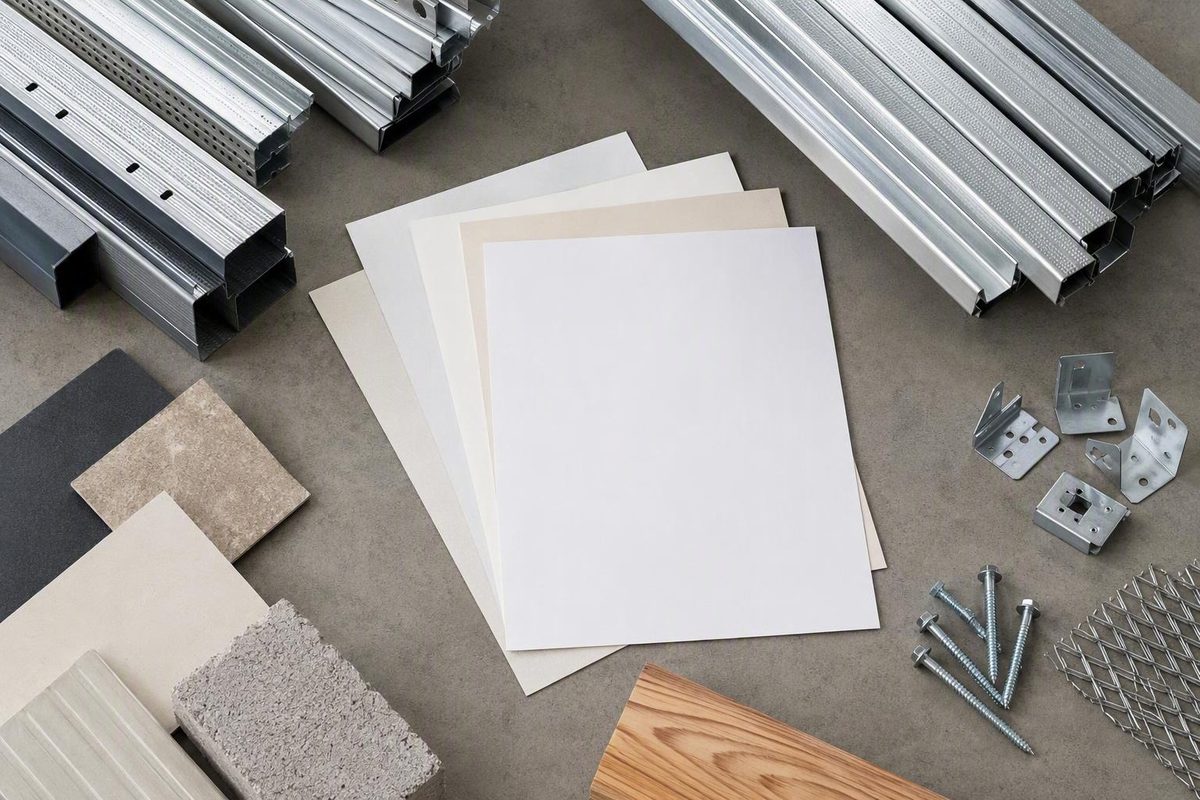
Yes—multiple manufacturers announced 2026 price increases affecting metal framing or broader steel-building-product categories. But the evidence does not support one nationwide percentage or dollar increase for metal studs. To determine the effect on an order, match the manufacturer and exact stud or track specification, then check the notice’s effective date, quote conditions, shipment or delivery trigger, freight, and coating extras.
The short answer: a broad increase wave is documented, but no universal percentage is
A series of manufacturer notices documents a broad wave of announced pricing actions across steel framing and related building products in 2026. The ABC Supply Interiors manufacturer-pricing index lists notices involving ClarkDietrich, Telling Industries, EB Metal/Super Stud, CEMCO, MarinoWARE, Mill Steel Framing, Ram Steel Framing, MBA Metal Framing, AMICO, Niles Building Products, and others.
That does not establish that every metal stud rose by the same percentage—or that every broadly worded notice covered every stud and track SKU. Several announcements use categories such as “all steel products,” “steel-based products,” or “steel Building Products” without itemizing each affected product.
Four pricing events need to be kept separate:
- Manufacturer announcement: Notice that a pricing action is planned.
- Revised price list: The manufacturer’s new published pricing.
- Distributor quote: Pricing for a specific product, quantity, destination, and customer.
- Final transaction price: What is invoiced after the applicable quote, shipment, delivery, freight, and extra-charge terms are applied.
An announced increase does not prove that every distributor implemented it in full or that every customer immediately paid more.
The information in this article is current through September 16, 2026. MarinoWARE’s October 1 action and other later-dated notices were therefore still prospective.
2026 steel-framing price-increase timeline
The table combines the notice dates, stated scope, pricing triggers, disclosed amounts, and quote terms. “Not disclosed” means the cited announcement did not state a general percentage or dollar amount; it does not mean the increase was zero.
| Manufacturer and notice | Stated scope | Effective date and pricing trigger | Amount and quote terms |
|---|---|---|---|
| CEMCO — May 29, 2026 | All steel-based products across all markets | Effective June 29, 2026 | General amount not disclosed. A qualifying job quote requires written commitment within 30 days of origination and remains firm for 180 days from issuance. CEMCO notice |
| ClarkDietrich — July 27, 2026 | Nationwide increase; the notice does not itemize products or explicitly name studs | Effective September 1, 2026 | Amount not disclosed. No specific quote-protection terms stated in the cited notice. ClarkDietrich notice |
| AMICO — August 4, 2026 | All steel Building Products; studs are not individually identified | Applies to shipments on or after September 1, 2026 | Amount not disclosed. No specific quote-protection terms stated in the cited notice. AMICO notice |
| MarinoWARE — September 1, 2026 | All steel products; studs are not individually identified | Applies to deliveries on or after October 1, 2026; the invoice uses the price in effect at shipment | Amount not disclosed. Activated quotes are honored under its policy; quotes not activated within 30 days may be reviewed and repriced or canceled. MarinoWARE notice |
The distributor index also lists notices involving Telling Industries, EB Metal/Super Stud, Mill Steel Framing, Ram Steel Framing, MBA Metal Framing, Niles Building Products, and other suppliers. A separate distributor index lists additional actions with effective dates extending into October 2026, including notices involving ClarkDietrich, MarinoWARE, and Telling Industries.
Repeated notices from one manufacturer should not automatically be added together. A later notice might be cumulative, supersede an earlier action, or apply to a different scope. Determining that requires the corresponding notices and price lists, not simply a count of announcements.
Why the 20.9% steel index increase is not a metal-stud price increase
Upstream steel data show substantial movement, but they do not provide a project-level stud rate. From January through August 2026:
- The steel mill products producer-price index rose from 315.369 to 381.162, approximately 20.9%.
- The iron and steel index rose from 329.774 to 378.128, approximately 14.7%.
- The broader metals and metal products index rose from 362.690 to 388.690, approximately 7.2%.
The May through August values were preliminary in the displayed Bureau of Labor Statistics producer-price data.
These are producer-price indexes for broad upstream categories. They are not dollar prices, metal-stud unit prices, distributor quotes, retail prices, or completed transactions.
Do not apply the 20.9% index movement directly to a metal-stud package. It is market context, not a documented increase for a specific order.
If revised supplier pricing is not yet available, use clearly labeled sensitivity scenarios:
| Planning scenario | Current material quote | Contingency amount |
|---|---|---|
| Hypothetical 5% change | $8,000 | $400 |
| Hypothetical 10% change | $8,000 | $800 |
| Hypothetical 15% change | $8,000 | $1,200 |
These are planning scenarios, not observed 2026 market increases. The reusable calculation is:
Current material quote × hypothetical change rate = contingency amount
For example, $8,000 × 0.10 = $800. Keep that contingency separate from the base estimate until a supplier provides revised, specification-matched pricing.
What manufacturers said was driving the increases
ClarkDietrich cited domestic steel-mill increases, zinc-coating surcharges, longer galvanized lead times, higher transportation costs, and limited access to competitively priced imports in its July 27 notice.
AMICO cited domestic steel pricing and transportation costs in its August 4 notice.
CEMCO cited steel-mill increases and higher coating costs associated with elevated zinc prices in its May 29 announcement.
MarinoWARE attributed its September 1 action to continuing price increases from domestic steel producers.
These are the manufacturers’ stated reasons for their pricing decisions, not independent findings that isolate how much each factor changed a stud’s price.
Tariffs are another possible source of cost pressure, but they require product-specific analysis. A professional summary reports that revised Section 232 treatment took effect for covered customs entries on April 6, 2026. Rates and treatment vary by annex, tariff classification, origin, metal content, and exceptions, as outlined in EY’s analysis of the 2026 proclamation.
The available summaries do not identify the tariff classification of every finished metal stud or track product. They also do not prove that tariffs caused the manufacturer announcements or show how much tariff cost, if any, was passed through to distributors and buyers.
A 25% or 50% tariff rate is not an expected 25% or 50% increase in the price of a stud package. A tariff may apply only to qualifying imports, while the buyer’s final price can include material, fabrication, coating, freight, inventory, margin, and contract terms.
Order date, shipment date, delivery date: which one controls?
The controlling event depends on the supplier’s written terms. Placing an order before an effective date does not necessarily lock the old price if the notice applies according to shipment or delivery date.
AMICO is the clearest shipment-date example: its notice applies to steel Building Products shipped on or after September 1, 2026. An order entered in August but shipped in September could therefore fall under revised pricing unless separate written quote or contract terms protect it.
MarinoWARE uses both shipment and delivery concepts. Its announced increase applies to deliveries on or after October 1, 2026, while the invoice price is the price in effect when the product ships. It also says qualifying activated quotations will be honored under its published policy. Quotes not activated within 30 days may be reviewed and either repriced or canceled.
CEMCO uses a different framework. A job quote must be committed in writing within 30 days of origination to qualify, with quoted pricing remaining firm for 180 days from issuance.
None of these terms supports the assumption that every purchase order, informal estimate, or verbal quote automatically locks the price.
Before placing an order:
- Obtain the price and protection terms in writing.
- Identify whether order, commitment, shipment, invoice, or delivery date controls.
- Ask what constitutes quote “activation” or written commitment.
- Record both the quote-expiration date and any separate price-firmness period.
- Confirm whether freight, fuel, coating, and other extras are included.
- Ask what happens if the supplier or carrier delays shipment.
- Confirm whether partial shipments will be priced separately.
- Retain the accepted quote, purchase order, acknowledgment, and delivery schedule together.
This is especially important near an effective date. Moving the order date forward may not help if production, shipment, or delivery remains scheduled after the pricing trigger.
How to check the real increase on a stud-and-track order
The reliable method is to compare old and new unit prices for identical products. Comparing a 3-5/8-inch nonstructural stud with a wider structural member—or G40 coating with G90—does not reveal the underlying price change.
Match these fields before calculating:
- Manufacturer
- Stud or track designation
- Gauge or design thickness
- Web width and flange configuration
- Length
- Structural or nonstructural classification
- Coating designation
- Quantity and bundle requirements
- Freight terms
- Delivery location
- Quote date
- Shipment or delivery window
Then calculate:
((New unit price − old unit price) ÷ old unit price) × 100 = percentage change
If an identical stud was previously quoted at $10.00 and is now $10.80:
(($10.80 − $10.00) ÷ $10.00) × 100 = 8%
That result applies only to the compared product and commercial conditions. It should not be presented as the national 2026 metal-stud price increase.
Separate the base-product adjustment from coating extras. CEMCO disclosed coating upcharges of 10% from G40 to G60, 10% from G60 to G90, and 20% from G40 to G90. Those adjustments are distinct from its undisclosed general increase on steel-based products. Combining them without checking the price sheet could misstate the change.
Also ask whether the distributor is shipping older inventory.
A change found for one brand, branch, region, gauge, coating, or manufacturer cannot establish a nationwide market rate. A definitive market-wide figure would require dated old and new price sheets, comparable invoices, implemented percentages, precise product scope, and evidence that the announced actions took effect.
The practical workflow is straightforward: identify the relevant manufacturer notice, obtain dated prices for an identical specification, separate coating and freight charges, and confirm in writing which event controls the invoice.
Does a 25% or 50% steel tariff mean metal studs will cost 25% or 50% more?
No. Those are duty rates reported for qualifying imported goods under particular classifications and conditions—not forecasts for customer-level stud prices. Applicability can depend on tariff classification, origin, metal content, annex treatment, and available exceptions or reduced rates. The controlling proclamation, annexes, tariff schedule, and customs guidance determine the treatment of a particular import, as summarized in this trade-policy analysis.
Even where a tariff applies, a finished stud’s price depends on how much landed cost changes, whether that cost is absorbed or passed through, and how fabrication, coating, freight, inventory, and distributor pricing affect the order. Check the product’s classification and origin documentation for tariff treatment, then use a dated supplier quote to establish the actual price.
Will metal-stud prices continue rising through the end of 2026?
The available notices do not establish that they will. Several actions were scheduled for September and October, but an announcement does not determine the price direction of every product through year-end.
For an active project, request a dated quote with a stated firmness period and ask which event controls the invoice. For forecasting, use separate planning scenarios rather than treating a steel index, tariff rate, or manufacturer announcement as a guaranteed price path.