 MortarDesk
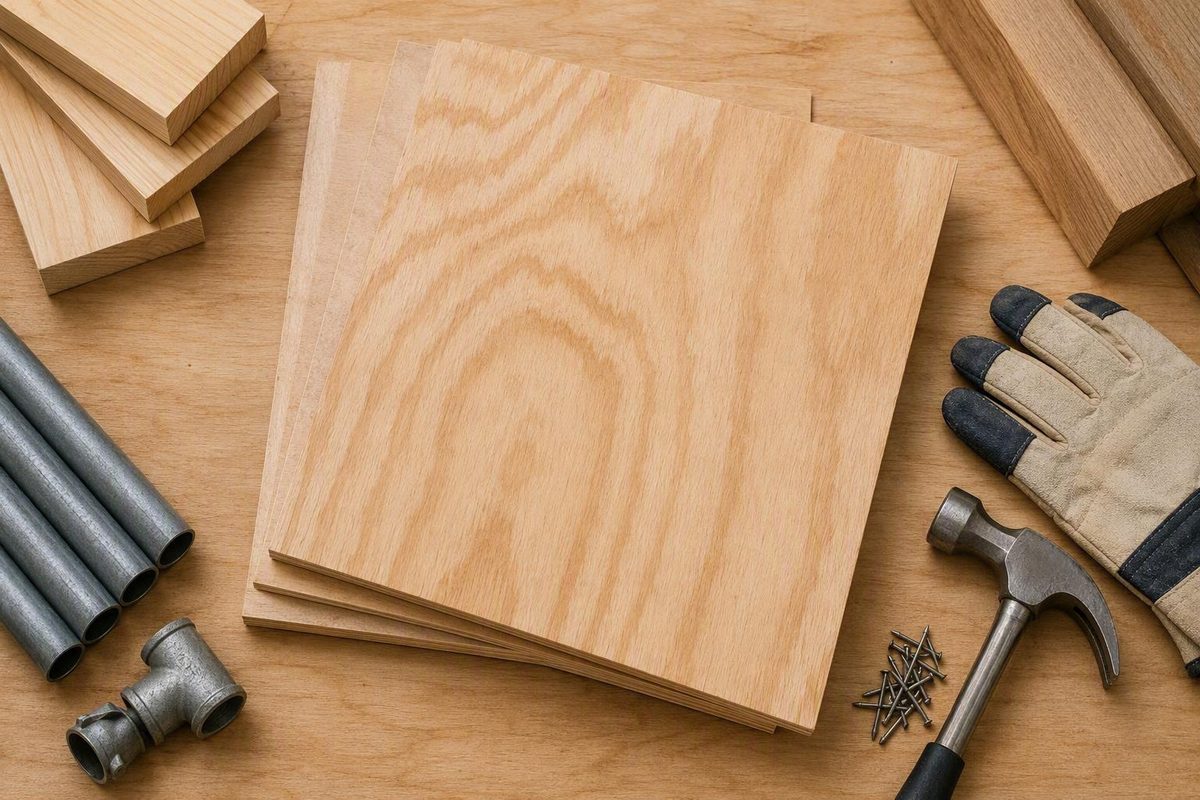
CDX plywood is best treated as a starting description, not a complete specification. Retailers and suppliers generally use the term for construction-oriented softwood plywood with a C-grade face and a D-grade back. Those letters help predict surface appearance, but they do not establish whether a particular sheet is suitable for a roof, wall, floor, outdoor structure, or other assembly.
Before buying, inspect the physical panel stamp. Confirm the thickness, actual dimensions, exposure or bond classification, span rating, edge profile, certification information, manufacturer identification, and any preservative-treatment label. Then compare those details with the plans, support conditions, intended covering, manufacturer documentation, and locally adopted requirements.
Because the available retail sources do not provide a complete standards-based guide to panel stamps or structural installation, this article should be used as a cautious retail-selection overview—not as a substitute for product-specific technical instructions, engineering, or code requirements.
What CDX plywood is—and what the letters do not tell you
In common marketplace descriptions:
- C identifies the grade of one face veneer.
- D identifies the grade of the opposite face veneer.
- X is associated with the adhesive or permitted exposure, but suppliers do not explain it consistently.
The C face is normally the better side, but “better” does not mean cabinet-grade. Knots, patches, repairs, splits, grain or color variation, and other visible defects may be permitted. The D back can be rougher and allow more imperfections. Many CDX products are unsanded because they are intended for construction rather than display.
The C and D letters concern the surface veneers. They do not, by themselves, establish the sheet’s structural capacity, allowable support spacing, exposure durability, decay resistance, treatment status, or suitability for a particular assembly. A rough-looking panel may be rated for sheathing, while a more attractive panel may lack the rating required for structural work.
The X is a frequent source of confusion. Commercial sources variously describe it as exterior-type glue, exterior exposure, or Exposure 1. One retailer guide equates exterior-type glue with Exposure 1 while also limiting CDX to short-term moisture exposure rather than permanent weathering. That is the retailer’s terminology, not a reason to treat the complete panel as waterproof. The exact stamp and manufacturer documentation should take priority over a shelf sign, article, or online title. Review the retailer’s CDX terminology and stated limitations.
- Face grade: The quality and permitted defects of the better face veneer.
- Back grade: The quality and permitted defects of the reverse face veneer.
- Adhesive or bond classification: The moisture exposure the glue bond is documented to tolerate.
- Structural rating: Product-specific information relevant to how the panel may be used and supported.
- Preservative treatment: A separate process intended for specified decay or insect exposures within the treatment label’s limits.
A panel can have a moisture-resistant adhesive without being pressure-treated. It can be pressure-treated without being approved for every outdoor condition. It can also have C and D faces without having the thickness, edge configuration, or span rating required by the plans.
CDX is therefore a construction-panel category rather than a promise that all sheets bearing the name are interchangeable. Products can differ in species, number of plies, actual thickness, rating, edge profile, exposure classification, treatment, width, and available length.
Practical rule: Use “CDX” to identify a general family of rough-faced construction plywood. Use the physical stamp and supporting documentation to determine what the particular sheet actually is.
How the panel is made and why it is intended to be covered
Plywood is made from thin sheets of wood called veneers or plies. Adjacent layers are generally arranged with their grain directions across one another and then bonded into a panel. This cross-laminated lay-up reduces the extent to which the entire sheet moves in one wood-grain direction and contributes to general panel stability.
That construction is separate from surface appearance. The internal veneer arrangement and adhesive form the panel, while the face grades describe the permitted quality of its outer veneers. A sheet can therefore be sold as rated structural sheathing even though its faces contain knots, patches, splits, knot holes, or an unsanded texture.
This helps explain why CDX is commonly concealed within an assembly, including:
- Beneath roofing and its specified underlayment or water-control layers
- Behind siding or another exterior wall system
- Beneath drywall where an assembly calls for structural sheathing
- Below finished flooring
- Inside a protected shed, outbuilding, or utility assembly
- On temporary construction surfaces where appearance is secondary
A Roseburg retail listing provides a bounded product example. The seller identifies its nominal 23/32-inch panel as four-ply, unsanded Rated Sheathing with Exposure 1 durability and says it is suitable beneath drywall, roofing, and flooring. It also warns that knots, splits, and knot holes may be present and that the panel is not intended for exposed, appearance-focused applications. Review the listed Roseburg panel characteristics.
Those details should not be generalized to every sheet labeled CDX. “Four-ply,” “Rated Sheathing,” “Exposure 1,” thickness, and span rating are additional product characteristics; they are not meanings automatically supplied by the letters CDX.
Nor does the phrase “construction plywood” create universal permission for load-bearing work. Suitability depends on the selected panel and complete assembly. Thickness, support spacing, edge support, fastening, orientation where specified, openings, loads, plans, and local requirements can all affect selection and installation.
Moisture resistance is not waterproofing
Standard CDX is commonly marketed as capable of tolerating temporary or intermittent construction moisture. That does not make it waterproof or establish permission to leave it permanently exposed outdoors.
The essential distinction is between the adhesive bond and the wood veneers. A moisture-resistant or exterior-type adhesive can help the plies remain bonded during the exposure covered by the panel’s classification. It does not automatically protect the wood from decay, insects, standing water, repeated saturation, or continuous wetting.
A Lowe’s buying guide uses the phrase “temporary waterproofing” for Exposure 1 adhesive and distinguishes that classification from exterior-rated adhesive and pressure-treated plywood. That wording concerns the adhesive classification; it should not be read as a claim that the complete CDX panel is waterproof. The guide also says CDX should be protected from prolonged exposure. See the retailer guide’s distinctions among Exposure 1, exterior-rated, and pressure-treated plywood.
The sheathing should be protected by the system specified for the project.
The supplied evidence does not establish a universal safe number of hours or days for leaving CDX uncovered. Exposure classification, weather, panel condition, edge damage, installation, and the duration and severity of wetting vary. If the schedule may leave sheathing exposed, consult the documentation for the selected panel.
Standard versus pressure-treated CDX
Pressure treatment is an additional product characteristic. It is not inherent in the C, D, or X designation.
A treated panel may be marketed for conditions involving moisture, decay, or wood-destroying insects, but its permitted uses must come from the treatment label and supporting documentation. One retailer lists a 3/4-inch pressure-treated CDX product and claims resistance to fungal decay and wood-destroying insects. The page does not identify the treatment chemistry, retention level, use category, or approval for continuous wetting or ground contact. Review the treated-CDX listing and the details it does not provide.
Do not infer from a generic “pressure-treated CDX” title that a sheet is approved for:
- Ground contact
- Permanent immersion or continuous wetting
- Every shed floor, porch, ramp, or exterior structure
- Raised beds or proximity to edible plants
- Any particular fastener or connector
- Any structural span or load
Those questions require the complete treatment label, manufacturer instructions, project documentation, and applicable local requirements. Treated and untreated CDX are not interchangeable simply because they share the same face-grade letters.
Where CDX is commonly used—and where it is usually the wrong choice
CDX is most often considered where the panel will be concealed and surface appearance is secondary. “Commonly listed” describes marketplace use; it does not approve an individual product for a particular project.
| Application | General fit for CDX | What must be checked |
|---|---|---|
| Roof sheathing | Commonly listed application | Stamped thickness, panel rating, support spacing, edge support, fastening, roof assembly, plans, and local requirements |
| Wall sheathing | Commonly listed application | Rating, framing layout, orientation if specified, openings, fastening, bracing or shear requirements, weather-control assembly, and code |
| Subflooring | Listed for certain rated products | Thickness, span rating, support spacing, edge profile, blocking or tongue-and-groove requirements, fastening, finished-floor requirements, and plans |
| Sheds and utility structures | Often considered as protected sheathing | Whether it will be concealed beneath roofing or siding, structural rating, floor exposure, treatment requirements, and local rules |
| Temporary work | Commonly cited for enclosures, hoarding, formwork, and jobsite surfaces | Product rating, loads, support, duration, moisture exposure, surface needs, and reuse expectations |
| Permanently exposed outdoor work | Standard CDX is usually a poor default | Documented exterior use, treatment or durability requirements, coatings, drainage, edge protection, and maintenance |
| Cabinets, furniture, or bookcases | Usually a poor choice | Appearance, flatness, voids, edge quality, finish, joinery, and whether a smoother panel is more suitable |
| Visible painted surfaces | May accept coatings but is generally a poor finish-grade choice | Knots, patches, splits, repairs, sanding effort, primer system, and acceptable final appearance |
For roofs, walls, and floors, a generic sheet may be too thin, have the wrong edge configuration, lack the necessary rating, or be incompatible with the specified supports. The supplied evidence does not support a universal CDX thickness or fastening schedule.
Sheds illustrate the difference between protected sheathing and an exposed finish. CDX may be appropriate as structural sheathing beneath roofing and siding when the panel and assembly are properly documented. That does not mean the same untreated sheet should serve as the permanently exposed exterior surface.
Temporary work also covers several distinct demands. A broad retailer application list cannot settle those questions.
Appearance-sensitive projects present the clearest limitation. Standard CDX is a poor default for cabinet doors, furniture, decorative shelving, visible interiors, or walls expected to have a smooth painted finish. Permitted knots, plugs, patches, repairs, grain variation, and unsanded areas can remain visible through coatings.
One Home Depot listing says its CDX pine sheathing can be primed, stained, or painted. That establishes that coatings may be applied to the listed product; it does not promise a smooth or furniture-quality result. See the retailer’s coating description.
If appearance matters, compare the sheet with smoother-faced plywood such as BCX or ACX. The core, bond classification, dimensions, intended environment, and structural rating where relevant still need verification.
How to read the product information before choosing a sheet
The most important information may be printed on the panel rather than in the retailer’s large-font title. Before putting a sheet on the cart, work through the following checklist.
Buyer checklist
- Stamped thickness: Confirm the thickness identified on the panel.
- Actual dimensions: Check actual thickness, width, and length where fit or alignment matters.
- Panel or veneer grade: Determine whether the stamp says CDX, Rated Sheathing, or another description.
- Exposure or bond classification: Read the exact classification rather than inferring it from X.
- Span rating: Treat any rating as product-specific information, not a complete installation recipe.
- Edge profile: Verify whether the sheet is square-edge, tongue-and-groove, or another configuration.
- Certification or agency mark: Identify the organization represented and obtain the applicable documentation before attempting to interpret the mark.
- Manufacturer or mill identification: Retain enough information to locate instructions or resolve questions.
- Treatment label: For treated material, verify the treatment information, use limitations, and related handling or connector instructions.
- Condition: Inspect for delamination, significant swelling, crushed areas, or damaged edges.
A span rating does not independently specify how to install a panel. The supplied retail evidence includes a “48/24” entry but does not authoritatively explain how that rating applies to a particular assembly. Support direction and spacing, orientation, edge support, loads, fastening, and local requirements must come from appropriate project and product documentation.
If an online listing omits an exposure classification, rating, manufacturer, or applicable standard, do not fill the gap by assumption.
Nominal versus actual dimensions
Nominal thickness is a product name and may not equal the finished measurement. This matters when matching existing panels, aligning surfaces, fitting trim, or avoiding an unwanted step between materials.
A nominal 5/8-inch-by-4-foot-by-8-foot square-edge listing reports an actual thickness of 19/32 inch. The same captured listing displayed a price of $31.79 per sheet at a Pennsylvania retailer location. See the listed dimensions and captured price.
A second example appears in the price snapshot below: a nominal 1-inch panel is listed as 31/32 inch actual thickness. Four-by-eight-foot sheets are common in the supplied retail examples, but dimensions, edge profiles, and available lengths vary by product and seller.
Measure the sheet in front of you when tolerances are important. A casual measurement, however, is not a substitute for the panel’s stamped structural identity.
Treat retailer inconsistencies as warning signs
Online fields and images are useful for narrowing a search, but they may conflict. One nominal 23/32-inch product page illustrates several quality-control concerns:
- The title says 23/32 inch.
- The listed actual thickness is 0.75 inch, without explanation.
- One field gives a 48/24 span rating.
- Another field presents 23/32 under the span-rating label.
- Product images are labeled 15/32 inch even though the title says 23/32 inch.
These entries are inconsistent; the available evidence does not establish which field should control. The same captured page displayed a price of $45.67. Inspect the conflicting specifications and captured price.
Prioritize the physical panel stamp and product-specific manufacturer documentation over search snippets, image captions, or duplicated retailer fields.
Edge profiles deserve the same attention.
CDX compared with OSB, smoother plywood, exterior panels, and treated plywood
No panel type is automatically best. The useful question is which documented product fits the intended role.
| Panel category | Intended role | Visible finish | Moisture or exposure question | Treatment | What to verify |
|---|---|---|---|---|---|
| Standard CDX | Concealed construction sheathing and utility work | Rough; defects and repairs may be visible | Commonly marketed for temporary or intermittent construction moisture | Not inherent | Stamp, thickness, rating, bond classification, edges, and manufacturer instructions |
| Rated OSB sheathing | Commonly considered for roofs, walls, and floors | Strand texture; generally concealed | Depends on the rated product and assembly | Not inherent | Rating, thickness, exposure classification, edges, and installation instructions |
| BCX or ACX plywood | Work needing a smoother better face | Generally more suitable for painted or semi-visible work | Must be read from the product documentation | Not inherent | Face and back grades, core, bond classification, dimensions, and finish requirements |
| Exterior-rated plywood | Uses permitted by its documented exterior classification | Varies by face grade | Do not infer continuous exposure solely from appearance or X | Not necessarily treated | Exact classification, protection instructions, and structural rating where relevant |
| Marine plywood | Specialized uses defined by product documentation | Varies | “Marine” is not a substitute for reading the specification | Not necessarily preservative-treated | Governing specification, veneer and core requirements, bond, finish, and intended use |
| Pressure-treated plywood | Documented decay or insect exposure within the labeled category | Often construction-grade | Limited by the treatment label and panel documentation | Yes | Treatment information, use limitations, connector requirements, and structural rating |
| RTD-labeled panel | Another construction-panel label encountered in stores | Usually selected for utility rather than appearance | Product-specific | Not inherent | Full stamp, rating, exposure classification, and manufacturer documentation |
This table is a selection framework, not a standards-based performance ranking. The supplied evidence does not support universal claims that one category is stronger, stiffer, lighter, cheaper, faster-drying, or better at holding fasteners than another.
CDX versus OSB
Both CDX plywood and rated OSB are commonly considered for roof, wall, and floor sheathing. They are manufactured differently: plywood uses veneers, while OSB uses oriented wood strands bonded into panels.
That manufacturing difference does not by itself decide which product is appropriate. Compare actual rated products against the plans and intended assembly rather than relying on uncited percentages or blanket rankings about stiffness, weight, cost, swelling, drying, or fastener performance.
CDX versus BCX or ACX
The practical distinction is often appearance. CDX permits comparatively rough faces and visible defects, making it a common candidate for concealed construction. BCX or ACX is generally a more sensible starting point where a painted or semi-visible face matters.
A smoother face does not answer every other selection question. The panel still needs suitable dimensions, core quality, bond classification, environment, and structural documentation where applicable.
Exposure 1, exterior, and marine terminology
These terms should come from the product stamp or documentation, not from an assumed expansion of X. The supplied retail sources generally associate Exposure 1 with temporary construction moisture, while exterior and marine products are described separately.
Read the complete product documentation rather than treating any one label as a synonym for waterproof or maintenance-free.
Standard versus pressure-treated plywood
CDX face grades and preservative treatment answer different questions. C and D describe face quality. Treatment addresses specified biological exposure within the label’s limits.
A treated sheet may still be rough, may still require a particular structural rating, and may still be unsuitable for applications not shown in its treatment documentation.
A practical selection sequence is:
- Determine whether the panel has a structural role.
- Decide whether it will remain visible.
- Identify the expected duration and severity of moisture exposure.
- Determine whether documented decay or insect protection is required.
- Set the required finish quality.
- Identify the necessary thickness, supports, edge details, and fastening requirements.
- Verify those needs against the physical stamp and product-specific documentation.
Dimensions, prices, and retailer listings: useful snapshots, not specifications
Four-by-eight-foot panels are common in the supplied retail listings. The examples include nominal descriptions of 5/8 inch, 3/4 inch, 23/32 inch, and 1 inch, but the naming is not fully consistent from one listing to another.
Nominal and actual measurements must be kept separate. A nominal 5/8-inch listing reports 19/32 inch actual thickness, while the nominal 1-inch example below reports 31/32 inch. A title using “3/4 inch” may also appear in the market beside a 23/32-inch description.
Captured price examples
The following are undated, product-specific snapshots from the supplied retailer pages. No stable capture date was provided, so none should be treated as a current quote or market average.
- The nominal 5/8-inch untreated, square-edge panel described above was displayed at $31.79 and listed as 19/32 inch actual thickness.
- A nominal 23/32-inch Roseburg Rated Sheathing panel was displayed at $45.67; its page also contained the dimension, image, and span-field conflicts described above.
- A nominal 1-inch-by-4-foot-by-8-foot square-edge panel was displayed at $52.96 and listed as 31/32 inch actual thickness. Review the nominal size, actual thickness, and captured price.
- A 3/4-inch-by-4-foot-by-8-foot pressure-treated CDX listing displayed $60.15 at a retailer in Keene, New Hampshire. See the captured Hamshaw price.
- A separate pressure-treated listing displayed $62.78, illustrating a supplied range of roughly $60 to $63 for these two treated products. See the captured Lowe’s listing and its local-price caveat.
Do not average these figures. The panels differ in thickness description, treatment, grade information, brand, seller, and location. Treated and untreated CDX are especially unsuitable for direct price comparison because preservative treatment is a separate product feature.
Inventory, promotions, pickup times, delivery options, and prices can change by store and date. An online page may also omit a rating that appears on the physical panel—or contain conflicting dimensions, images, or specification fields.
Store-check checklist
Before paying for a sheet:
- Compare the online title with the physical stamp.
- Verify nominal and actual dimensions where fit matters.
- Confirm the panel grade and exposure or bond classification.
- Locate the span rating if the plans require a rated structural panel.
- Check the edge profile.
- For treated plywood, read the complete treatment label.
- Inspect both faces for damage beyond what you are prepared to accept.
- Examine the edges for separation, impact damage, or significant swelling.
- Look across the panel for distortion that could interfere with installation.
- Do not assume a coating will hide knots, patches, splits, or rough grain.
- Photograph or retain the stamp and save the product documentation.
If the title, stamp, treatment label, and retailer specifications disagree, pause the purchase and request clarification. Do not resolve a material discrepancy by choosing whichever description is most convenient.
From transport to covering: a practical handling checklist
CDX is a construction product, but transport and storage can still affect panel condition. Product-specific instructions should control. The following are general precautions rather than structural acceptance criteria.
Transport and storage
- Support sheets during transport rather than severely bending or dragging them.
- Keep panels flat and dry where practical.
- Store them off wet ground.
- Protect them from standing water and prolonged weather.
- Keep stamps and treatment labels identifiable.
- Recheck panel condition before installation after extended storage.
Inspect each sheet before use. If a panel shows delamination, significant swelling, crushed edges, major impact damage, or deterioration that might affect its intended role, seek guidance from the manufacturer or responsible project professional rather than assuming the damage is cosmetic.
Installation and covering
Installed sheathing should be covered by the roofing, siding, flooring, or other system specified for the assembly. Covering means completing the layers intended to manage weather, drainage, finish, and long-term exposure—not merely hiding the sheet.
Some commercial guidance suggests placing the smoother C face outward. Treat that as a general convention, not a universal orientation rule. Follow the panel stamp, manufacturer instructions, and project documentation wherever orientation matters.
Do not improvise universal values for:
- Fastener type, length, or spacing
- Panel gaps
- Support spacing
- Blocking
- Sheathing clips
- Tongue-and-groove requirements
- Edge support
- Panel orientation
- Treatment-compatible connectors
Those details depend on the selected panel, assembly, plans, loads, manufacturer documentation, and locally adopted requirements.
Finishing expectations
CDX may accept primer, paint, stain, or another coating, but coatability and finish quality are separate questions. Knots, plugs, repairs, open grain, splits, and unsanded texture can remain visible.
Even then, the panel may not resemble finish-grade plywood. For visible work, starting with a smoother-faced product is often more practical than trying to turn rough sheathing into furniture-grade material.
Cutting and wood dust
Sawing, drilling, sanding, or otherwise machining wood products can create airborne dust. One supplied CDX listing carries a California warning about wood dust and advises users to avoid inhalation or use a dust mask or other safeguards. Follow the warnings supplied with the selected product. Review the product listing’s wood-dust warning.
Frequently asked questions
Is CDX plywood waterproof?
No. Standard CDX is commonly marketed for temporary or intermittent construction moisture, but that is not the same as waterproofing.
A moisture-resistant adhesive concerns the bond between veneers. It does not automatically make the wood resistant to decay, insects, standing water, or continuous wetting. The panel should be protected by the completed assembly specified for the project.
There is no universal exposure-time limit for every CDX panel. Consult the selected manufacturer’s documentation if sheathing has been significantly wetted or may remain uncovered.
Does the X in CDX always mean Exposure 1?
Do not assume that it does. Commercial sources use X inconsistently, describing it as exterior-type glue, exterior exposure, or Exposure 1.
Read the bond or exposure classification printed on the panel and consult the product documentation rather than attempting to derive the panel’s complete moisture limitations from the letter X.
Can CDX plywood be used for roof sheathing, walls, or subfloors?
CDX is commonly listed for all three applications, but the name alone does not approve a particular sheet.
Verify thickness, rating, span information, support conditions, edge profile, fastening requirements, and exposure classification. Match those details to the plans, manufacturer documentation, intended assembly, and locally adopted requirements.
What is the difference between standard CDX and pressure-treated CDX?
Standard CDX describes face grades and, depending on the product and seller terminology, an adhesive or exposure characteristic. It does not inherently include preservative treatment.
Pressure-treated CDX has undergone a separate treatment process intended to address specified decay or insect exposures. Permitted applications depend on the treatment label and its use limitations.
Do not assume every treated panel is approved for ground contact, continuous wetting, food-growing applications, or every outdoor structure.
Can CDX plywood be painted or used for furniture?
CDX can often be primed, painted, or stained, but applying a coating does not make its surface smooth. Knots, patches, splits, repairs, grain variation, and unsanded texture may remain visible or show through the finish.
It is generally a poor default for furniture, cabinets, decorative bookcases, or smooth painted interiors. Where appearance matters, compare smoother face grades such as BCX or ACX while also checking the core, dimensions, bond classification, and intended environment.
The final purchase rule
Treat CDX as a description of rough-faced construction plywood, then verify the physical stamp, actual dimensions, exposure or bond classification, structural rating, edge details, and treatment label against the plans and local requirements.
If the panel will remain visible, face prolonged moisture, or serve a structural role with specified spans and fasteners, the generic CDX label is not enough.
Mortar Desk publishes general building-material reference information, not project-specific contracting, engineering, or code advice. Specifications change, codes are local, and structural selection should be checked against the documentation and requirements governing the particular project. Read about Mortar Desk’s reference scope.