 MortarDesk
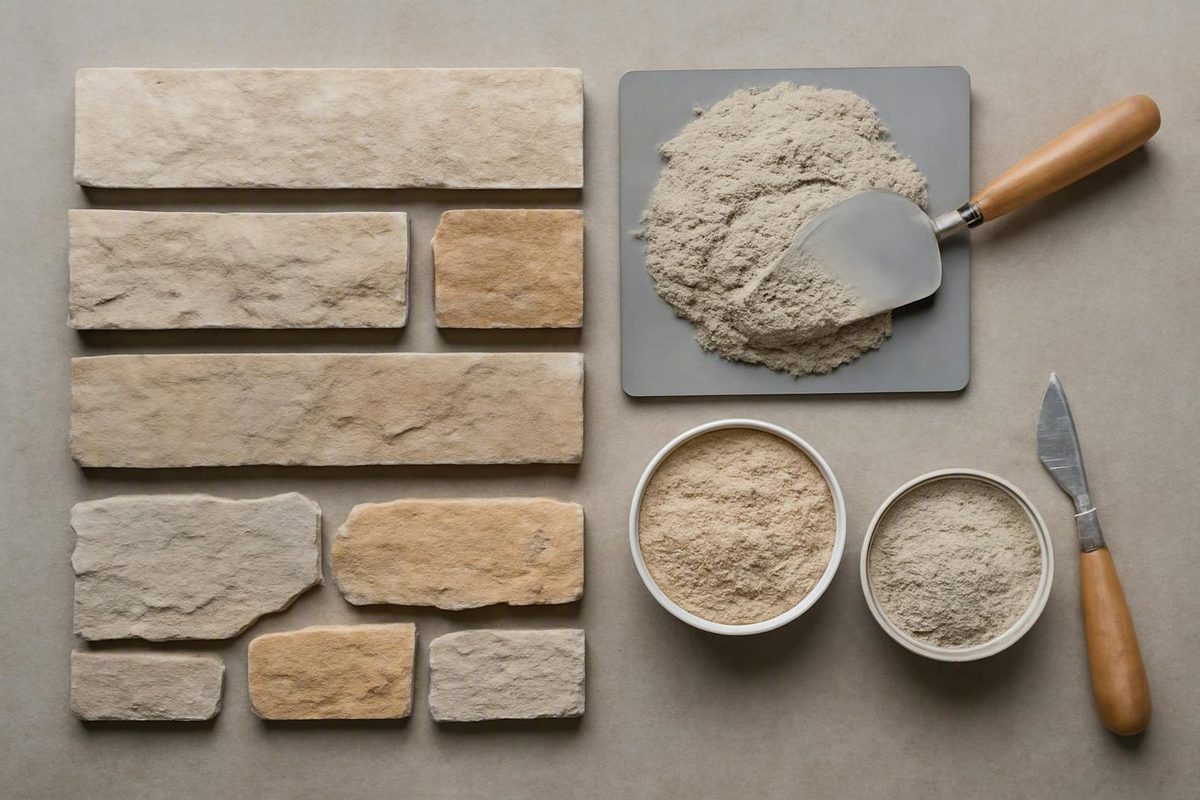
The short answer: choose by veneer, mortar function, substrate and exposure
There is no single best mortar type for every stone-veneer project.
A purpose-formulated, polymer-modified veneer mortar is a well-supported starting point for natural thin stone and many adhered manufactured veneers, particularly where high bond and vertical non-sag performance matter. Type S is commonly associated with scratch coats, demanding exterior exposure and higher-load masonry conditions. Type N may be acceptable for some above-grade, interior, decorative, mild-exposure or softer-stone applications—but only when the veneer manufacturer and complete wall assembly permit it.
The controlling documents are the veneer manufacturer’s current installation instructions and the selected mortar’s technical data sheet. They take priority over a generic recommendation based on the words “Type N,” “Type S” or “polymer-modified.” The approved wall assembly and applicable local requirements must also agree with the choice.
Use this four-part selection test:
- Veneer material: Is it manufactured stone veneer, natural thin stone veneer, full-bed veneer, anchored veneer or load-bearing stone masonry?
- Mortar function: Is the mortar forming a scratch coat, adhering the veneer or filling visible joints?
- Substrate and assembly: Is direct bonding to approved masonry allowed, or does the wall require lath and a scratch coat?
- Exposure and demand: Is the work interior or exterior, wet or dry, above or below grade, and subject to freeze-thaw cycling, wind, seismic movement or unusual loads?
This framework explains much of the apparently conflicting advice about Type N and Type S. One supplier may be discussing natural stone above grade, another may be addressing manufactured veneer on an exposed exterior wall, and a third may be specifying only the scratch coat. Those are different applications.
A practical decision path is:
- Identify manufactured versus natural thin veneer.
- Separate the scratch coat, setting bed and visible joint mortar.
- Determine whether direct bonding is approved or the wall needs lath and a scratch coat.
- Check grade, moisture, freeze-thaw, wind and structural conditions.
- Buy only a product approved for the veneer, function, substrate and exposure.
For example, one natural-stone supplier recommends a high-performance polymer-modified setting mortar rather than conventional Type N or Type S for its vertical natural thin stone, which it describes as approximately 3/4 to 1-1/4 inches thick. That is product-category guidance, not a universal rule for every natural stone. Stoneyard describes the stone range and its recommended setting-mortar properties.
By contrast, guidance for many framed manufactured-veneer walls specifies Type S for the scratch coat over lath but discusses the veneer-setting mortar separately. The function must therefore be identified before mortar labels are compared.
First identify the veneer and the job the mortar must perform
“Stone veneer” describes several materially different products. Before comparing bags, place the project in the correct category.
Manufactured stone veneer is a factory-made facing installed as part of an adhered veneer system. Its manufacturer may prescribe a purpose-made veneer mortar, a conventional mortar meeting a stated classification or a proprietary system.
Natural thin stone veneer is real stone cut or split into relatively thin units for adhered installation. Guidance written for one natural-stone line should not automatically be transferred to every manufactured or natural veneer.
Full-bed or anchored stone veneer uses a different support and attachment arrangement from adhered thin veneer. It should not be treated as synonymous with load-bearing stone masonry, and neither category should be specified solely from guidance for adhered veneer.
Load-bearing or structural stone masonry is different again. Recommendations for foundations, retaining walls or structural stone do not by themselves establish the correct setting mortar for adhered veneer.
The mortar may also be performing one of three separate jobs:
- Scratch coat: A cementitious layer installed over lath or another approved surface and roughened to create a bonding surface.
- Setting or bond coat: The mortar directly between the prepared wall and the back of the veneer.
- Joint mortar: The material placed and tooled between stones, where it becomes part of the visible finish.
A proprietary product may be approved for more than one function, but its documentation must say so. A Type S scratch-coat requirement does not prove that ordinary Type S is also the approved setting mortar or visible joint mortar.
Consider a framed exterior wall clad with manufactured stone. Commercial installation guidance describes assemblies that may include a weather-resistant barrier, galvanized metal lath and a Type S scratch coat. It refers separately to setting mortar for the veneer, so the scratch-coat recommendation cannot be treated as a blanket setting-mortar specification. Requirements still vary by substrate, moisture exposure, veneer instructions and local rules. Mountain View Stone’s wall-preparation guide illustrates the separation between the Type S scratch coat and the setting mortar.
Natural thin stone provides a useful contrast. Stoneyard advises using a high-performance polymer-modified mortar with high bond, non-sag, flexibility and water-retention characteristics for the vertical stone application it describes. Its warning against standard Type N or Type S concerns the setting bed for that natural thin stone; it does not prohibit Type S from serving as a separately specified scratch coat.
The useful questions are therefore:
- What exactly is the veneer?
- Which layer am I building?
- What does that layer bond to?
- Which product does the veneer system approve for that function?
Type N vs Type S vs polymer-modified veneer mortar
Type N and Type S are mortar classifications. “Polymer-modified veneer mortar” describes a purpose-formulated product category, and some products in that category may also carry a Type S classification. The terms are not mutually exclusive.
| Mortar category | Commonly cited compressive strength | Relative workability or rigidity | Bond and vertical-use considerations | Typical conditional applications | Selection cautions |
|---|---|---|---|---|---|
| Type N | About 750 psi | Generally more workable and less rigid than Type S | Conventional masonry performance; vertical veneer suitability depends on the product and assembly | Some above-grade, interior, decorative, mild-exposure or softer-stone work where expressly permitted | Do not assume that “above grade” makes Type N acceptable for every veneer |
| Type S | About 1,800 psi | Stronger and typically stiffer or less workable than Type N | Often associated with higher strength and bond demands; frequently specified for scratch coats over lath | Some exterior work, higher-load masonry, at- or below-grade masonry conditions and scratch coats | The label alone does not establish wet-area, freeze-thaw, direct-bond or complete-system approval |
| Polymer-modified veneer mortar | Product-specific | Formulation varies; products may offer added flexibility or easier vertical handling | Commonly designed for improved bond, water retention, water resistance or non-sag placement | Natural thin stone and manufactured adhered veneer where the named product is approved | Verify the exact veneer, substrate, bed thickness and exposure |
| Polymer-modified mortar also classified Type S | Product-specific | Combines a masonry classification with proprietary formulation characteristics | May be designed for scratch, bond or joint work, depending on its data sheet | Proprietary systems listing both designations | Not every Type S mortar is polymer-modified, and not every polymer-modified mortar is Type S |
Kafka Granite reports the commonly cited figures of approximately 750 psi for Type N and at least 1,800 psi for Type S. It associates Type N with more general, above-grade and softer-stone applications and Type S with more demanding exterior, at-grade or below-grade conditions, while cautioning against selecting mortar that is excessively strong relative to soft stone. These are supplier recommendations rather than universal system specifications. Kafka Granite provides the strength figures and conditional application guidance used in the table.
Type N
Type N is a medium-strength, comparatively workable conventional mortar. It can be a plausible choice for certain dry interiors, decorative installations, moderate above-grade exposures and softer natural stone. Its lower compressive strength and greater workability can be useful where compatibility and modest movement accommodation matter more than maximum hardness.
Type N should not, however, be treated as the universal default for above-grade veneer. A manufactured product may require Type S or a proprietary setting mortar. A natural thin-stone system may specify a high-bond polymer-modified product. An exposed exterior assembly may require wet-service or freeze-thaw performance that the Type N classification alone does not establish.
Type S
Type S is a higher-strength conventional mortar commonly associated with demanding exterior conditions, higher loads, lateral demand and masonry at or below grade. It is also frequently identified as the scratch-coat mortar over metal lath in manufactured-veneer assemblies.
Type S can also be an approved veneer-setting mortar. QUIKRETE, for example, identifies Mason Mix Type S, Veneer Stone Mortar and Polymer Modified Veneer Stone Mortar as ASTM C270 Type S products for listed stone applications. The selector nevertheless assigns them different attributes and functions, including very-low-sag performance and dry-stack use for particular veneer products. QUIKRETE’s selector distinguishes the functions and manufacturer-reported performance of its listed Type S products.
The shared classification does not make those products interchangeable. It also does not mean that every Type S mortar is approved for the selected veneer, substrate or exposure.
Polymer-modified veneer mortar
Polymer-modified veneer mortar is cement-based mortar formulated with polymeric components to change properties such as bond, flexibility, water retention, water resistance or vertical non-sag performance. Exact characteristics are product-specific.
This category is often a strong starting point for natural thin stone on vertical surfaces and manufactured veneer systems that call for a dedicated setting mortar. It is particularly relevant when the installation depends on adhesive bond rather than the compressive role of a conventional masonry bed.
LATICRETE describes MVIS Veneer Mortar as polymer-fortified, fiber-reinforced and mixed with water for adhered natural or manufactured stone, thin brick and other listed materials. The manufacturer also reports compressive-strength and shear-bond testing while directing users to its data sheet and system documents for limitations. It does not present the product simply as Type N or Type S. LATICRETE lists the product’s intended materials, substrates and manufacturer-reported testing.
A dedicated veneer mortar can therefore have compressive strength above a conventional Type S figure without being documented as Type S. Conversely, a Type S classification does not automatically establish the non-sag, shear-bond, substrate or exposure characteristics required by a specific adhered-veneer system.
Do not use generic field-mix ratios as substitutes for proprietary instructions. Preblended products have specified water quantities, mixing sequences, rest or remix procedures and working limits.
Decision matrix by veneer type and project conditions
The following matrix provides a starting point, not a final specification.
| Application or condition | Best-supported starting point | Why the answer is conditional | Verify before buying |
|---|---|---|---|
| Natural thin stone on a vertical wall | Manufacturer-approved, high-bond, non-sag polymer-modified veneer mortar | Natural stone varies in weight, absorption, dimensions and surface characteristics; some suppliers reject conventional Type N or Type S as the setting bed for their thin stone | Stone instructions, mortar data sheet, unit limits, substrate and exposure approval |
| Manufactured stone on a framed exterior wall | Purpose-made setting mortar approved by the veneer manufacturer; evaluate the scratch coat separately | The setting product may be Type S, polymer-modified or both. The wall may also need a weather-resistant barrier, lath and Type S scratch coat | Veneer manual, framed-wall assembly, flashing and drainage details, lath and scratch-coat specification |
| Manufactured stone over clean concrete or CMU | Approved veneer mortar suitable for direct bonding, if expressly allowed | Curing compounds, contamination, coatings, smoothness or moisture can prevent an adequate bond | Mortar substrate list, veneer instructions and required surface preparation |
| Dry interior decorative veneer | Purpose-made veneer mortar; Type N may be considered if expressly permitted | Mild exposure reduces environmental demands, but gravity, substrate compatibility and veneer weight still matter | Interior-use approval, substrate limits and veneer dimensions or weight |
| Soft natural stone | Compatible lower-rigidity mortar or an approved polymer-modified system selected for the stone | Maximum compressive strength can shift movement-related stress into softer masonry | Stone supplier’s compatibility guidance, mortar strength and documented bond performance |
| Freeze-thaw or persistently wet exposure | Complete veneer system expressly approved for the exposure | A Type S designation alone does not establish water management, freeze-thaw suitability or compatibility across all layers | Exterior or wet-service rating, drainage assembly, flashing, curing limits and system documentation |
| High-wind or seismic exposure | Project-approved or engineered complete assembly | Mortar is only one component; substrate, attachment, lath, anchors, movement joints and veneer geometry may govern | Project specification, tested assembly, local requirements and design-professional direction |
| At- or below-grade conditions | Complete veneer system expressly permitted at that location | General Type S recommendations for below-grade masonry may concern structural masonry rather than adhered veneer | Veneer-system grade limits, waterproofing and drainage design, substrate and local requirements |
For high-wind, seismic and other demanding applications, supplier guidance associates Type S with greater lateral or exposure demands, but the mortar label cannot establish structural suitability for the whole wall. Project-specific requirements must control. Kafka Granite discusses wind, seismic and grade conditions as selection factors rather than universal approvals.
The same caution applies below grade. Sakrete markets its dedicated Stone Veneer Mortar Mix for setting and grouting natural or artificial veneer above or below grade over listed substrates. That is a product-specific manufacturer statement; it does not prove that every veneer or wall assembly is permitted below grade. Sakrete lists the product’s stated functions, substrates and grade claims.
For framed walls, keep the scratch coat decision separate from the setting-bed decision. For mild interior work, Type N may be plausible when expressly permitted, although a purpose-made mortar may offer better vertical handling or bond. For severe exposure, missing drainage, unsuitable sheathing or inadequate attachment cannot be corrected by choosing a stronger mortar.
Why the highest-psi mortar is not automatically the best
Compressive strength measures resistance to crushing under compression. That matters, but adhered veneer must also remain bonded to a vertical substrate while responding to moisture, temperature change and limited assembly movement.
Relevant properties include:
- Shear or tensile bond: Resistance to forces trying to slide or pull the veneer from the wall.
- Extent of coverage: The amount of effective contact among the mortar, stone and substrate.
- Flexibility or movement accommodation: The ability of the mortar and assembly to tolerate limited differential movement.
- Water retention: The ability to retain the water needed for placement and curing rather than losing it too quickly to an absorptive surface.
- Non-sag performance: Resistance to downward movement before the mortar develops sufficient hold.
- Workability: The ability to spread, key in, back-butter and obtain the required contact without excess water.
- Exposure resistance: Product-specific suitability for exterior moisture, wet areas, installation temperatures and freeze-thaw conditions.
The conventional Type N and Type S compressive-strength figures do not determine veneer compatibility by themselves. They do not say whether a mortar is approved over cement backer board, can support the selected units vertically or has the documented bond performance required by a proprietary system.
Stronger may also mean more rigid. Supplier guidance for natural stone warns against choosing mortar solely for maximum hardness because a mortar stronger or less accommodating than soft stone may shift movement-related damage into the stone.
That does not make Type N automatically preferable. A wall may require the greater strength, bond characteristics or exposure performance of Type S. Alternatively, a polymer-modified veneer mortar may combine high compressive strength with product-specific bond and handling characteristics that the compressive number does not describe.
Before comparing products, check:
- Stone hardness, absorption and surface texture.
- Veneer thickness, weight and unit dimensions.
- Direct-bond versus lath-and-scratch-coat construction.
- Expected substrate and joint movement.
- Interior, exterior, wet and freeze-thaw exposure.
- Application thickness and required mortar coverage.
- Vertical non-sag limitations.
- Documented shear-bond or tensile-bond performance.
- Whether a test or classification applies to the mortar alone or the complete veneer assembly.
Formal mortar classification and veneer-system bond testing answer different questions. A manufacturer may identify a mortar as ASTM C270 Type S while separately reporting a shear-bond result or a proprietary system test. Those values should not be collapsed into one “psi” ranking.
Check the substrate and the complete wall assembly
The same mortar may be approved over one substrate and restricted over another. “Bonds to stone” does not mean “bonds directly to every wall.”
Clean concrete or CMU
Direct bonding may be possible when both the veneer and mortar manufacturers approve it. The surface must still meet their preparation requirements.
Do not assume that all poured concrete or concrete masonry is ready to receive mortar. Required surface profile, moisture condition and preparation are product-specific.
Unpainted masonry
Sound, clean, unpainted brick or masonry may be eligible for direct application or a preparatory scratch coat, depending on the system. Existing joints, weak units, efflorescence, contamination and previous repairs must be evaluated.
A surface that looks like bare masonry may still contain clear sealers or water repellents. Confirm its condition rather than relying on appearance.
Cement backer board
Some veneer mortars list cement backer board as an approved substrate.
LATICRETE lists concrete, CMU, concrete block and cement backer board among the substrates for MVIS Veneer Mortar. Its product information directs users to consult the backer-board manufacturer, including confirmation that the board is acceptable for exterior use. It lists exterior-glue plywood, gypsum plaster and gypsum wallboard only for interior, non-wet applications. LATICRETE’s substrate list illustrates why the exact surface and exposure must be verified.
Wood-framed construction
An exterior framed wall commonly requires a layered assembly rather than direct mortar application to sheathing. Depending on the approved system, that assembly may include:
- Sheathing and framing meeting project requirements
- A weather-resistant barrier or drainage layer
- Correctly integrated flashing
- Corrosion-resistant lath attached as specified
- A scratch coat fully embedding the lath
- An approved veneer-setting mortar
- Required joints, clearances and terminations
Commercial manufactured-stone guidance describes weather-resistant barriers, galvanized lath and a Type S scratch coat for many framed or otherwise unsuitable substrates, while directing readers to the veneer manufacturer and local requirements. Mountain View Stone outlines this conditional framed-wall preparation.
A high-bond polymer-modified product cannot replace required flashing, weather barriers, drainage or structural support.
Prepared OSB or plywood
OSB and plywood require particularly careful review of the data sheet. Sakrete lists prepared OSB for its Stone Veneer Mortar Mix, but the product page does not define that preparation. “Prepared” should not be read as permission to spread mortar directly over any OSB panel.
Likewise, a mortar may list exterior-glue plywood only for dry interior work. That does not make the installation acceptable outdoors or in a wet area. Confirm the panel grade, fastening, deflection limits, intermediate layers and exposure restrictions.
Gypsum surfaces
Drywall, gypsum plaster and related surfaces may be limited to dry interior applications, if allowed at all. Veneer weight, board attachment, surface treatment and exposure must fall within the relevant instructions.
Do not transfer an interior gypsum approval to an exterior facade or wet installation. A manufactured-stone exterior assembly may instead require lath and a scratch coat over the framed substrate.
Painted or sealed masonry
Do not assume direct-bond suitability over paint, waterproofing, sealer or unknown coatings. Acceptable remedies may include removal to sound masonry, an approved bonding treatment or mechanically attached corrosion-resistant lath. The veneer and mortar system must identify the permitted method.
Polymer modification does not automatically eliminate:
- Weather-resistant barriers
- Flashing and drainage
- Metal lath
- Scratch coats
- Anchors or other support
- Movement joints
- Approved backer boards
- Required substrate preparation
Each component performs a different job. Setting mortar cannot manage concealed water or make an inadequately supported substrate structurally suitable.
How to verify a mortar product before buying
Collect the controlling documents before comparing price or bag yield. At minimum, review:
- The veneer manufacturer’s current installation instructions
- The mortar manufacturer’s current technical data sheet
- The approved substrate or backer-board documentation
- Applicable local requirements and adopted code provisions
- Any tested-assembly information referenced by the project
- Warranty terms and required system components
Confirm the mortar’s stated function. A bag carrying the words “stone veneer” might be intended for a setting bed, scratch coat, grout joints or several functions. The product name alone does not answer that question.
Check each of the following:
- Manufactured veneer, natural stone or both
- Scratch-coat, bond-coat, setting-bed and joint applications
- Approved substrates and required preparation
- Interior and exterior ratings
- Dry, wet and freeze-thaw exposure
- Above-, at- or below-grade limitations
- Minimum and maximum application thickness
- Maximum veneer weight or unit dimensions, if stated
- Vertical non-sag performance
- Mixing equipment, water quantity and sequence
- Open time, pot life and working time
- Application and curing temperatures
- Protection and curing requirements
- Cleaning restrictions
- Packaging, shelf life and storage
- Required primers, membranes, lath or companion components
Manufacturer selectors can narrow the field but should not be treated as universal substitution approvals. QUIKRETE’s selector identifies Mason Mix Type S, Veneer Stone Mortar and Polymer Modified Veneer Stone Mortar as ASTM C270 Type S products for listed veneer uses. It also gives the dedicated products different attributes and applications, demonstrating why the shared classification does not make them interchangeable. QUIKRETE provides the classifications, functions and product-specific attributes.
LATICRETE says MVIS Veneer Mortar is polymer-fortified, fiber-reinforced and mixed with water. It also reports testing against cited compressive-strength and shear-bond requirements. Those are manufacturer claims for the named product under defined conditions, not proof of compatibility with every stone, substrate, climate or jurisdiction.
Sakrete offers another model: a dedicated product marketed for setting and grouting natural or artificial veneer over masonry, concrete or prepared OSB. Its page separately recommends another product for scratch or brown coats. That reinforces the need to distinguish functions.
Warranty documents also require careful reading. Purchasing one system component does not establish warranty eligibility.
Finally, treat general online guidance as procurement screening rather than project approval. Mortar Desk describes itself as a building-material reference desk, not a contractor or provider of engineering advice. Specifications change, and local requirements and current manufacturer instructions must be checked before buying or building.
Installation and purchasing details that can change the result
Nor can it correct missing drainage, incomplete coverage, incorrect water addition, expired working time or inadequate curing protection.
Surface preparation and contact
The substrate should meet the mortar and veneer manufacturers’ requirements for cleanliness, soundness, flatness, moisture condition and surface profile. Loose material and bond-breaking contamination must be addressed by an approved method.
Back-buttering may be required to obtain the specified contact and support. Stoneyard, for example, instructs installers to back-butter each natural thin-stone unit in the application it describes. That direction is specific to the supplier’s installation guidance and does not replace the selected system’s coverage, keying-in, troweling and placement instructions. Stoneyard includes back-buttering and clean-substrate instructions in its natural thin-stone guidance.
“Full contact” should mean the coverage required by the system, not mortar touching a few points on the back of the stone. Follow the product instructions for checking and correcting coverage.
Water and mixing
Do not estimate water solely by appearance or add extra water simply to make stiff mortar easier to spread. Commercial mixing guidance warns that excess water can weaken mortar, while insufficient water can reduce workability and make proper placement harder. Thin Brick Company summarizes these water-addition cautions and directs users to product instructions.
Use the product’s measured water range and mixing sequence. If the instructions require mechanical mixing, a rest period and remixing, follow that sequence. Do not add more water after the mortar begins to stiffen unless the manufacturer expressly permits it.
Thickness, working time and coverage
Application thickness is product-specific. It affects performance as well as estimated coverage.
Calculate coverage from the chosen product rather than a category-wide bags-per-square-foot figure.
As a clearly labeled example, Sakrete states an application thickness of 3/8 to 1/2 inch for its Stone Veneer Mortar Mix. It gives estimated yields of 8 square feet per 50-pound bag and 13 square feet per 80-pound bag and reports final strength greater than 1,800 psi. The supplied product page does not identify this dedicated mortar as Type S. Sakrete publishes these product-specific thickness, package, yield and strength figures.
Do not transfer those figures to another product.
Curing and environmental conditions
Fresh mortar needs the protection specified by its manufacturer. Do not use a temperature range or curing period remembered from another product.
Plan the work so installers can remain within the stated open and working times. Include time for staging, cutting, back-buttering, placement, joint filling and cleaning—not only spreading mortar.
Visible mortar color and texture
Where joints remain visible, mortar is a finish material as well as a bonding material. Appearance can be affected by:
- Pigment or cement color
- Sand color and grading
- Water addition
- Batch consistency
- Joint depth and tooling
- Curing conditions
- Cleaning method
- Sealers or adjacent stone treatments
Wet mortar may cure lighter than it first appears. Build a representative mock-up using the actual stone, selected mortar, intended bed and joint profile, tooling method and proposed cleaning procedure. Let it cure fully, then inspect it in different lighting for staining, haze, color variation, texture and cleaning damage. Horizon Stone recommends evaluating a fully cured mock-up and notes the potential color difference between wet and cured mortar.
Pre-purchase checklist
Record these items before calculating the order:
- Total net veneer area
- Corners, returns, openings and difficult details
- Whether mortar is needed for the scratch coat, setting bed, joints or all three
- Selected product for each function
- Required application thickness
- Manufacturer’s stated yield at that thickness
- Substrate roughness and stone-back variation
- Expected placement and mixing waste
- Bag size and pallet quantity
- Shelf life and storage requirements
- Availability of matching colors and production batches
- Ability to obtain additional matching material if the estimate is low
Treat the result as a planning quantity, not a guaranteed order.
Frequently asked questions
Is Type S or Type N mortar better for exterior stone veneer?
Neither is universally better.
Type S is commonly associated with higher strength, demanding exterior exposure and scratch coats over lath. Some manufactured-stone suppliers favor it for exterior veneer. Type N may be acceptable for certain above-grade installations in moderate exposure, especially with softer natural stone, when the veneer system expressly permits it.
For an exterior wall, verify the veneer category, setting-mortar approval, substrate, drainage assembly, freeze-thaw suitability, bond requirements and curing conditions. A Type S label alone does not establish compatibility or prevent moisture- or movement-related problems. Mountain View Stone, for example, generally favors Type S for manufactured veneer while still emphasizing the controlling role of manufacturer requirements and complete installation details. Its Type N versus Type S discussion presents that position as manufactured-stone supplier guidance.
Should natural thin stone veneer be installed with polymer-modified mortar?
A manufacturer-approved, high-bond, non-sag polymer-modified veneer mortar is a strong starting point for natural thin stone on a vertical surface. It addresses bond and handling properties that compressive-strength classification alone does not describe.
Approval remains specific to the stone, mortar, substrate and exposure. Confirm unit thickness and weight, stone compatibility, bed thickness, coverage requirements, back-buttering instructions and exterior or wet-use limitations. Do not assume that every polymer-modified tile mortar is suitable for natural stone veneer.
Can Type S be used for both the scratch coat and the veneer-setting bed?
Sometimes, but only when the selected product and veneer system approve both functions.
A Type S mortar may be specified for the scratch coat while a different proprietary mortar is required to set the veneer. Conversely, a purpose-made Type S veneer mortar may be documented for scratch coats, bond coats and grout joints.
Read the function list on the current technical data sheet rather than extending a scratch-coat specification to the setting bed.
Does polymer-modified mortar eliminate the need for metal lath or a scratch coat?
No. Polymer modification can change mortar properties, but it does not replace components required by the approved wall assembly.
A framed exterior wall may still require a weather-resistant barrier, flashing, drainage provisions, corrosion-resistant lath and a scratch coat. Other walls may permit direct bonding to approved concrete, masonry or cement backer board. The substrate and veneer instructions determine the assembly.
Do not apply polymer-modified mortar directly to OSB, plywood, drywall, painted masonry or another questionable surface unless the exact system permits that substrate, preparation and exposure.
How much stone veneer mortar is needed per square foot?
Use the selected product’s stated coverage at the specified application thickness. There is no reliable category-wide figure.
As one product-specific example, Sakrete states approximate coverage of 8 square feet from a 50-pound bag and 13 square feet from an 80-pound bag at a listed 3/8- to 1/2-inch application depth. Those figures apply to that named product and should not be transferred to other mortars.
Adjust the planning quantity for rough substrates, irregular stone backs, scratch-coat work, visible joints, thicker placement and waste. Keep scratch-coat, setting-bed and joint-mortar quantities separate, then confirm the estimate with the supplier.
Final purchasing rule
Use four steps before ordering:
- Identify the veneer: manufactured, natural thin, full-bed, anchored or load-bearing stone construction.
- Identify the mortar function: scratch coat, setting bed or visible joints.
- Verify the substrate and exposure: including grade, moisture management, freeze-thaw conditions, wind and movement demands.
- Buy only a product approved across the veneer instructions, mortar data sheet and complete wall assembly.
Polymer-modified veneer mortar, Type S and Type N all have plausible uses. None is a safe universal answer based only on its label or compressive strength.