 MortarDesk
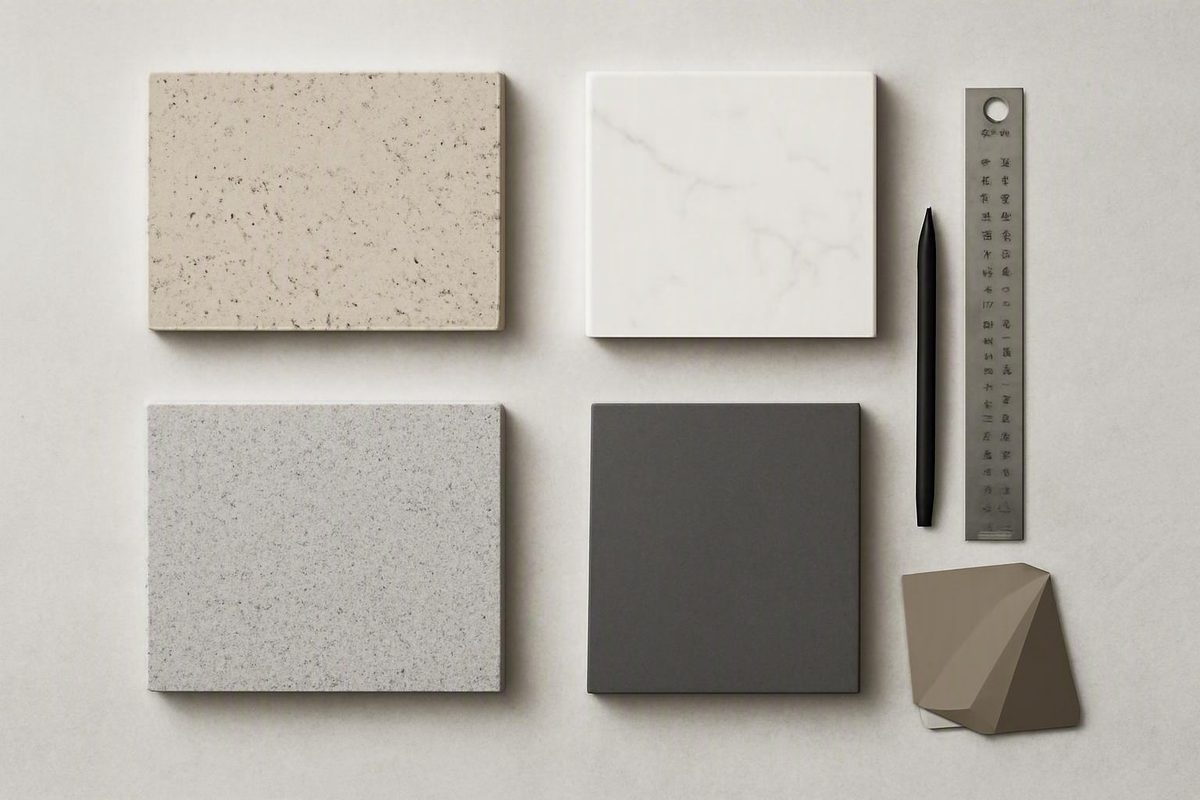
The short answer: Silestone is a brand, while quartz is a category
Silestone is a countertop-surface brand manufactured by Cosentino. It sits within the broader market commonly described as engineered quartz, although Cosentino uses “hybrid surface” terminology for newer Silestone products. Quartz countertops, by contrast, are sold by numerous manufacturers under many brand and collection names. A commercial remodeling guide to Silestone and quartz likewise identifies Silestone as a Cosentino brand within the larger engineered-quartz category.
That makes “Silestone vs quartz” an imperfect comparison. It is like comparing one appliance brand with the entire category of appliances containing it. Silestone can have distinctive colors, finishes, formulations, distribution arrangements, and warranty terms, but it is not wholly separate from the countertop category in which shoppers encounter Caesarstone, Cambria, MSI, and other manufacturers.
There is also no single uniform product called “generic quartz.” Products sold under that label can differ in:
- Mineral and binder composition
- Color, pattern, and finish
- Thickness and slab availability
- Manufacturing tolerances
- Care requirements
- Warranty coverage
- Regional inventory
- Fabricator experience
- Installed price
The useful purchasing question is therefore not whether Silestone is better than an undefined product called quartz. It is whether a specific Silestone collection is a better fit than named competing collections at comparable design and price levels.
For each candidate, record the manufacturer, collection, color, finish, and thickness. Then request the current technical sheet, care instructions, written regional warranty, access to full slabs, and an itemized installation quote based on the same drawing.
Concise verdict: Silestone may justify a premium when its particular color, finish, documented formulation, local availability, or verified warranty has measurable value for the project. Another reputable quartz product may be the better value when it meets the same design and technical requirements at a lower normalized installed price. The available evidence does not show that the Silestone name alone guarantees universally better performance.
Silestone and other quartz products at a glance
Silestone and competing quartz products share several broad characteristics, but important details remain product-specific. The table separates shared traits from brand-specific points and variables that must be checked for the exact product.
| Broadly shared traits | Documented Silestone-specific points | Variables that depend on the exact product |
|---|---|---|
| Manufactured rather than quarried as a finished slab | Manufactured by Cosentino | Total installed price |
| Engineered construction using minerals, binders, pigments, and other ingredients | Newer products described with hybrid-surface terminology | Exact mineral, resin, recycled-material, or silica content |
| Commonly positioned as nonporous | Hybriq terminology for documented newer products | Color and pattern quality |
| Commonly sold as not requiring routine sealing | Silestone collections, colors, and finishes | Pattern repeat and slab-to-slab consistency |
| Mild daily cleaning generally recommended | Brand-specific technical and care guidance | Thickness and local slab inventory |
| Resistance to many ordinary household stains | Cosentino distribution and warranty processes | Performance against particular stains or chemicals |
| Cutting boards remain advisable | Formulation and manufacturing claims specific to the brand | Scratch, chip, impact, and heat performance |
| Vulnerability to direct or sustained heat | Multiple aesthetic options | Warranty eligibility, exclusions, and labor coverage |
| Fabrication quality affects the finished result | Product names and finishes unique to Silestone | Lead time, replacement prospects, and fabricator experience |
Both Silestone and quality competing quartz surfaces are commonly positioned as durable, low-maintenance interior materials. Their nonporous character removes the recurring sealing schedule associated with some natural stones. It does not make a countertop self-cleaning, stainproof, or immune to damage.
“Resistant” is not the same as “proof.” Either type of product may be scratched, marked, chipped, cracked, scorched, or discolored. Seams may be conspicuous or poorly aligned. Cutouts and overhangs may become vulnerable when fabrication or support is inadequate. Those outcomes can depend as much on layout, installation, and use as on the logo printed on the slab.
Price and warranty also resist simple brand-wide conclusions. A value-tier competing quartz may cost less than a premium Silestone design, while a high-end competing collection may overlap with or exceed the cost of a particular Silestone selection. Warranty terms can vary by region, purchaser, product, registration status, and installation method.
There is no sound basis in the supplied evidence for declaring a universal durability winner. Such a conclusion would require standardized comparative testing of equivalent colors, finishes, thicknesses, production generations, and installation conditions. Treat every candidate as a documented product rather than relying on a broad brand or category label.
Composition: why a single quartz percentage can be misleading
Traditional descriptions of engineered-quartz countertops refer to mineral particles combined with polymer resins, pigments, and other additives. That remains a useful category-level explanation, but it is not a dependable specification for every product currently sold under a quartz-related label.
Older and third-party articles commonly assign Silestone a fixed quartz percentage. Published figures include approximately 90%, 94%, and a broader 90%–95% range. Those figures may describe conventional engineered-quartz production, older formulations, or selected products, but they should not automatically be applied to every current Silestone collection.
Cosentino’s newer terminology is different. It describes new Silestone surfaces as hybrid products made with premium minerals and recycled materials using Hybriq Technology. Secondary descriptions also associate Hybriq+ with reduced crystalline silica, but they do not establish one composition or reduction level for every Silestone color, collection, market, or production generation. A Silestone review discussing Hybriq+ and changing composition illustrates why a legacy percentage should not be treated as a universal current specification.
The supplied manufacturer material does not state one quartz percentage that applies to every current Silestone product. Buyers should therefore request:
- The complete product and collection name
- The color and finish
- The current technical data sheet
- The document revision date
- Any declared mineral or crystalline-silica information
- The applicable fabrication guidance
- The current residential care instructions
- The written warranty for the relevant region
It can also prevent a buyer from comparing a current hybrid Silestone product with a legacy specification copied from an older article.
Hybriq or Hybriq+ should be understood only as a formulation or manufacturing differentiator for the products to which that documentation applies. The evidence does not provide one composition percentage for every product, nor does it establish a universal household health or performance advantage for an intact installed countertop.
The practical rule is simple: do not use 90%, 94%, or 90%–95% as a universal specification for new Silestone. Obtain the current technical sheet for the exact collection and color being quoted.
Durability in daily use: resistant does not mean damage-proof
Silestone and reputable competing quartz surfaces are broadly suitable for homeowners seeking a durable, nonporous, low-maintenance interior countertop. They are commonly considered for kitchens, bathrooms, utility rooms, and other spaces where predictable appearance and straightforward cleaning matter.
What the evidence does not establish is equally important. It does not prove that Silestone is universally more:
- Scratch-resistant
- Stain-resistant
- Impact-resistant
- Heat-resistant
- Hygienic
- Chip-resistant
- Crack-resistant
- Durable overall
than every competing quartz product.
Product quality varies, as do use conditions. A pale polished slab in a lightly used bathroom does not face the same demands as a dark matte surface beside a busy range. A small counter with no seams is not directly comparable with a large island assembled from multiple slabs.
Stains, scratches, and visible residue
A nonporous surface can resist liquid penetration while still retaining dried residue or showing discoloration from particular substances. Prompt cleanup remains sensible, especially for strongly colored foods, oils, cosmetics, ink, rust, and products not addressed by routine-care guidance.
Use a cutting board even when a countertop is described as scratch-resistant.
Color and finish also affect perceived performance. The evidence does not support a universal ranking in which polished, matte, suede, light, or dark finishes always perform better.
Chips, cracks, and installation-related damage
Edges and corners are common impact zones. Heavy cookware striking a sink edge may chip a surface that otherwise tolerates normal use. Cutouts, narrow strips, seams, and overhangs deserve particular attention because their performance depends heavily on layout, support, handling, and fabrication.
A commercial fabricator identifies impact, thermal shock, and inadequate support around cutouts or overhangs among potential contributors to cracking or damage. These are possible causes, not proof of responsibility in any individual case; a damaged top requires case-specific assessment by the installer, supplier, or an experienced independent fabricator. See the fabricator’s discussion of Silestone heat, impact, support, and installation risks.
Before installation, ask how the fabricator will handle:
- Sink and cooktop cutouts
- Narrow countertop sections
- Seam placement
- Overhang support
- Waterfall panels
- Slab transport and handling
- Cabinet readiness
- Layout approval
Do not diagnose a crack from photographs alone or assume that it is automatically a material defect. Record the installation date, product details, symptoms, and any known heat or impact event before repair work begins.
What owner reports can—and cannot—tell you
Owner discussions contain both long-term success stories and complaints about stains, rings, marker residue, seam discoloration, and heat-related marks. Some contributors report years of heavy use without meaningful damage, while others describe isolated problems involving Silestone, Caesarstone, or another quartz product. This range is visible in a Houzz discussion of owner experiences with Silestone and other quartz countertops.
These reports illustrate possible outcomes, not typical rates. Forum contributors are self-selected, products may come from different generations, and posts rarely establish the exact formulation, installation details, cleaner concentration, heat exposure, or cause of damage. Anecdotes can generate useful questions for a supplier or fabricator, but they cannot show that one brand fails—or succeeds—more often than another.
The defensible durability verdict is conditional: both Silestone and another reputable quartz product can perform well when the selected surface is competently fabricated, properly supported, and used within its care limits. Neither should be purchased on the assumption that it is indestructible.
Cleaning, heat, sealing, and outdoor-use rules
Silestone does not require periodic sealing, and many comparable engineered-quartz products are sold on the same basis. That is a meaningful maintenance advantage over materials that require recurring sealer application, but “no sealing” does not mean “no care.”
Routine cleaning and stain treatment
For current Silestone, Cosentino directs owners to apply neutral soap, rub gently with a damp microfiber cloth, allow brief contact where needed, remove the soap residue, and dry the surface. For specified wine, coffee, tea, and food-coloring stains, the manufacturer permits a 15% bleach solution for two minutes, followed by rinsing; it also warns that prolonged bleach exposure can permanently stain the surface. These instructions are product-specific and should not be generalized to another brand or older surface without checking its current care sheet. See Cosentino’s Silestone maintenance guidance.
For routine use:
- Remove loose or gritty debris.
- Apply the cleaner permitted by the current care sheet.
- Wipe with a soft cloth using light pressure.
- Remove cleaner residue.
- Rinse if directed.
- Dry the surface.
A competing manufacturer may specify different products, pads, concentrations, or contact times. Keep the care sheet for the exact countertop with the household records.
Third-party advice conflicts on bleach, vinegar, acetone, alkaline cleaners, solvents, disinfectants, and abrasive pads. Some sources advise avoiding a product completely, while others permit it for a narrow stain-removal procedure. When instructions conflict, use this order of priority:
- Current care sheet for the exact product
- Written clarification from the manufacturer
- Advice from the supplier or authorized fabricator
- Generic retailer, blog, or forum guidance
Do not assume that a treatment recommended for one Silestone generation, finish, or stain is safe for every Silestone surface. Likewise, do not extend Silestone instructions to another quartz brand.
Heat precautions
Treat Silestone and other resin-containing quartz surfaces as heat-resistant rather than heatproof. Direct, sustained, or concentrated heat and sudden temperature changes can damage the surface or binder. Use a suitable trivet or protective mat beneath hot cookware and heat-producing appliances; a fabricator’s care guidance likewise recommends heat protection rather than direct placement on the countertop.
That precaution applies to:
- Slow cookers
- Air fryers
- Toaster ovens
- Electric griddles
- Hot plates
- Pressure cookers
- Coffee equipment with warming plates
- Sous-vide containers or circulators
Follow the appliance manufacturer’s clearance requirements as well as the countertop care instructions.
Do not rely on one universal safe-temperature threshold. Product formulation, exposure duration, heat distribution, and the protective material all influence the risk.
Outdoor exposure
Silestone should not be selected for outdoor or sustained UV-exposed use without written product-specific approval. Cosentino’s guidance does not recommend outdoor installation because ultraviolet exposure may damage or alter the surface; a third-party Silestone care guide also warns against outdoor and UV-exposed installations.
A roof or partial enclosure does not necessarily eliminate sunlight. Before approving an exterior installation, obtain written guidance addressing the exact product, UV exposure, climate, and warranty eligibility. If exterior use is central to the project, consider a countertop category specifically designed and warranted for those conditions.
Chips, cracks, and loose joints
A chipped area may sometimes be assessed for repair by a stone supplier. Whether a repair will be structurally and visually acceptable depends on the chip’s size, location, finish, color, and pattern.
Cosentino’s maintenance guidance says surface cracks generally cannot be repaired durably and directs owners to have loose joints assessed and, where appropriate, remade by the installer or stone supplier. Photograph the problem and collect the purchase, slab, and installation records before making alterations.
Avoid casual do-it-yourself filling or polishing.
Cost comparison: use installed quotes, not brand averages
One commercial countertop marketplace reports a broad installed Silestone estimate of approximately $60 to $140 per square foot, while identifying customization, thickness, color, labor, and project size as cost drivers. The page was last updated in January 2026, but the estimate is not tied to one location or standardized project scope, so it should be treated only as a rough screening figure. See the marketplace’s Silestone countertop cost overview.
Competing quartz prices overlap substantially with Silestone. A value collection may cost less, while a premium competing design may cost as much as—or more than—a particular Silestone selection. There is no dependable fixed Silestone surcharge, and “non-Silestone quartz” does not mean inexpensive quartz.
Why square-foot prices can mislead
Two suppliers may advertise the same price per square foot while providing very different scopes. One quote may include templating, standard edges, cutouts, delivery, and installation. Another may cover material or net countertop area before fabrication fees.
Slab yield creates another distortion.
The lowest square-foot figure may also exclude the details that made the product attractive, such as a mitred edge, full-height backsplash, book-matched waterfall, or controlled seam placement.
Quote-normalization worksheet
Require every bidder to price the same drawing and complete the same fields:
| Quote item | Supplier A | Supplier B | Supplier C |
|---|---|---|---|
| Manufacturer, collection, color, and finish | |||
| Material thickness | |||
| Measured countertop area | |||
| Number of slabs charged | |||
| Slab dimensions or usable yield | |||
| Waste allowance | |||
| Standard and upgraded edge profiles | |||
| Sink cutout and finishing | |||
| Cooktop or range cutout | |||
| Faucet and accessory holes | |||
| Seam locations and number of seams | |||
| Backsplash | |||
| Waterfall panels or end returns | |||
| Overhang and cutout supports | |||
| Demolition and countertop removal | |||
| Disposal fees | |||
| Field templating | |||
| Delivery | |||
| Installation | |||
| Plumbing disconnection or reconnection | |||
| Appliance coordination | |||
| Taxes and permits, if applicable | |||
| Warranty registration or administration | |||
| Total installed price |
Record the quote date, project location, lead time, and expiration date. Labor, distribution, promotions, and inventory can change, so an older quote may not represent current choices.
If one bidder proposes a different seam, slab count, support method, or edge, ask for an explanation rather than forcing unlike plans into a superficial price comparison. The useful number is the total installed cost for an equivalent finished project, not the lowest advertised material rate.
Design, slabs, warranties, and installer quality
Silestone’s strongest practical advantage may be a specific design rather than a universal performance lead. A particular background color, vein movement, texture, finish, documented formulation, or locally stocked slab may suit the project better than the closest competing product.
That value is legitimate, but it should be assessed in the full slab rather than inferred from the brand name.
Inspect full slabs
Full-slab inspection is especially important for:
- Large islands
- Waterfall ends
- Full-height backsplashes
- Long runs with visible seams
- Vein-matched layouts
- Projects requiring multiple slabs
- Strongly directional patterns
Use this showroom checklist:
- Does the background read warm, cool, gray, cream, or bright white?
- Is the sheen appropriate under the project’s lighting?
- Does the texture feel practical for the intended use?
- How often does the pattern repeat?
- Which direction do the dominant veins run?
- How much variation appears within one slab?
- How different are the available slabs from one another?
- Where will seams fall?
- Will vein direction change across a seam or corner?
- How will the pattern look on the proposed edge?
- Does the finish show fingerprints, water residue, or glare?
- Can the required slabs be reserved for the project?
Photograph the selected slabs and record their identifiers if the supplier permits it. Confirm whether those exact slabs—not merely the same product name—will be used.
Read the warranty, not the headline
A commercial fabricator reports a 25-year Silestone residential warranty, but that secondary source does not establish universal current eligibility, transferability, regional coverage, or labor terms. The duration should not be relied upon until the buyer has obtained the current written warranty applicable to the exact product and location.
Ask:
- Must the product be registered, and by what deadline?
- Who is the eligible owner?
- Is coverage transferable?
- Must an approved fabricator perform the work?
- What proof of purchase and slab information must be retained?
- Does coverage apply only to manufacturing defects?
- Are heat, chemicals, stains, scratches, chips, or impacts excluded?
- Are fabrication and installation problems excluded?
- Who pays for removal, fabrication, transport, labor, and plumbing?
- What photographs, samples, or inspections are required?
- Who submits and manages the claim?
- What happens if the original dealer closes?
- Is an exact replacement color or pattern guaranteed?
A long material warranty may have limited practical value if it excludes removal and installation labor. Conversely, a capable local fabricator may provide useful workmanship support for issues outside the surface manufacturer’s coverage.
Vet the installer as carefully as the material
Ask each fabricator:
- How many projects have you completed with this exact product or collection?
- Can I approve the full-slab layout before cutting?
- Who decides seam placement?
- How will directional veins be aligned?
- How will sink and cooktop cutouts be prepared and supported?
- What reinforcement is proposed for overhangs and waterfalls?
- How will the slabs be transported and handled?
- Can you provide recent references for comparable layouts?
- Do you carry appropriate insurance?
- What written installation warranty do you provide?
- Who manages a manufacturer claim?
- Who is responsible if a slab breaks during fabrication or installation?
- What happens if the installed layout differs from the approved plan?
Seam quality, cutout preparation, support, cabinet readiness, handling, and installation technique can materially affect the result regardless of the slab’s logo. Paying more for a premium surface while selecting the least capable fabricator is often a poor trade.
Which should you choose? A project-based decision guide
Choose Silestone when a specific Silestone feature matters enough to justify the normalized installed price. That feature might be:
- A color unavailable elsewhere
- A preferred finish or texture
- A particular vein pattern
- A documented current formulation
- Better local slab availability
- A shorter or more dependable lead time
- Written warranty terms that suit the project
- A fabricator with strong experience in that product
Choose another reputable quartz product when a named alternative provides the desired appearance, documented specifications, acceptable care requirements, suitable warranty, and competent fabrication for less.
Budget remodels, rentals, and multi-unit projects
Prioritize total installed cost, stock availability, repeatability, and replacement prospects.
Brand prestige usually matters less than:
- Predictable supply
- Acceptable appearance
- Clear maintenance instructions
- Simple fabrication
- Replacement availability
- A fabricator capable of repeating the installation across units
Do not choose solely from the lowest square-foot advertisement. Extra slabs, cutout charges, delivery, and weak after-sales support can erase an apparent material saving.
Premium kitchens
Treat the surface as a complete visual assembly. Inspect full slabs, approve the layout, and plan pattern continuity through corners, backsplashes, and waterfall ends.
The most expensive brand is not automatically the best choice. A less costly product with better slab selection and a more skilled fabricator may produce the stronger result. Conversely, a specific Silestone design may be worth paying for when no competing slab delivers the intended appearance.
Large islands, waterfalls, and multi-slab layouts
Resolve the following before approving fabrication:
- Number of slabs
- Pattern repeat
- Slab orientation
- Seam locations
- Vein transitions
- Waterfall alignment
- Edge build-up
- Structural support
- Expected waste
- Responsibility for layout approval
Large projects magnify small differences. An awkward repeat or poorly positioned seam that appears minor on a sample can dominate the finished installation.
Outdoor or sun-exposed counters
Do not select Silestone for exterior or sustained UV exposure without written approval for the exact product and location. General Silestone guidance advises against outdoor use because UV exposure may damage or alter the surface.
If exterior use is central to the project, compare materials expressly designed and warranted for those conditions. Evaluate climate, staining, heat, support, and installation requirements rather than considering UV resistance alone.
When another countertop category may fit better
Consider granite, quartzite, porcelain, sintered surfaces, stainless steel, or another category when the project prioritizes something quartz may not provide.
A different category may be appropriate when:
- Direct heat tolerance is a primary requirement
- The countertop will receive sustained outdoor sunlight
- Natural, nonrepeating variation is desired
- The owner prefers the aging or repair characteristics of another material
- Very thin profiles or specialized cladding details are central to the design
Each alternative introduces different tradeoffs. The project requirements—not a universal material ranking—should determine the shortlist.
A five-step buying workflow
- Shortlist exact products. Record the manufacturer, collection, color, finish, and thickness.
- Obtain current documents. Collect technical data, fabrication guidance, care instructions, and the applicable written warranty.
- Inspect full slabs. Review color, sheen, pattern repeat, variation, seam locations, and slab matching under relevant lighting.
- Normalize itemized quotes. Use the same drawing, edge, cutouts, supports, demolition, delivery, installation, plumbing, taxes, and slab assumptions.
- Verify responsibilities in writing. Confirm who handles layout approval, breakage, installation defects, warranty registration, and future claims.
Do not choose between Silestone and an undefined material called quartz. Compare exact collections under equivalent project conditions. Silestone is worth considering when its appearance, finish, documented formulation, availability, or support has identifiable value. Otherwise, a well-documented competing quartz product installed by a capable fabricator may deliver better overall value.
Frequently asked questions
Is Silestone real quartz?
Silestone is a Cosentino-branded manufactured surface historically and commonly classified within the engineered-quartz countertop market. Cosentino now describes newer Silestone products as hybrid surfaces made with premium minerals and recycled materials using Hybriq Technology.
So the answer is yes in the ordinary countertop-market sense. However, “real quartz” should not be interpreted as meaning a slab of quarried natural quartz or a product with one fixed quartz percentage. Check the technical sheet for the exact collection and color.
Is Silestone more expensive than other quartz countertops?
Sometimes, but not always. Silestone is commonly positioned in the mid-to-premium market, while products from other quartz manufacturers span value, midrange, and premium tiers.
One commercial estimate places installed Silestone at roughly $60 to $140 per square foot, but that is not a national average or a project quotation. A value-tier alternative may cost less, while a premium competing product may overlap with or exceed the price of a Silestone selection. Compare total installed quotes for the same drawing and specifications.
Do Silestone and quartz countertops need sealing?
Silestone does not require periodic sealing. Many comparable engineered-quartz products are also sold as nonporous surfaces that do not need routine sealer application.
They still require cleaning and reasonable protection from heat, abrasion, impacts, and unsuitable chemicals. Verify the care sheet for the exact competing product rather than assuming every quartz surface has identical instructions.
Can you put a hot pan or countertop appliance directly on Silestone?
No. Treat Silestone as heat-resistant rather than heatproof, and use a suitable trivet or protective mat beneath hot cookware and heat-producing appliances.
That includes slow cookers, air fryers, toaster ovens, electric griddles, hot plates, and sous-vide equipment. Follow both the appliance-clearance instructions and the countertop manufacturer’s current guidance.
Can Silestone be used outdoors?
Cosentino does not recommend Silestone for outdoor use because UV exposure may damage or alter the surface. A roof or partial enclosure does not necessarily prevent sunlight from reaching it.
For an exterior countertop, obtain written approval for the exact product and location or choose a material specifically designed and warranted for outdoor exposure.