 MortarDesk
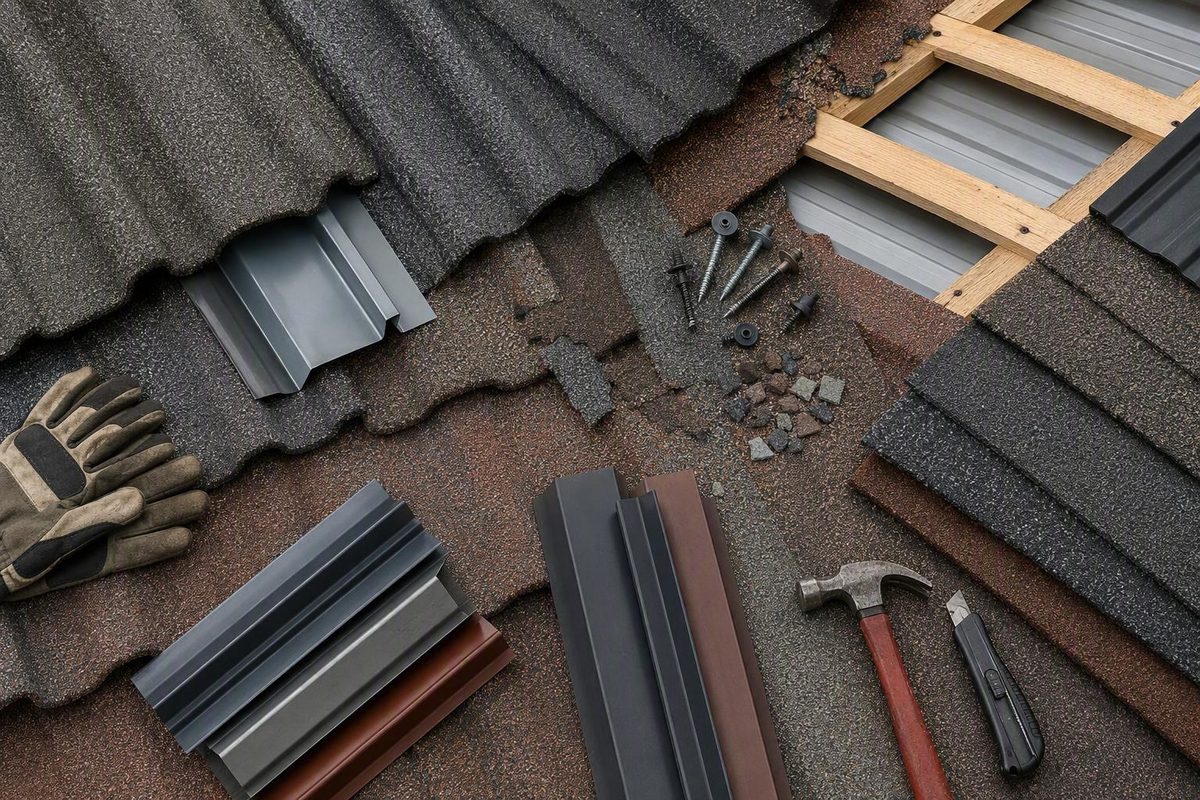
A lasting stone-coated steel roof repair begins with the assembly, not the most obvious crack or gap. The visible symptom may involve the stone finish, but water may be entering through a panel joint, fastener, valley, penetration, flashing transition, underlayment, or damaged roof deck.
That distinction affects the scope. An isolated defect may be eligible for resealing, reanchoring, patching, or finish restoration. A damaged panel or flashing component may need replacement. Recurring leaks, deteriorated wood, widespread corrosion, or repeated failures can justify opening and rebuilding a larger section.
This article is a preliminary homeowner discussion guide, not a repair specification. The available evidence consists mainly of contractor-authored guidance and a general sealant manufacturer’s guide; it does not include a complete set of roof-system repair manuals, technical bulletins, warranties, trade standards, or local code provisions. Use the framework to organize an inspection and evaluate a proposal—not to select universal products, fasteners, sealants, or roof-access procedures.
The objective is to identify the likely underlying defect, determine which layers may be affected, and ask whether the proposed work is compatible with the particular manufacturer, profile, installation method, and warranty.
How a stone-coated steel roof affects the repair approach
Stone-coated steel roofing generally consists of formed steel panels or tiles with a bonded stone-granule surface. Profiles may resemble conventional tile, wood shake, shingles, or slate, although dimensions, interlocks, fastening points, and accessories vary among systems. A contractor overview illustrates these common stone-coated metal roof profile families.
A repair may have to preserve three connected elements:
- The steel substrate. This is the formed body of the panel. A puncture, severe crease, damaged edge, or corrosion may affect how it fits or sheds water.
- The roof assembly. Panels, overlaps, interlocks, fasteners, supports, underlayment, valleys, flashings, and accessories work together. A sound-looking field panel cannot compensate for a defective wall flashing or open penetration.
- The bonded finish. The coating and stone granules provide color and texture over the steel. A repair may need to restore appearance, but cosmetic treatment should not conceal damage beneath the finish.
Reaching a valley, wall flashing, underlayment section, or deck area may therefore require nearby panels to be lifted or removed and then reinstalled.
Generic exposed-metal patching instructions are incomplete for this application. They may not address the stone finish, concealed fastening locations, panel interlocks, profile deformation, compatible touch-up materials, or interaction with adjoining metals and coatings. A proposed patch must also fit the way the particular system drains.
Before selecting products or authorizing work, try to identify:
- The roof manufacturer and product line
- The panel or tile profile
- The approximate installation date
- Whether the roof is direct-to-deck, batten-mounted, or installed another way
- The original installer, if known
- Available invoices, specifications, installation instructions, and warranty documents
- Records of previous coatings, sealants, patches, or panel replacements
Mortar Desk publishes general building-material reference information.
Symptom-to-cause guide for common roof problems
The following table is a discussion aid rather than a diagnosis or complete inspection protocol. Several defects may produce the same symptom, particularly after a storm or prolonged leak. Contractor-authored repair guidance identifies loose or bent panels, fastener problems, punctures, short valleys, wall-detail failures, abandoned openings, debris, damaged vents, and deteriorated decking as recurring repair concerns, but the proposed remedy still has to be checked against the actual roof system. Examples appear in this stone-coated steel tile repair guide.
| Visible symptom | Plausible locations or causes | What else to discuss with the inspector | Possible repair level |
|---|---|---|---|
| Loose, rattling, or lifted panel | Failed or missing fastener; inadequate anchoring; unsuitable or absent support; wind effects; panel movement; misalignment; installation defect | Neighboring panels and fasteners; supporting wood or batten; panel edge and interlock; underlayment; signs of water entry | Reanchoring if the panel and support remain sound; panel replacement or localized rebuilding if the edge, support, or interlock is damaged |
| Interior stain or active drip | Panel overlap; valley; hip or ridge; wall transition; chimney; skylight; vent; pipe penetration; failed sealant; damaged flashing | Details above and upslope from the stain; underlayment; fasteners; attic staining; decking; gutters and drainage | Resealing where the joint is correctly constructed; component or flashing replacement where the detail is defective; deck work if wood is damaged |
| Dented or bent panel | Hail; falling debris; foot traffic; service work; other impact | Seam and interlock fit; fasteners; drainage shape; coating condition; underside where accessible | Limited reshaping or reanchoring may be considered for minor deformation; replacement may be considered when the panel has lost its fit |
| Puncture or tear | Sharp debris; tool damage; careless access; failed accessory; impact | Location and extent; distortion; corrosion; proximity to a seam or fastener; condition below | Compatible patching may be considered for limited eligible damage; replacement may be more appropriate when fit or a joint is affected |
| Granules in gutters or below an edge | Limited shedding; recent work; traffic; coating deterioration; impact | Whether loss is stable or increasing; condition of the underlying coating; scratches, exposed steel, or rust | Observation or approved finish restoration for limited loss; broader evaluation where protective layers are damaged |
| Fading or chalking | Weathering; UV exposure; aging coating; incompatible prior treatment | Coating adhesion; bare areas; rust; differences between exposed and sheltered sections | Cleaning or system-appropriate finish work after product-specific review |
| Rust spots or streaking | Scratches; cut edges; punctures; exposed steel; fasteners; persistent moisture; coating loss | Extent around edges or beneath loose finish; source of repeated wetting; panel condition; adjacent flashing | Compatible preparation and protection may be possible for limited eligible areas; replacement may be needed if the component no longer functions properly |
| Debris in a valley or drainage path | Leaves, branches, sediment, or construction debris; obstructed gutter or downspout | Water marks; valley metal; panel ends; underlayment; deck edges; overflow path | Debris removal and drainage correction; valley or deck work if water has already entered the assembly |
| Open gap at a ridge, hip, wall, vent, or pipe | Failed sealant; displaced trim; movement; insufficient overlap; incorrectly arranged flashing; missing closure | Adjacent panels and fasteners; flashing orientation; concealed opening; history of resealing | System-appropriate resealing for a correctly configured joint; reconstruction where overlap or flashing is defective |
| Soft, stained, delaminated, or dry-rotted decking | Long-running leak; recurring flashing defect; backed-up drainage; open penetration; underlayment failure | Source above the damaged wood; surrounding framing; underlayment; panel supports; extent beyond the visible stain | Selective roof removal, wood replacement, correction of the entry detail, and reinstallation of compatible components |
| Damaged vent cap, skylight component, or abandoned opening | Impact; deterioration; corrosion; remodeling; missing cover; failed flashing | Curb or flange; panel integration; underlayment; deck; other abandoned penetrations | Component repair or replacement, or durable closure of an abandoned opening rather than perimeter caulk alone |
Rust requires context. A visible mark does not establish how far corrosion extends, whether it has affected the panel’s function, or whether moisture is continuing to reach the location. Nor should a small exposed area automatically be dismissed when it is at a cut edge, seam, fastener, or repeatedly wet transition. The practical question is whether the affected panel or detail remains sound and correctly fitted.
Granule loss also needs context. Limited shedding may occur, but a growing bare area, damaged underlying coating, exposed steel, or rust deserves closer assessment. A contractor discussion of stone-coated steel damage similarly identifies chipped coating, rust, loose panels, compromised fasteners, flashing defects, and panel movement as possible concerns, while emphasizing inspection beyond the first visible symptom. See this stone-coated steel repair overview.
Trace the water path before treating the visible leak
Begin with details above and upstream of the stain. A discussion with the inspector should generally cover:
- Ridges and ridge terminations
- Hip caps and intersections
- End laps, side laps, seams, and panel overlaps
- Upper-roof tie-ins
- Roof-to-wall connections
- Chimneys and chimney chases
- Skylights and curbs
- Vents, pipes, and other penetrations
- Valleys and valley terminations
- Eaves, gutters, and downspouts
- Accessible underlayment, framing, and deck conditions
Direction matters. If a stain appears below a wall intersection, inspect the wall connection and details above it before focusing on the nearest field panel. If the stain appears beside a valley, consider whether debris is backing up water, whether the valley reaches its intended discharge point, and whether adjoining panels direct water into it correctly.
A visible sealant split may be the immediate opening without being the underlying defect. The joint may be moving because a panel is loose. Flashing may be poorly oriented or inadequately integrated. An overlap may be insufficient. A valley may end before the intended drainage point. An old pipe opening may have been left after remodeling.
That distinction helps explain recurring leaks. Replacing a failed bead without correcting the configuration behind it can leave the same vulnerable joint in place.
Recurring moisture, stained or softened decking, or a leak that persists after surface resealing may justify selective inspection beneath the affected roofing. The purpose is to expose only enough of the assembly to establish whether concealed panel edges, fasteners, supports, underlayment, flashing, or decking are involved.
A contractor’s proposed sequence might include:
- Documenting exterior and interior symptoms before disturbing the roof
- Inspecting the apparent defect and surrounding upslope details
- Comparing the installation with available system instructions
- Lifting or removing only the components needed for access
- Recording concealed conditions
- Correcting the entry detail and replacing affected materials
- Reinstalling compatible panels, trims, fasteners, and finish materials
- Documenting the completed repair
- Rechecking the original symptom after suitable weather exposure or another system-appropriate verification process
This is a scope-review sequence, not a validated procedure for moisture meters, infrared scanning, controlled water testing, panel disassembly, or roof access. The supplied evidence does not establish universal methods for those tasks.
What the principal repair methods involve
The method should match both the defect and the roof system. The categories below summarize possible approaches reported in commercial repair guidance; they are not manufacturer-approved instructions for every product.
Loose panels or tiles
A loose panel may be eligible for reanchoring if it remains correctly aligned and its edges, interlocks, and supporting material are sound. Before approving that work, ask whether the contractor has checked:
- The available nailing strip, batten, deck, or other support
- Whether the existing fastener engaged sound material
- Whether surrounding fasteners or panels are also moving
- Whether the panel is misaligned or deformed
- Whether the underlayment shows signs of damage
There is no universal nail, screw, coating, length, diameter, or fastening pattern for every stone-coated roof. An oversized fastener should not be assumed to be the correct response to a loose one. The proposal should identify the intended fastener and explain how its location and use were confirmed for the roof in question.
Bent or dented panels
Contractor guidance describes both reshaping and replacement as possible responses to bent steel tiles. Limited reshaping may be considered when the panel can be returned to its intended position without leaving a defective edge, joint, or fit. Replacement may be more appropriate where deformation affects an overlap, seam, interlock, or the panel’s ability to sit correctly.
Location matters. Damage in the field of a panel is not necessarily equivalent to damage at an edge that interacts with neighboring components.
Small punctures
A limited puncture may sometimes be addressed with compatible patch metal and sealant. Whether that is suitable depends on the damage, the surrounding panel, its location relative to joints, and the roof manufacturer’s requirements.
Replacement may be preferable where the panel is distorted, corroded, difficult to patch without obstructing drainage, or no longer fits correctly. A generic manufacturer guide distinguishes between patching limited metal-roof damage and replacing extensively damaged flashing, but it does not address restoration of a stone-granule finish. It should therefore be treated as general background rather than a stone-coated roof specification. See the metal-roof sealing and patching guide.
Granule and coating loss
Matching granules bonded over an eligible repair area are reported as an option for localized cosmetic restoration.
The condition beneath the granules must be evaluated first. Any proposed primer, coating, adhesive, or replacement granule should be identified in the scope and checked for use with the existing surface.
Damaged penetrations and abandoned openings
A damaged vent cap, skylight component, pipe detail, or abandoned flashing opening should be treated as a possible component defect rather than automatically as a perimeter-sealant problem.
The work may involve repairing or replacing the component, correcting its flashing, or durably closing an abandoned opening with compatible materials. If water has passed beneath the detail, the inspection may need to extend to underlayment and decking.
Deteriorated decking
Soft, delaminated, stained, or dry-rotted wood expands the scope below the visible roof surface. Roofing components may need to be removed to expose the affected area. Damaged wood may then require replacement, but the original water-entry detail must also be addressed; otherwise, the same source remains above the new material.
The final scope cannot always be established until the area is accessible. The proposal should explain how concealed conditions will be documented and approved.
Temporary water control
Emergency water-control work may be necessary before matching components, permanent materials, or suitable application conditions are available. It should be identified as temporary, photographed, and retained in the repair record.
Temporary work is not equivalent to completed assembly repair. The final scope should say whether the entry detail, affected components, underlying materials, panel fit, and finish still require attention.
Why caulk is not a substitute for correctly integrated flashing
Sealant can be a legitimate part of stone-coated steel roof repair. Depending on the system and product, it may be used at appropriate fasteners, small gaps, joints, patches, hips, ridges, or penetrations.
The problem is relying on an exposed bead to compensate for defective assembly geometry.
Consider a recurring roof-to-wall leak. Another exterior bead may temporarily reduce water entry, but it does not necessarily correct flashing that is improperly arranged or inadequately integrated with the adjoining wall finish. A more durable correction may require enough access to reposition or replace the flashing so water is directed over the roof covering.
A short valley creates a similar problem. Sealing its lower end does not necessarily correct water discharging behind a gutter or beneath adjoining panels. Commercial stone-coated tile guidance describes cases in which nearby tiles are removed, valley metal is extended, and the tiles are reinstalled—an example of correcting the drainage path rather than maintaining an exposed sealant joint.
Use these questions when reviewing a resealing proposal:
- Is the joint correctly overlapped and oriented?
- Is flashing present, and what condition is it in?
- Does the detail drain without depending entirely on exposed sealant?
- Are adjoining panels secure and aligned?
- Has the location been resealed before?
- Is movement reopening the joint?
- Are there signs that water has reached the layers below?
- What access is required to correct the component rather than cover it?
Silicone, butyl, and polyurethane sealants have different properties and exposure limitations, according to general metal-roof sealant guidance. They should not be treated as interchangeable merely because each is sold for some roofing uses. The general distinctions are outlined in this manufacturer’s metal-roof sealant guide.
Do not transfer a cure time, surface-preparation method, or product recommendation from one sealant to every roof. Use the selected product’s current technical information together with the applicable roof documentation.
Patch, replace one panel, rebuild a section, or replace the roof?
The appropriate scope can be organized into four discussion levels. These are not validated thresholds, and selective opening may reveal conditions that change the level.
| Repair level | Typical application | Questions to resolve |
|---|---|---|
| 1. Localized sealing or finish touch-up | Eligible joint resealing; limited gap treatment; localized coating or granule restoration | Is the underlying joint correctly formed? Is surrounding material stable? Is the proposed product compatible? Are there signs of concealed deterioration? |
| 2. Patch or fastener correction | Reanchoring a sound panel; correcting an isolated fastener; applying an approved patch to limited damage | Is the support sound? Are panel fit and interlocks intact? Is the method acceptable for the system? |
| 3. Individual panel or flashing replacement | Replacing a badly bent, torn, corroded, or punctured panel; replacing a failed vent, valley, or wall-flashing component | Can compatible components be obtained? Can adjoining roofing be accessed and restored? Does damage remain concentrated in replaceable components? |
| 4. Partial rebuilding or broader replacement | Correcting repeated flashing failures; addressing multiple lifted panels; replacing affected underlayment, decking, or multiple components | Does damage extend beyond the visible defect? Can localized work restore a continuous assembly? Are matching and integration constraints significant? |
Panel or flashing replacement becomes more compelling when the damaged component no longer fits, overlaps, drains, or integrates correctly. Examples include severe deformation, an affected seam or interlock, a failed flashing configuration, recurring patches at the same location, or damage that cannot be addressed without interfering with adjacent components.
Scope may expand when inspection reveals recurring leakage, wet or deteriorated underlayment, dry-rotted decking, repeated flashing failure, coating deterioration across multiple panels, several loose components, or damage beyond the initially visible area. Contractor discussions of stone-coated steel repair similarly present recoating, resealing, touch-up, and panel restoration as different possible scopes rather than one universal response.
An individual panel can sometimes be replaced without replacing the entire roof. Access may nevertheless require adjacent interlocking pieces to be lifted or temporarily removed. Valleys, wall flashing, and deck damage can require a wider opening than a straightforward field-panel replacement.
A replacement must fit mechanically, not merely look similar. The available evidence does not establish a universal sourcing solution.
Avoid decisions based solely on roof age, a fixed rust diameter, a percentage of coating loss, or a stated damage area. The evidence does not validate universal numerical thresholds across all products and installations. Whole-roof replacement should remain a project-specific conclusion rather than the automatic response to one leak or damaged panel.
Compatibility and warranty checks before work begins
A product marketed for “metal roofing” is not automatically appropriate for a particular stone-coated system. The proposed repair should identify the materials involved and explain how compatibility was checked.
Use this as a non-exhaustive pre-authorization checklist:
- [ ] Manufacturer and product line identified
- [ ] Panel or tile profile identified
- [ ] Installation method and support identified
- [ ] Substrate beneath the repair identified
- [ ] Proposed fastener type, coating, size, and location stated
- [ ] Adjoining metals identified
- [ ] Patch-metal type and finish stated
- [ ] Sealant product and application location stated
- [ ] Existing sealants or coatings considered
- [ ] Proposed primer, corrosion treatment, or coating identified
- [ ] Adhesive and replacement granules identified
- [ ] Replacement panel profile, dimensions, finish, and interlock checked
- [ ] Underlayment and flashing materials stated if opening is required
- [ ] Available manufacturer instructions reviewed
- [ ] Actual warranty obtained and reviewed
- [ ] Temporary work separated from the final repair
The evidence pack does not provide brand-by-brand approved products, repair manuals, installer requirements, or warranty conditions. Obtain the actual documents for the roof rather than relying on a general assurance that the work is “manufacturer approved” or “will not affect coverage.”
Questions for the contractor should include:
- Have you repaired this manufacturer and profile before?
- How will you access the defect and protect surrounding panels?
- Which components must be lifted or removed?
- What concealed findings could change the scope?
- Which fasteners, sealants, metals, primers, coatings, adhesives, and granules are proposed?
- How was compatibility checked?
- What roof-system documentation was consulted?
- How will exposed steel and the stone finish be addressed?
- What happens if matching panels or granules are unavailable?
- How will damaged underlayment, corroded components, or deteriorated decking be handled?
- What repair warranty will be provided?
- What documentation will be delivered at completion?
Request photographs before disassembly, after concealed conditions are exposed, and after completion. The middle set is particularly useful because it records details that will no longer be visible after the roof is closed.
What controls repair cost and completion time
The supplied evidence does not support a credible universal repair-price range or standard completion time. Published installation or whole-roof replacement prices are not valid substitutes for a localized repair estimate.
The following matrix is a quote-review checklist, not a validated pricing model:
| Quote or scheduling consideration | Question to ask |
|---|---|
| Roof height, pitch, and access | What access, staging, or protection is included? |
| Defect location | Is the work in an open field area or at a chimney, upper wall, valley, skylight, or confined transition? |
| Number of panels involved | How many adjoining components must be lifted to reach the defect? |
| Flashing or valley complexity | Must roofing, siding, trim, or accessories be selectively removed? |
| Panel and granule availability | Are matching components currently available, and who is confirming the match? |
| Finish matching | Does the scope include preparation, coating, adhesive, granules, and blending? |
| Underlayment or deck condition | What allowance or approval process applies if concealed damage is found? |
| Temporary weather protection | Is interim work required while components are obtained? |
| Application conditions | What product-specific temperature, moisture, surface, and cure requirements affect scheduling? |
| Documentation | Are photographs, reports, product records, and warranty documents included? |
A small visible leak can lead to a wider scope if selective opening reveals affected underlayment, flashing, fastener support, or decking. That possibility should be discussed before work begins rather than appearing as an unexplained addition to the invoice.
A similar-looking panel is not necessarily mechanically compatible.
Ask for a quote that separates:
- Inspection and diagnostic access
- Temporary water control
- Panel lifting or removal
- Panel, fastener, or patch work
- Flashing or valley correction
- Underlayment work
- Wood-replacement allowances
- Coating and granule restoration
- Reinstallation and cleanup
- Photographs, reports, and warranty documents
The contractor should state which discoveries trigger a change order and how concealed conditions will be photographed, priced, and approved. Where exact quantities cannot be known before opening, the estimate can still provide allowances, unit prices, or decision points.
Storm response, climate priorities, and post-repair records
After hail, wind, falling debris, or severe rain, begin with conditions that can be documented from the ground or interior. This article does not establish that walking on any roof is safe or provide a roof-access protocol. If the relevant area cannot be evaluated without getting onto the roof, use an appropriately qualified contractor rather than treating this guide as permission or instruction to climb.
A post-storm discussion checklist should cover:
- [ ] Lifted, shifted, or missing panels
- [ ] Dents, creases, tears, or punctures
- [ ] Fresh granule or coating loss
- [ ] Scratches, exposed metal, or rust
- [ ] Loose or displaced fasteners
- [ ] Open or displaced ridge and hip components
- [ ] Valley damage or debris
- [ ] Wall and chimney flashing
- [ ] Vent caps, pipes, and skylights
- [ ] Gutters, downspouts, and drainage paths
- [ ] Interior stains or dripping
- [ ] Accessible signs of affected decking
- [ ] Changes at previously repaired locations
Photograph visible conditions before temporary work when that can be done without roof access. Retain dated photographs, inspection reports, product names, invoices, repair descriptions, warranty correspondence, and images of concealed conditions. These records may help document timing, prior condition, maintenance, and repair history for later discussions; they do not independently prove the cause of damage.
Climate changes the inspection emphasis:
- Coastal salt exposure: Give additional attention to deposits, cut edges, fasteners, scratches, and corrosion-prone transitions. Cleaning instructions should come from the roof manufacturer rather than a universal schedule.
- High UV exposure: Watch for fading, chalking, coating changes, and exposed sealant. A Florida contractor discusses these concerns in its stone-coated metal shingle maintenance overview, but its regional recommendations should not be treated as universal requirements.
- Hail and wind: Ask whether impact or movement affected coatings, seams, fasteners, panel fit, or interlocks—not simply whether a dent is visible.
- Large temperature changes: Give attention to recurring movement, working fasteners, reopened joints, and rigid transitions.
- Heavy rain and debris: Prioritize valleys, gutters, downspouts, panel ends, and other locations where drainage may be obstructed.
Published inspection-frequency recommendations vary. A generic metal-roof manufacturer guide recommends twice-yearly inspection, while contractor guidance promotes annual or post-storm checks. These are source recommendations, not universal mandates. The appropriate schedule should be determined from the roof manufacturer’s documents, the warranty, previous defects, local exposure, and property conditions.
Post-repair review should focus on the original failure mechanism: renewed panel or fastener movement, separation at a resealed joint, recurring rust, finish-restoration problems, debris at a repaired valley, or renewed moisture at rebuilt flashing.
Commercial repair guidance also reports that incorrect foot placement can bend some stone-coated steel tiles. That supports caution about material damage but does not establish a safe walking method. Roof access, handling, and work procedures must come from appropriate system-specific and site-specific guidance.
Frequently asked questions
Can one damaged stone-coated steel panel be replaced without replacing the whole roof?
Sometimes. If damage is limited to one panel and surrounding components are sound, an individual panel may be replaceable. Adjacent interlocking pieces may have to be lifted or temporarily removed so the damaged panel can be released and the overlaps restored.
Feasibility depends on access, profile availability, mechanical compatibility, finish matching, and whether damage extends into flashing, underlayment, supports, or decking. A discontinued or heavily weathered system may make isolated replacement more difficult, but one damaged panel does not automatically require whole-roof replacement.
Is granule loss only cosmetic, or can it indicate a more serious problem?
Limited shedding may occur, and some localized loss may primarily affect appearance. It should not automatically be dismissed.
The condition beneath the missing granules matters. An area with intact underlying coating differs from one with loose coating, scratches, exposed steel, or rust. Impact-related loss also warrants consideration of panel fit, seams, and interlocks before cosmetic restoration is selected.
Will caulking stop a stone-coated steel roof leak permanently?
Sealant may be suitable where it is the intended material for a correctly formed joint and is applied to a compatible, prepared substrate. It is less likely to provide a durable correction where the actual problem is a loose panel, inadequate overlap, short valley, damaged component, or defective flashing arrangement.
Repeated failure at the same location is a reason to investigate the assembly rather than automatically adding another exposed bead.
How much does stone-coated steel roof repair cost?
The available evidence does not support a universal repair range. The quote will depend on the access required, defect location, number of affected components, flashing complexity, material availability, finish work, and concealed conditions.
Request an itemized estimate that distinguishes diagnostic access, temporary work, permanent panel or flashing repair, wood allowances, finish restoration, cleanup, and documentation. Do not use installation or whole-roof replacement prices as a proxy for localized repair.
Can a homeowner patch or walk on a stone-coated steel roof safely?
This general article cannot establish that either activity is safe or provide a roof-access procedure. Some panel profiles may be deformed by incorrect foot placement, while patching requires diagnosis and materials appropriate to the actual system.
Homeowners can assemble roof records, document interior symptoms, photograph conditions from locations that do not require roof access, and ask detailed questions about the proposed repair. Work requiring roof access should not be undertaken on the strength of this general guide.
The durable repair decision
Use a concise sequence:
- Identify the manufacturer, profile, installation method, and available documents.
- Record the visible symptom and repair history.
- Investigate the complete water path rather than assuming the nearest gap is the source.
- Determine whether damage is limited to the finish or extends into panels, flashing, underlayment, supports, or decking.
- Match the scope to the affected components.
- Verify proposed materials and methods against the available manufacturer instructions, actual warranty, and local requirements.
A durable stone-coated steel roof repair should address the underlying assembly defect rather than repeatedly covering its visible symptom with sealant.