 MortarDesk
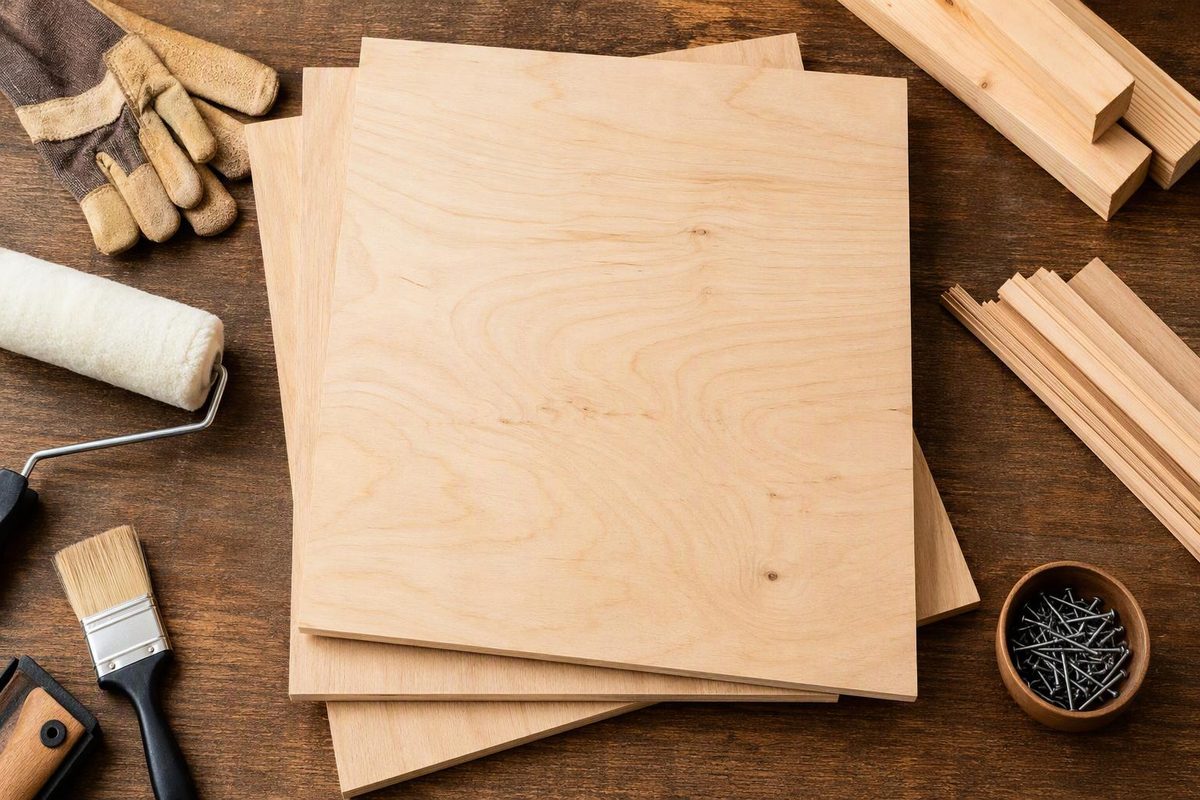
ACX plywood is generally lumberyard shorthand for A-C Exterior plywood: a smooth, paintable A-grade face, a lower-grade C back and an Exterior bond classification. The “X” is not a third veneer grade, waterproof coating or preservative treatment. On a standards-conforming panel, look for A-C and EXTERIOR in the grade stamp.
Choose a thickness category, then optionally check a measured sheet against the PS 1-22 range.
PS 1-22 Thickness Check
Check a measured thickness
15/32 sanded panels: 0.453–0.484 in. (11.51–12.30 mm)
No measured thickness entered. Measure the sheet if it must fit an existing assembly.
| Category | Inches | Millimeters |
|---|---|---|
| 1/4 | 0.234–0.266 | 5.95–6.75 |
| 11/32 | 0.328–0.359 | 8.33–9.13 |
| 15/32 | 0.453–0.484 | 11.51–12.30 |
| 19/32 | 0.578–0.609 | 14.68–15.48 |
| 23/32 | 0.703–0.734 | 17.86–18.65 |
| 3/4 | 0.734–0.766 | 18.65–19.45 |
Source: NIST PS 1-22, Sections 2.39 and 5.10.2. Ranges apply to the listed sanded-panel categories.
A common sheet is 4 × 8 ft (1,220 × 2,440 mm), but the thickness named at the store may be a Performance Category rather than its measured thickness. Under the current U.S. structural-plywood standard, PS 1-22, common sanded categories have these permitted ranges:
| Performance Category | Thickness Range | Decimal Range |
|---|---|---|
| 1/4 | 5.95–6.75 mm | 0.234–0.266 in. |
| 11/32 | 8.33–9.13 mm | 0.328–0.359 in. |
| 15/32 | 11.51–12.30 mm | 0.453–0.484 in. |
| 19/32 | 14.68–15.48 mm | 0.578–0.609 in. |
| 23/32 | 17.86–18.65 mm | 0.703–0.734 in. |
| 3/4 | 18.65–19.45 mm | 0.734–0.766 in. |
These are standard tolerance ranges, not a promise that every mill makes every category. PS 1-22 links Performance Category to nominal code thickness and gives the full ranges above; a stamp may also state a decimal thickness near the lower tolerance (NIST PS 1-22, Sections 2.39 and 5.10.2). Measure the sheet when it must fit a dado, groove or existing assembly.
What Each Part of ACX Means
| Mark | What It Controls | What to Expect |
|---|---|---|
| A | Face-veneer grade | Firm, smoothly cut and suitable for painting; repairs are allowed within the grade rules |
| C | Back-veneer grade | Tight knots up to 1-1/2 in. and knotholes generally up to 1 in. are permitted, with limited larger defects |
| X / Exterior | Bond classification | Suitable for repeated wetting and redrying or long-term weather exposure |
Those veneer limits come from the current federal voluntary product standard. PS 1-22 lists A-C as an Exterior plywood grade with an A face, C back and C-or-better inner plies (NIST PS 1-22, Sections 5.4 and 5.6).
Exterior describes the panel bond, not immunity from water or rot. APA states that bond classification indicates exposure suitability rather than structural strength or decay resistance; fungal-decay resistance still depends on design, detailing and maintenance (APA plywood guidance).
ACX therefore is not automatically pressure-treated plywood. For ground contact, persistent dampness or another decay-prone location, select by the treatment label and use category instead; see Pressure-Treated Plywood: Grades, Use Categories and Buying Checks.
ACX Fits One-Face Finish Applications
ACX makes sense when all three conditions apply:
- one visible side needs a relatively smooth, paintable wood face;
- the reverse face can show C-grade knots, holes and repairs;
- the assembly needs an Exterior bond because it may experience repeated moisture or weather.
Typical examples include painted soffits, shed components, exterior utility panels and some signs or fixtures. An APA sanded-plywood guide identifies A-C Exterior for applications where only one face matters, including soffits, fences and farm buildings (APA Sanded Plywood guide). The finish system and construction details must still protect the wood appropriately.
Do not choose ACX merely because a panel carries load. The A-C letters describe veneer quality, while structural capacity also depends on thickness, species group, orientation, support spacing, loading and installation.
APA’s stamp guide explains that a species-group number identifies strength and stiffness on non-span-rated panels, while rated sheathing uses a separate span rating (APA stamp guide). For a roof, floor or braced wall, buy the panel grade and rating specified by the plans and applicable local code—not just “ACX.”
Nearby Plywood Labels Are Not Equivalent
| Label | Main Difference From ACX |
|---|---|
| BCX / B-C Exterior | Less refined B face; often adequate where a solid surface matters more than an A-grade painted appearance |
| CDX | Rougher C and D faces; panels commonly called CDX are usually Exposure 1 rather than Exterior, so the stamp controls. See What CDX Plywood Means. |
| Marine plywood | Exterior bond plus tighter species, veneer and core requirements; ACX is not marine grade |
| Pressure-treated plywood | Preservative-treated for labeled exposure conditions; Exterior-bond ACX is not treatment |
PS 1-22 permits D veneer in Exposure 1 grades but does not permit it in Exterior grades. It also requires marine grades to meet Exterior requirements while imposing more restrictive face, inner-ply and core-gap rules (NIST PS 1-22, Table 3 and Section 5.6.1).
The distinctions affect different parts of the specification. ACX versus BCX primarily changes visible veneer quality. Exterior versus Exposure 1 changes the bond classification. Pressure treatment addresses decay hazards covered by the treatment label. Marine grade adds construction requirements beyond an Exterior bond.
Read the Stamp Before Buying
For a standards-conforming ACX panel, check the stamp for:
- A-C, confirming the face and back veneer grades;
- Exterior, confirming the bond classification;
- the required Performance Category or stated thickness;
- a species group, span rating or other structural designation required by the plans;
- a recognized certification mark.
“Exterior,” “Exposure 1” and “pressure-treated” are not interchangeable descriptions. A store label or rack sign also does not override the grade stamp on the panel.
Inspect the A face as well. A-grade veneer is intended to provide a smooth, paintable surface, but repairs are permitted under the grade rules. If plugs, patches, grain variation or edge condition matter to the finished work, examine the actual sheet rather than ordering on the letters alone.
A 15/32-Inch Soffit Order Example
Suppose a shed soffit will be painted, only its underside will remain visible, and the drawing calls for 15/32-in. exterior plywood. A complete order description is:
15/32 Performance Category, A-C, Exterior, 48 × 96 in., with a recognized certification stamp.
The A face goes toward the visible side. Under PS 1-22, a sanded 15/32-category sheet may measure 0.453–0.484 in. (11.51–12.30 mm).
Before paying, verify that the stamp says Exterior, not Exposure 1, and that the specified thickness, fastening and support arrangement match the drawing. If appearance is unimportant, B-C Exterior may be an economical substitution. If the panel will remain wet or contact the ground, changing the face grade does not solve the durability problem.