 MortarDesk
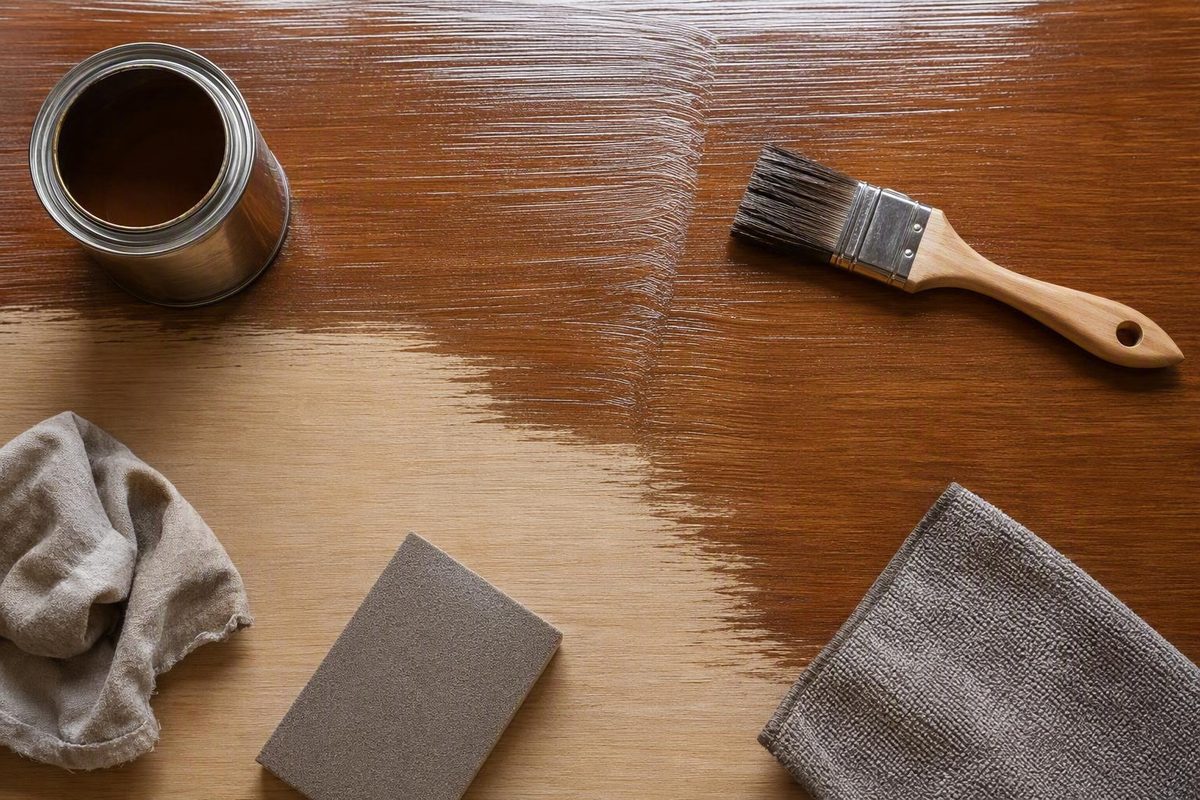
To correct light-to-moderate brush marks in polyurethane, identify the exact product, wait until the coat is hard enough to sand, level the raised marks with the manufacturer-approved abrasive, remove the dust, and apply a replacement coat according to the current label or technical data sheet.
Quick fix: dry, level, clean, and recoat
Start with the can. Record the product name, formulation—oil-based, water-based, or water-based oil-modified—and sheen. If the label is damaged or outdated, find the current technical data sheet for that exact product rather than borrowing instructions from another polyurethane.
Use this sequence:
- Wait until the marked coat is ready for sanding. It should be hard and non-tacky, subject to the product’s stated readiness requirements.
- Test an inconspicuous area with light pressure. Be especially cautious near edges, stain, paint, and thin veneer.
- Sand the raised marks level. Reduce the high lines rather than merely scratching the surrounding finish.
- Remove all sanding residue using a method approved for the product.
- Apply the replacement coat with the specified applicator, coat thickness, conditions, and recoat timing.
Sanding behavior provides a useful checkpoint for products whose instructions use it. Varathane says its Crystal Clear water-based polyurethane should be clear, hard, non-tacky, and powder-producing when lightly sanded before recoating. If that product remains tacky or the abrasive smears or clogs rather than making powder, stop and allow more drying time (Varathane Crystal Clear Polyurethane technical data sheet).
General Finishes specifically says existing streaks in its High Performance Water-Based Topcoat can be buffed with a fine 220–320 grit pad or sanded and recoated. That is a product-specific remedy for streaking, not proof that every deep ridge can be removed without cutting through the clear film (General Finishes High Performance application guide).
If a ridge remains prominent after careful leveling, do not continue sanding blindly. Stop when the work begins to threaten the color layer, an edge, bare wood, or veneer.
Check the can before choosing a brush or thinner
“Polyurethane” does not identify one universal application system. Applicators, permissible thinning, cleanup, and between-coat instructions vary by exact formula.
| Product and formulation | Applicator and thinning | Between coats | Cleanup and key caution |
|---|---|---|---|
| Varathane Interior Oil-Based Polyurethane | Natural-bristle brush or applicator; apply full strength and do not thin | Follow the stated recoat interval; lightly sand if the previous coat exceeds the label’s interval | Mineral spirits or paint thinner; stir rather than shake (Varathane oil-based technical sheet) |
| Minwax Fast-Drying Polyurethane 350 VOC, oil-based | Natural-bristle or foam brush; apply thin coats and do not thin | Let dry, lightly sand with 220 grit, remove dust, and recoat | Mineral spirits; follow solvent and waste warnings |
| Varathane Crystal Clear Polyurethane, water-based | Synthetic-bristle brush, foam brush, or applicator; follow the exact label on thinning | Recoat only when the film meets the product’s readiness requirements | Soap and water for the brush-on product; stir rather than shake |
| General Finishes High Performance Topcoat, water-based | Synthetic bristles, foam, pad, or suitable roller; distilled-water thinning is permitted from 5% up to 10% by volume for this product | Finish-sand with a 220–320 grit pad and remove the dust | Follow the label’s cleanup directions; avoid excessive pressure and back-brushing (General Finishes application guide) |
| Water-based oil-modified polyurethane | Product-specific; do not infer applicator or thinning rules from either category above | Verify compatibility, sanding, and recoat requirements | Use the exact label’s cleanup and safety instructions |
Minwax’s cited oil-based product also requires stirring rather than shaking and prohibits thinning. Its use of a natural-bristle or foam brush does not make either tool universally suitable for other polyurethane products.
Water-based oil-modified polyurethane is a separate formulation readers may encounter. Its name alone does not establish whether it can be thinned, what it can cover, which applicator to use, or how tools should be cleaned.
When is polyurethane ready to sand?
A listed dry or recoat time is a product-specific minimum under stated conditions, not a universal deadline. The cited instructions illustrate the variation:
- General Finishes lists at least 2 hours under ideal conditions for its High Performance water-based topcoat (General Finishes High Performance application guide).
- Varathane lists 4 hours before recoating its Interior Oil-Based Polyurethane (Varathane Interior Oil-Based Polyurethane technical data sheet).
- Minwax directs users to let its Fast-Drying Polyurethane dry for 3–4 hours before light sanding (Minwax Fast-Drying Polyurethane instructions).
- Varathane lists a 2-hour minimum for brush-applied Crystal Clear water-based polyurethane under its stated conditions (Varathane Crystal Clear Polyurethane technical data sheet).
Use the elapsed time together with the readiness checks specified for the product. For Varathane Crystal Clear, that means a clear, hard, non-tacky coat that produces powder during light sanding. A coat that has reached the nominal time but does not satisfy those checks needs more time.
Drying can take longer at lower temperatures or higher humidity. The cited instructions also identify possible delays from thick coats, oily woods, some stains, multiple coats, and application over sealed or other-brand finishes, depending on the product. General Finishes warns that recoating its topcoat too quickly can trap moisture and contribute to clouding or blush.
When the surface remains soft or the abrasive does not behave as the product instructions describe, stop rather than pressing harder.
How to level the marks without sanding through
The cited manufacturers use fine abrasives between coats, but their grit numbers belong to those specific instructions. Minwax specifies 220 grit for its Fast-Drying Polyurethane, while General Finishes specifies a 220–320 grit pad for High Performance Topcoat (Minwax Fast-Drying Polyurethane instructions; General Finishes High Performance application guide).
There is an important difference between two sanding tasks:
- Scuff-sanding evenly dulls a coat to improve smoothness and prepare it for another coat.
- Level-sanding reduces a raised brush line until it is flush with the surrounding film.
Simply making the whole surface matte does not establish that a raised ridge has been leveled.
Use light pressure and inspect frequently. Look across the work in low-angle light and check the surface gently with a fingertip. The practical target is a smooth, evenly dulled surface with no obvious raised line.
Stop if color appears on the abrasive, stain or paint becomes exposed, bare wood begins to show, or an edge or veneer is at risk.
Remove the sanding residue before recoating. Manufacturer-listed methods across the cited products include:
- Vacuuming
- Compressed air
- A suitable tack cloth
- A water-dampened cloth
- A cloth dampened with mineral spirits
These methods are not interchangeable. Use only a method permitted for the product, and allow an approved damp wipe to dry as directed before recoating.
Do not adopt a generic coarse-to-fine progression for severe ridges. The supplied manufacturer instructions do not establish a universal grit sequence or defect depth at which a repair must be stripped. If leveling threatens the underlying finish or substrate, stop and reassess the scope of the repair.
Apply the replacement coat without reproducing the marks
Choose the applicator and coat thickness from the product instructions rather than treating one brush type as universally best.
For General Finishes High Performance Water-Based Topcoat, apply a liberal amount with smooth, even strokes along the grain. The manufacturer says to avoid excessive pressure and back-brushing and to leave light lap marks alone so they can tighten as the coating dries. On large surfaces, it recommends a large applicator to reduce streaking.
Minwax Fast-Drying Polyurethane calls for thin coats applied with a high-quality natural-bristle or foam brush. Varathane Interior Oil-Based Polyurethane instead calls for full-strength application with a good-quality natural-bristle brush or applicator. Those differences are why a technique that suits one can should not automatically be transferred to another.
The cited Varathane oil-based, Varathane water-based, and Minwax products should be stirred before and during application rather than shaken. Their instructions warn that shaking can introduce bubbles. Stir carefully without whipping air into the finish, and follow the label’s directions for maintaining an even sheen.
Before recoating:
- Make sure the surface is properly prepared, clean, and free of sanding residue.
- Use the listed applicator.
- Follow the specified coat thickness instead of adding extra material in an attempt to cover ridges.
- Work in orderly strokes, following the grain where directed.
- Avoid repeatedly brushing material that has begun to set.
- Leave minor wet lap marks alone when the instructions say they will tighten.
- Observe the stated recoat interval and physical readiness requirements.
General Finishes identifies spraying as the smoothest application method for its High Performance Topcoat. Spraying is an optional method for that product, not the default solution for every brushing problem, and it requires compliance with the product label and safety data sheet.
Control temperature, humidity, sunlight, and drying
Both cited Varathane technical sheets specify application between 55°F and 90°F, at relative humidity below 85%, with adequate ventilation and no direct sunlight (Varathane Interior Oil-Based Polyurethane technical data sheet; Varathane Crystal Clear Polyurethane technical data sheet).
Those are manufacturer limits for the cited products, not a universal workshop specification. Check the acceptable range on your can. When conditions differ from those used to establish the printed drying time, correct them where practical and allow additional time.
Lower temperatures and higher humidity can slow drying. General Finishes also identifies thick coats, multiple coats, and application over sealed or other-brand finishes as factors that can lengthen drying for its topcoat. These conditions can affect application and drying, but they do not by themselves establish the cause of a particular brush mark.
Know the limits—and handle oil-based products safely
Stop sanding if the polyurethane remains soft, the abrasive begins cutting toward stain or paint, an edge or veneer is at risk, or the marks cannot be leveled within the available clear film. The cited manufacturer instructions do not establish a universal ridge depth or number of coats at which stripping becomes mandatory.
They also do not provide one universal method for wet-sanding, polishing, buffing, spot-repairing a final coat, or recoating one formulation with another. Those decisions depend on the product, cure state, film thickness, sheen, substrate, and documented compatibility.
For the cited solvent-based products, provide the ventilation required by the label, remove flames, sparks, and other ignition sources, and use the specified mineral-spirit cleanup procedure. Minwax warns that solvent-soaked waste and sanding residue from its oil-based product can ignite spontaneously if handled or discarded improperly, so follow its storage and disposal directions exactly (Minwax product safety and application instructions).
If spraying is being considered, consult the label and safety data sheet for the actual coating. Compatibility, ventilation, ignition control, and protective-equipment requirements should come from those documents rather than generic spray guidance.
Can I thin polyurethane to make brush marks disappear?
Not as a general rule. The cited Varathane and Minwax oil-based products expressly prohibit thinning, while General Finishes permits limited distilled-water thinning of its specific water-based topcoat.
Do not add mineral spirits merely because a finish is oil-based, or water merely because it is water-based. For the light-to-moderate raised marks covered here, the supported repair sequence is to let the coating become ready for sanding, level it within the available clear film, clean the surface, and then recoat as directed. The manufacturer sources do not establish what every additional or thinned coat might conceal.
Should polyurethane be stirred or shaken before brushing?
The cited Varathane oil-based, Varathane water-based, and Minwax products should be stirred before and during use rather than shaken. Their instructions warn that shaking can introduce bubbles.
Stir gently enough to mix the finish without whipping air into it. Follow any additional label directions for maintaining suspended flatting agents and an even sheen.
Why does the sandpaper gum up instead of making powder?
Gumming or smearing is a reason to stop and reassess whether the finish is ready under its product instructions. Do not respond by pressing harder or immediately switching to a coarser abrasive.
For Varathane Crystal Clear water-based polyurethane specifically, a ready coat should be clear, hard, non-tacky, and powder-producing when lightly sanded. Other products may define readiness differently. Allow additional drying time as appropriate for the temperature, humidity, coat thickness, substrate, and previous finishes, then test again lightly in an inconspicuous area.
The label-first checklist is simple: identify the product, wait until it meets its stated sanding-readiness criteria, level only as far as the clear film safely allows, remove dust by an approved method, and recoat with the specified applicator and minimal working. If the coating remains soft or sanding threatens stain, paint, edges, wood, or veneer, stop rather than escalating to unsupported thinning, polishing, or stripping rules.