 MortarDesk
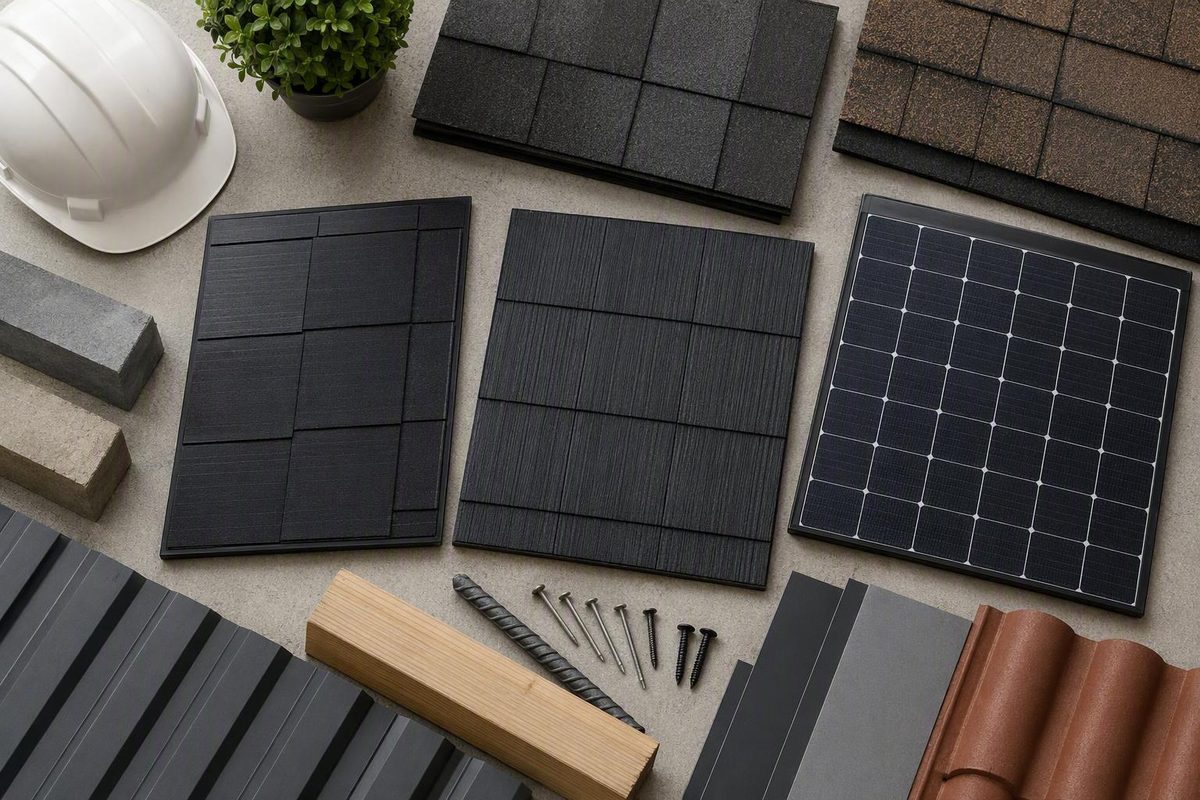
The closest solar shingle alternatives to Tesla Solar Roof are GAF Energy Timberline Solar and CertainTeed’s SunStyle or Solstice Shingle; Luma Solar is a possible lead that requires local verification. These integrated products are the only like-for-like replacements for a roof covering that also generates electricity. Rack-mounted panels generally cost less per watt and are easier to service, but they do not reproduce the tile-style appearance.
On August 20, 2026, Electrek reported that Tesla had stopped supplying Solar Roof tiles to third-party installers and would offer conventional panels instead. It also reported that Tesla’s Solar Roof page redirected to its panel page and that Solar Roof had disappeared from the Energy navigation. Because the report did not quote Tesla directly, “reportedly discontinued” or “unavailable for new tile orders” remains more precise than attributing an official discontinuation announcement to Tesla. (Electrek’s report)
The available evidence does not provide a consistent current set of watts per shingle, watts per roofing square, fire classifications, wind ratings or warranty years for every candidate. Those fields are therefore shown as unknown rather than filled with figures from mismatched product generations or secondary comparisons.
Enter the figures from each current quote; the tool calculates roof-area capacity and unit counts without substituting stale specifications.
Use current quote or data-sheet figures. Blank fields remain unknown; the calculator does not substitute specifications from older product generations.
| Product | Category | Current Evidence | Watts Per Unit | Coverage Per Unit, Sq. Ft. | Calculated W/ Roofing Square | Fire Class | Wind Rating | Fastening Method | Warranty Years | Estimated Units | Estimated DC Size |
|---|---|---|---|---|---|---|---|---|---|---|---|
| GAF Timberline Solar | Integrated roofing | Named on GAF Energy’s current website | — | — | — | ||||||
| CertainTeed SunStyle | Integrated roofing | Listed in CertainTeed’s current catalog | — | — | — | ||||||
| CertainTeed Solstice Shingle | Integrated shingle | Listed in CertainTeed’s current catalog | — | — | — | ||||||
| CertainTeed Solstice Panel | Mounted panel | Listed in CertainTeed’s current catalog | — | — | — | ||||||
| Luma Solar | Integrated; verify | Current model, territory and service require direct confirmation | — | — | — | ||||||
| Rack-Mounted Panel Array | Mounted-panel benchmark | Exact module, rack and attachment must be named in the quote | — | — | — |
Sources: Electrek’s August 20, 2026 status report and the current GAF Energy and CertainTeed product pages cited in the article. Technical fields are intentionally blank where the supplied evidence lacks current product documents.
The Shortlist Separates Integrated Roofing From Mounted Panels
GAF Energy’s website currently identifies Timberline Solar as its solar-roof product and markets it as a system that “protects like a roof, installs like a roof.” That establishes the current product name and manufacturer positioning, not its suitability for a particular deck, roof shape or jurisdiction. (GAF Energy’s Timberline Solar page)
CertainTeed’s current catalog lists SunStyle, Solstice Shingle and Solstice Panel. SunStyle and Solstice Shingle are the integrated-roof candidates. Solstice Panel belongs with the conventional mounted-panel benchmark. Older CertainTeed Apollo names do not appear in the catalog checked for this comparison and should not enter a bid without written confirmation that the exact product remains supported. (CertainTeed’s solar catalog)
Luma Solar appears in commercial comparisons as an integrated-roof option, sometimes described as modular or upgradeable. Those descriptions do not establish present availability, an authorized installer or replacement-parts support in a particular ZIP code. Treat Luma as a lead to verify, not a guaranteed national option. (EnergySage’s non-Tesla roof comparison)
| Candidate | Category | Current Evidence | Bid Position |
|---|---|---|---|
| GAF Timberline Solar | Integrated photovoltaic roofing | Named on GAF Energy’s current website | Primary integrated-roof candidate |
| CertainTeed SunStyle | Integrated roof product | Listed in CertainTeed’s current catalog | Request its own assembly and warranty documents |
| CertainTeed Solstice Shingle | Integrated solar shingle | Listed in CertainTeed’s current catalog | Primary shingle-format candidate |
| CertainTeed Solstice Panel | Mounted solar panel | Listed in CertainTeed’s current catalog | Possible conventional benchmark |
| Luma Solar | Integrated-roof candidate | Identified in secondary comparisons | Verify sales, model, territory and support directly |
| Rack-mounted panel array | Conventional solar over separate roofing | Widely available category; exact equipment varies | Required cost, output and service benchmark |
SunTegra belongs in a verify-before-shortlisting category because secondary reports conflict over its status. VOLTAIC and Duro-Last may be BIPV research leads, but the evidence supplied here does not establish either as a broadly available pitched-residential option. A company’s involvement in integrated or commercial roofing does not prove that it has an approved assembly for a particular house.
Integrated Shingles Are the Only Like-For-Like Replacement
A photovoltaic shingle or tile participates in the roof covering while generating electricity. It may replace ordinary roofing over selected areas, with inactive compatible roofing used around shaded planes, penetrations and roof edges. The permitted arrangement depends on the tested assembly and installation instructions.
Rack-mounted modules sit above a separate roof covering. The roof remains the primary weather barrier, while attachments and flashing connect the array to the structure. Both approaches require an inverter or comparable electrical equipment to supply alternating-current electricity to the home.
That construction difference controls the scope of work:
| Specification | Integrated Solar Roofing | Roof Plus Mounted Panels |
|---|---|---|
| Weather barrier | Photovoltaic units participate in the roof assembly | Existing or replacement roofing remains the primary barrier |
| Roof scope | May require full replacement, partial reroofing or compatible inactive units | Can use a serviceable roof or accompany a conventional replacement |
| Layout | Constrained by courses, unit geometry, wiring and approved details | Modules have more placement freedom but still face setbacks and obstructions |
| Repair responsibility | Roofing and electrical work may overlap | Module service and roof repair remain more separable |
| Appearance | Low profile and intended to blend with roofing | Modules remain visibly distinct |
| Expansion | May depend on proprietary matching parts and architecture | Often easier, subject to roof space, inverter design and interconnection |
A tile-style appearance therefore requires an integrated product. If visible modules are acceptable, conventional panels become the stronger baseline because commercial comparisons generally characterize them as lower in cost per watt, higher in conversion efficiency and supported by a broader installer network. Enphase makes similar category-level claims about cost, ventilation, serviceability and field history, although it has a commercial interest in conventional panel systems. (Enphase’s comparison)
Those tendencies do not decide an individual project. Shade, roof geometry, local labor, electrical work and the exact quoted equipment can reverse a simple category comparison.
Fire, Wind and Fastening Ratings Must Match the Assembly
The fire classification and wind documentation must apply to the complete proposed roof assembly, not merely to a product-family name. Deck type, underlayment, fastening schedule, roof covering and product revision can affect the applicable classification.
The evidence package for this comparison does not contain current technical manuals supporting exact fire or wind figures for every shortlisted product. A bidder should therefore supply the current manufacturer document and identify the page or table applicable to the proposed assembly.
For each option, record:
- Exact product model and revision
- Deck and substrate requirements
- Approved underlayment
- Decking requirements
- Fastener type, length, material, spacing and permitted location
- Relevant fastening details
- Eave, rake, ridge, valley and sidewall details
- Flashing around vents, chimneys and skylights
- Fire classification for the complete construction
- Wind-rating document and fastening assumptions
- Applicable hail and wind documentation
Timberline Solar is described in commercial sources as nailable, but a sales description is not a fastening specification. The current manual must establish where fasteners go, what penetrations are permitted and how damaged units are removed without compromising adjacent roofing.
Do not accept a statement that a product is “Class A” or rated to a particular wind speed unless the proposal identifies the tested assembly behind that claim. Ratings copied from an older comparison may refer to a different revision or roof construction.
Roof Condition Determines the First Bid Comparison
A sound existing roof generally favors pricing mounted panels over the current covering. Replacing roofing with credible remaining service life solely to obtain an integrated appearance adds demolition, disposal and replacement work that a panel proposal may avoid.
The roof inspection should address active leaks, brittle materials, failed flashing, damaged decking and likely remaining service life. It should also state whether attachments can be installed consistently with the roof warranty and whether a limited repair would make the roof solar-ready.
A roof already due for replacement creates the strongest case for integrated solar. Request two matched proposals:
- Integrated photovoltaic roofing.
- A conventional replacement roof plus rack-mounted panels.
Both designs should target the same direct-current capacity or, preferably, the same modeled annual generation. They should also use the same battery scope, service-upgrade assumptions, decking allowance and utility constraints.
New construction offers more freedom to coordinate roof planes, penetrations, conduit routes and electrical equipment before work begins. It does not eliminate product-territory or service risk. Confirm that the installer is authorized, the local authority has a viable permit path and another qualified contractor can service the system if the original company closes.
Roof geometry can remove candidates before price is compared. Valleys, hips, dormers, skylights, vents, chimneys and fragmented planes may leave too little continuous area for an efficient integrated layout. A broad unshaded plane is generally easier to cover. The approved instructions determine whether active units may be limited to favorable planes while ordinary roofing covers the rest.
Watts Per Shingle Alone Does Not Describe Roof Output
A per-unit wattage is meaningful only when paired with unit dimensions, coverage and layout restrictions. A physically larger unit can have a higher wattage without producing more power per usable roof area.
Request both of these values from each integrated-roof bidder:
- Rated watts per active unit
- Rated watts per roofing square or enough dimensional data to calculate it
Then require a plane-by-plane drawing showing active units, inactive roofing, required setbacks and unusable fragments. The theoretical watts per roofing square will not equal whole-roof capacity when valleys, penetrations or shaded sections interrupt the active layout.
Mounted-panel proposals require the same discipline. Module wattage must be paired with dimensions, row spacing, setbacks and a roof layout. Compare modeled first-year generation using the same weather, shade, orientation, pitch, temperature-loss and degradation assumptions.
The calculator above intentionally starts with blank specification fields. The source material does not support inserting current product wattages, and mixing figures from different revisions would create a false comparison.
Complete Project Cost Is the Useful Price Basis
Integrated solar roofing typically carries a higher cost per watt than mounted panels, but the size of the premium is not established by the supplied evidence and cannot be assumed for a particular house. Only matched local bids can show it.
Each proposal should separate ordinary roofing work from photovoltaic and electrical work wherever practical. The itemization should include tear-off, disposal, decking repairs, underlayment, flashing, inactive roofing, active photovoltaic units, racking where applicable, inverter equipment, wiring, permits, utility interconnection, monitoring, taxes and exclusions.
Published “price per shingle” figures are especially weak because unit sizes and power ratings differ. Solar-only cost per watt can also conceal the surrounding roof cost.
A useful screening ratio is:
Total installed project cost ÷ modeled first-year kilowatt-hours
This is not an electricity rate or a levelized cost of energy. It is useful only when roof, electrical and battery scopes are substantially identical. Where possible, calculate a second ratio using incremental solar cost after applying the same defensible conventional-roof baseline. That baseline should include comparable material quality, tear-off, flashing, underlayment and decking allowances.
Include the same battery capacity and backup scope in every proposal or exclude storage from all of them. Apply the same rule to service upgrades and unrelated electrical work.
Warranty Years Conceal Different Promises
A single warranty duration cannot show whether the roof, photovoltaic output, leaks, electronics and labor are protected for the same period. Record each promise separately:
| Warranty Component | Required Detail |
|---|---|
| Roofing material | Covered defects, exclusions and prorating |
| Water intrusion | Covered roof areas, diagnosis and interior damage exclusions |
| Photovoltaic product | Product defects and replacement procedure |
| Power retention | Output threshold, measurement method and remedy |
| Electronics | Inverter, gateway, optimizer and monitoring coverage |
| Workmanship | Responsible contractor, term and transfer rules |
| Labor | Diagnosis, removal, replacement and recommissioning costs |
| Weather events | Wind, hail and other exclusions |
The practical issue is who responds first when a leak could be attributed to roofing, photovoltaic components or electrical work. The contract should identify the first call, response responsibility, temporary weather protection, fault determination and payment for diagnosis.
Replacement-parts planning matters more for integrated roofing because the generating component is also part of the exterior finish. Ask whether one unit can be replaced without opening a large section, who stocks compatible pieces and what happens if the product line is retired. Confirm whether future revisions will fit the original assembly and whether another authorized contractor can assume a warranty claim.
The local service network should be treated as a product specification. A technically suitable system is a weak choice if no nearby company can repair the roof, diagnose electrical faults and administer claims.
The Bid Should Name Every Responsible Trade
A complete proposal identifies who performs roof penetrations, underlayment, flashing, photovoltaic attachment, wiring, inverter installation, structural review, permitting, inspections, utility interconnection, monitoring setup and future removal or replacement.
For GAF Timberline Solar, CertainTeed SunStyle and CertainTeed Solstice Shingle, request the exact model, current technical data sheet, installation manual, complete warranty documents and written installer authorization. Obtain the same documents for Luma before treating it as available.
Panels remain the baseline every integrated quote must beat or justify. Integrated roofing is most defensible when replacement is already necessary and the low-profile appearance is valuable enough to support a likely cost premium and narrower service network. A sound roof, a limited budget or a need for straightforward module replacement generally strengthens the mounted-panel case.
Tesla Solar Roof’s reported withdrawal changes the brand list, not the specification process. Select the assembly that has documented fire and wind performance, buildable roof details, matched production modeling, itemized cost and a credible repair path in the property’s ZIP code.